Best Spring Wildflower Hikes in the Columbia River Gorge
Peak Blooms, Iconic Trails, and When to Go
Spring wildflowers in the Columbia River Gorge feel different than anywhere else in the Pacific Northwest. Instead of waiting for high alpine snow to melt, the Gorge wakes up early — sun-soaked hillsides bursting into color while much of the state is still shaking off winter.
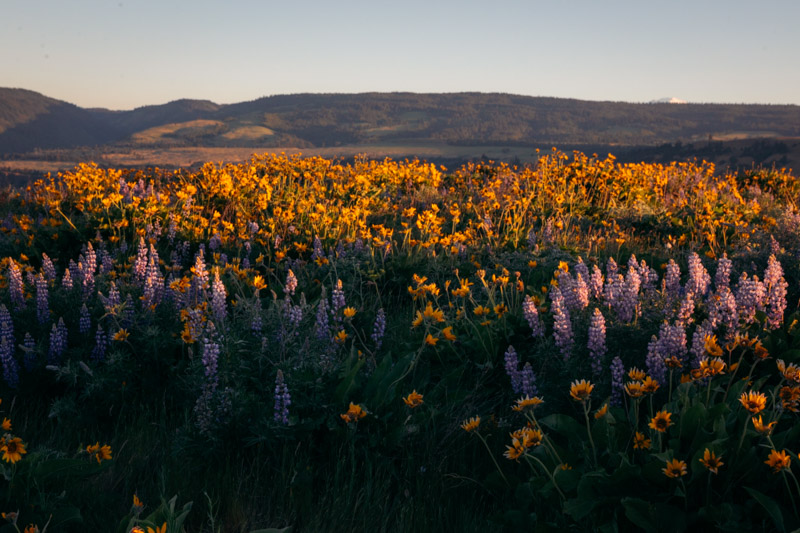
Golden balsamroot, purple lupine, paintbrush, and grass widows blanket open slopes above the Columbia River, often paired with sweeping views and long bloom windows. If you time it right, wildflower season in the Gorge can rival — and sometimes outshine — waterfall season.
This guide covers the best spring wildflower hikes in the Columbia River Gorge, when to go for peak bloom, and how to plan your trip without fighting crowds.
Disclosure: This post may contain affiliate links. If you purchase through these links, I may earn a small commission at no extra cost to you. Thanks for supporting The Trekking Mama.
Quick Reference: Gorge Wildflower Hikes
Best for jaw-dropping displays: Dog Mountain, Dalles Mountain Ranch
Best for fewer crowds: Memaloose Hills, Lyle Cherry Orchard, Coyote Wall
Best for beginners: Rowena Crest, Lyle Cherry Orchard, Memaloose Hills
Best for photographers: Rowena Crest, Dalles Mountain Ranch, Tom McCall Point
Peak bloom window: Early April – early May (varies by elevation)
Permits required: Dog Mountain (spring weekends)
When Do Wildflowers Bloom in the Columbia River Gorge?
Timing matters more here than mileage.
Typical Bloom Window
- Late March – early April: Lower-elevation east Gorge begins blooming
- Mid – late April: Peak bloom for most iconic trails
- Early May: Higher, wind-scoured ridges linger with color
Because the Gorge sits lower and sunnier than the Cascades, wildflowers appear weeks earlier than alpine hikes. Eastern and east-facing trails usually peak first.
What to Pack for Gorge Wildflower Hikes
Spring Gorge hikes are muddy in shaded sections, windy on ridges, and deceptively warm in the sun.
- Waterproof hiking boots — I’ve owned more pairs of La Sportiva Nucleo High II GTX Hiking Boots than I can count.
- Lightweight rain shell — I use the Black Diamond Fineline Stretch Shell.
- Warm midlayer — A fleece or light puffy.
- Trekking poles — Especially helpful on Dog Mountain. I use Black Diamond Alpine Carbon Cork Poles.
- Small daypack — My Osprey Tempest 20.
- Sun protection + extra water — Most trails are fully exposed.
Best Spring Wildflower Hikes in the Columbia River Gorge
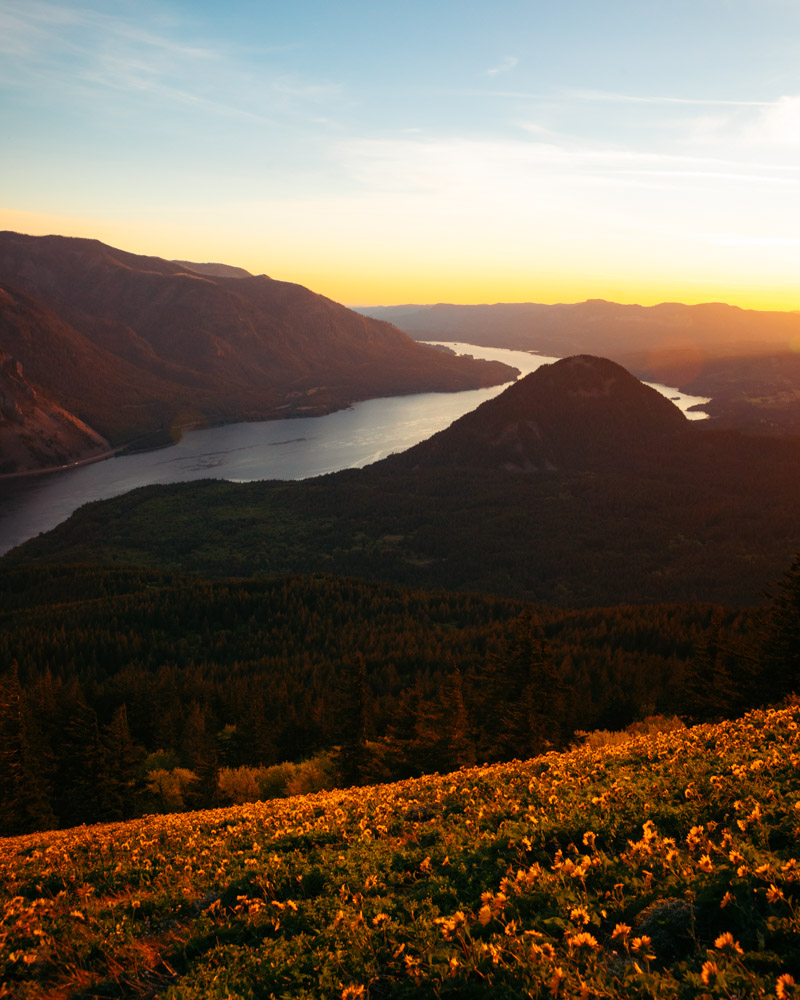
Dog Mountain (Washington Side)
The most iconic wildflower hike in the Gorge
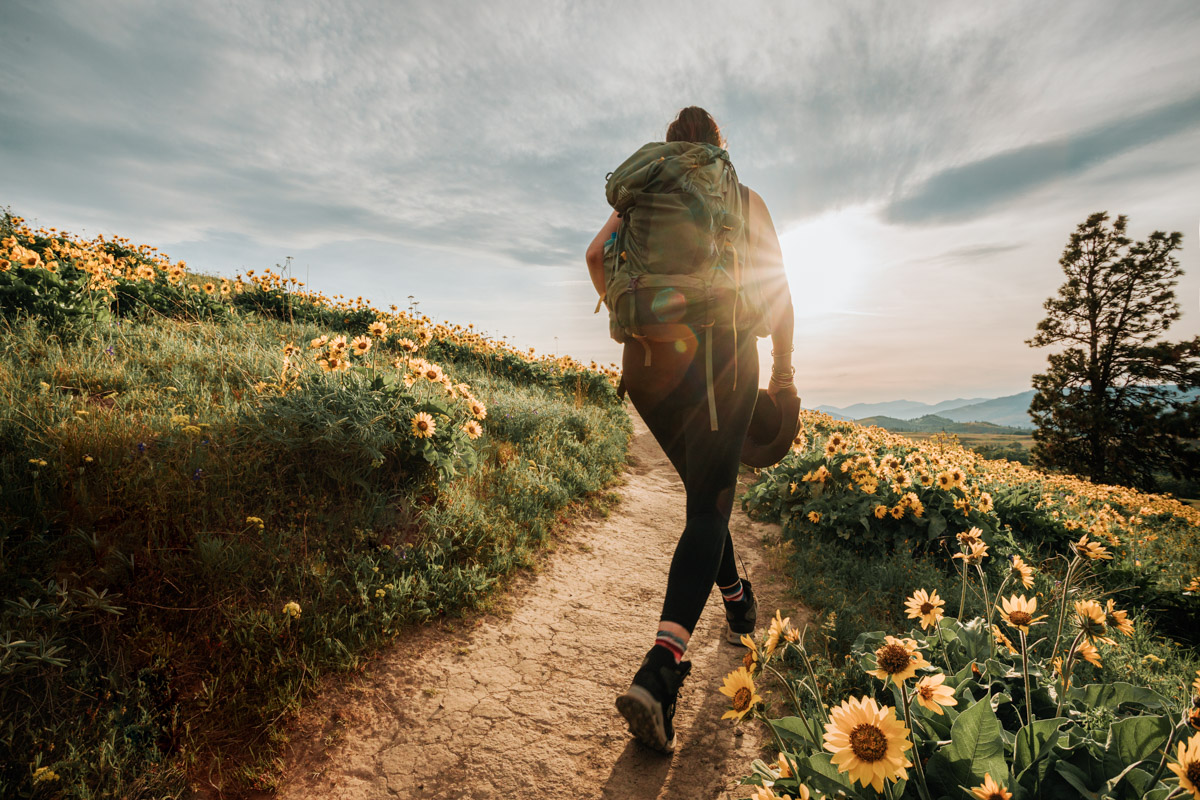
Dog Mountain is famous for a reason — and it earns every bit of that reputation. In peak season, the steep south-facing slopes above the river explode with yellow balsamroot and purple lupine, creating one of the most dramatic spring wildflower displays in Washington.
The climb is no joke: nearly 3,000 feet of elevation gain over exposed terrain. But when conditions align, the summit meadows feel almost unreal.
Stats
- Distance: 6.9 miles (loop)
- Elevation gain: ~2,800–3,000 feet
- Difficulty: Strenuous
- Time: 4–6 hours
Why hike Dog Mountain
- Massive, continuous wildflower fields
- Open ridgelines with nonstop Columbia River views
- Alpine-feeling scenery without alpine timing
Good to know
- Extremely steep and fully exposed
- Very crowded on weekends
- Timed-entry permits required on spring weekends (late April–mid June)
👉 Reserve Dog Mountain permits on Recreation.gov
Best time: Late April – early May
Dalles Mountain Ranch (Washington Side)
My top pick for Gorge wildflowers
If Dog Mountain is dramatic, Dalles Mountain Ranch is expansive. Rolling hills stretch toward Mount Hood, and during peak bloom the landscape feels endless — wide open, quiet, and incredibly scenic.
This is one of my favorite spring hikes in Washington. You can wander for miles, choose your own route, and still feel immersed in wildflowers without the pressure of crowds.
Stats
- Distance: 4–6 miles (varies by route)
- Elevation gain: ~1,000 feet
- Difficulty: Moderate
- Time: 2–3 hours
Why it stands out
- Huge fields of balsamroot and lupine
- Far fewer people than Dog Mountain
- Multiple route options
- Mount Hood views on clear days
Best time: Mid–late April
Good to know: No shade. Bring more water than you think. Located in Columbia Hills State Park (Discover Pass required).
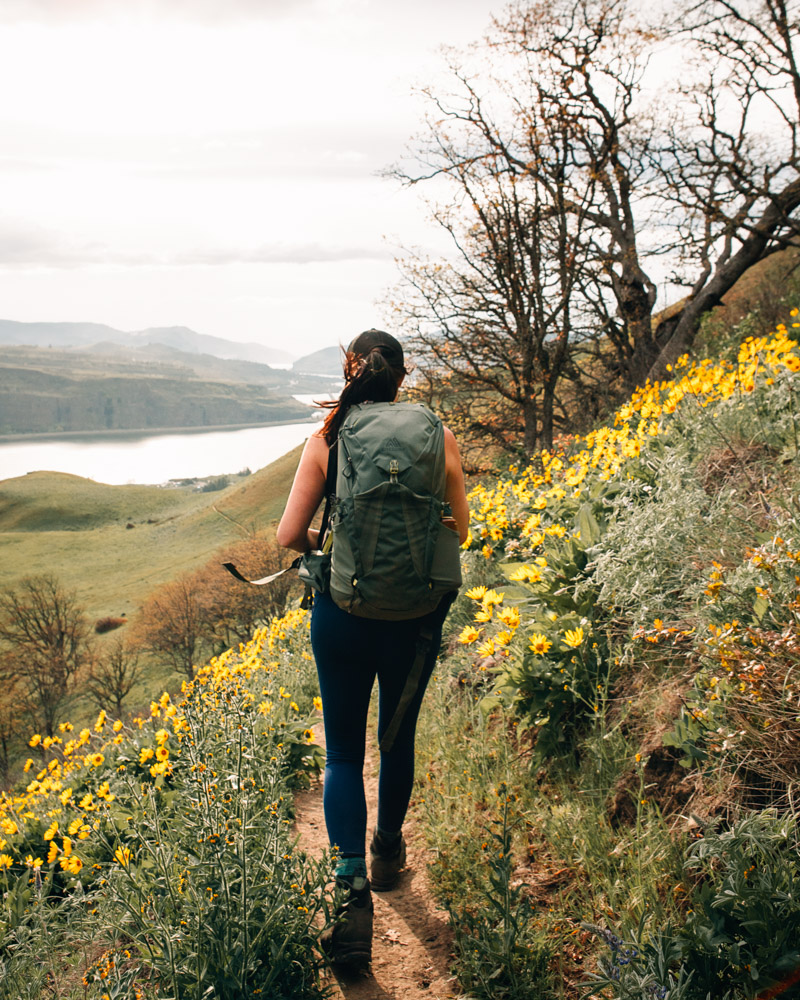
Lyle Cherry Orchard (Washington Side)
Short, scenic, and wildly underrated
Lyle Cherry Orchard delivers big views with relatively little effort. The trail climbs gradually through open slopes filled with spring color, with the Columbia River visible almost the entire way.
This is one of my go-to recommendations for early season hikes or days when you want wildflowers without committing to a brutal climb.
Stats
- Distance: 4 miles round trip
- Elevation gain: ~1,200 feet
- Difficulty: Easy to Moderate
- Time: 2–2.5 hours
Why it works so well
- Short mileage, big payoff
- Excellent early-season blooms
- Much quieter than Dog Mountain
Best time: Early–mid April
Good to know: Fully exposed — sun and wind can be intense.
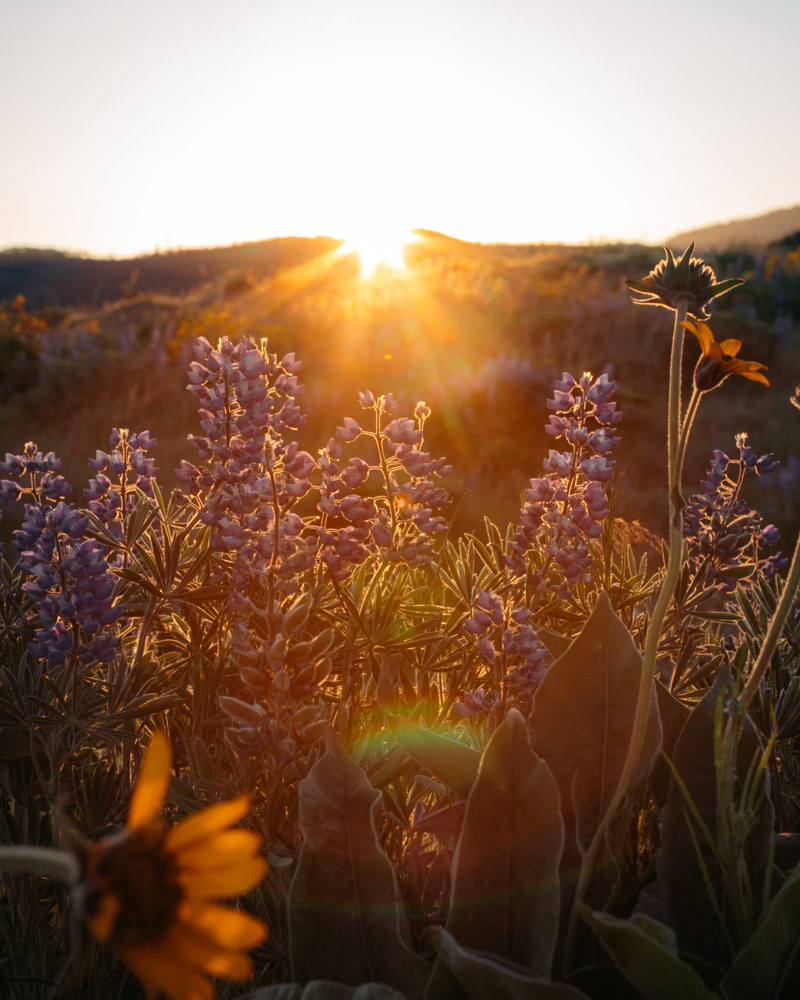
Coyote Wall (Washington Side)
Wildflowers with breathing room
Coyote Wall offers flexibility and space. The trail system allows for shorter loops or longer ridge climbs, and while bloom quality varies year to year, spring conditions often bring excellent color across open slopes.
Stats
- Distance: 6–7 miles (loop, varies)
- Elevation gain: ~1,600 feet
- Difficulty: Moderate
- Time: 3–4 hours
Why choose Coyote Wall
- Fewer crowds than Dog Mountain
- Dramatic basalt cliffs and river views
- Flexible route options
Best time: April – early May
Good to know: Fully exposed. Sun and wind are constant; rattlesnakes and poison oak are present in lower sections.
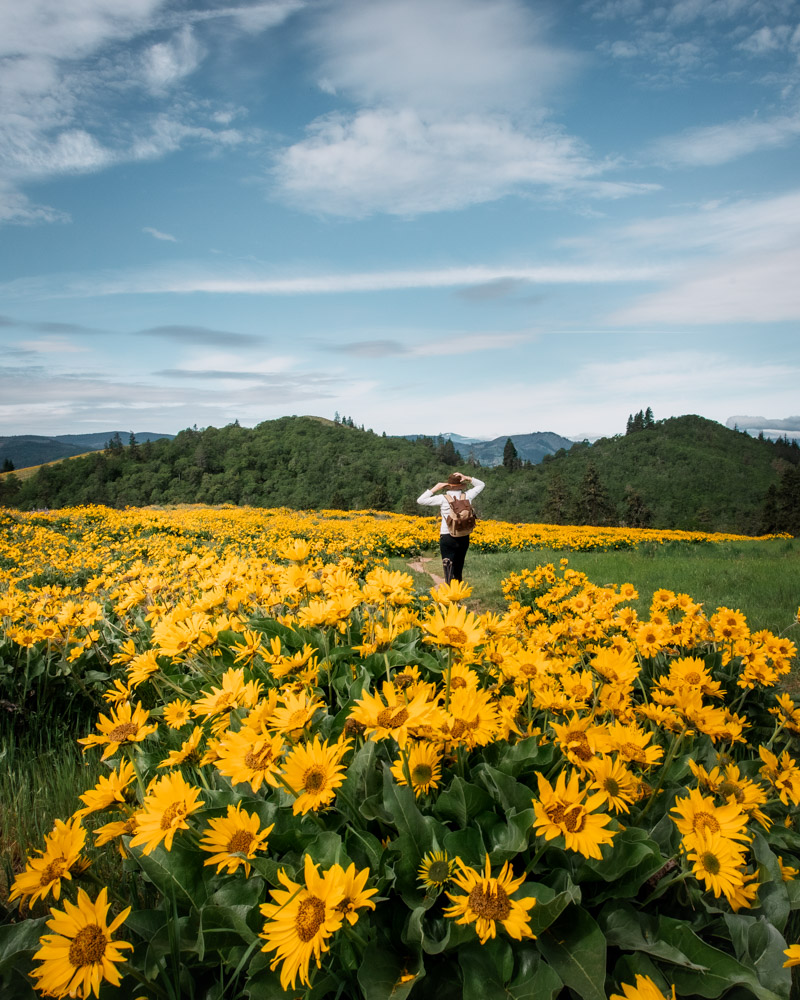
Memaloose Hills (Oregon Side)
Quiet trails and early spring color
Memaloose Hills is one of the most overlooked wildflower areas in the Gorge. Rolling terrain, early blooms, and a calm atmosphere make this a great alternative to busier hikes.
Stats
- Distance: ~2.8 miles round trip
- Elevation gain: ~900 feet
- Difficulty: Easy to Moderate
- Time: 1.5–2 hours
Why hike here
- Peaceful, low-traffic trails
- Early bloom window (often late March)
- Ideal for slower, exploratory hikes
Best time: Late March – April
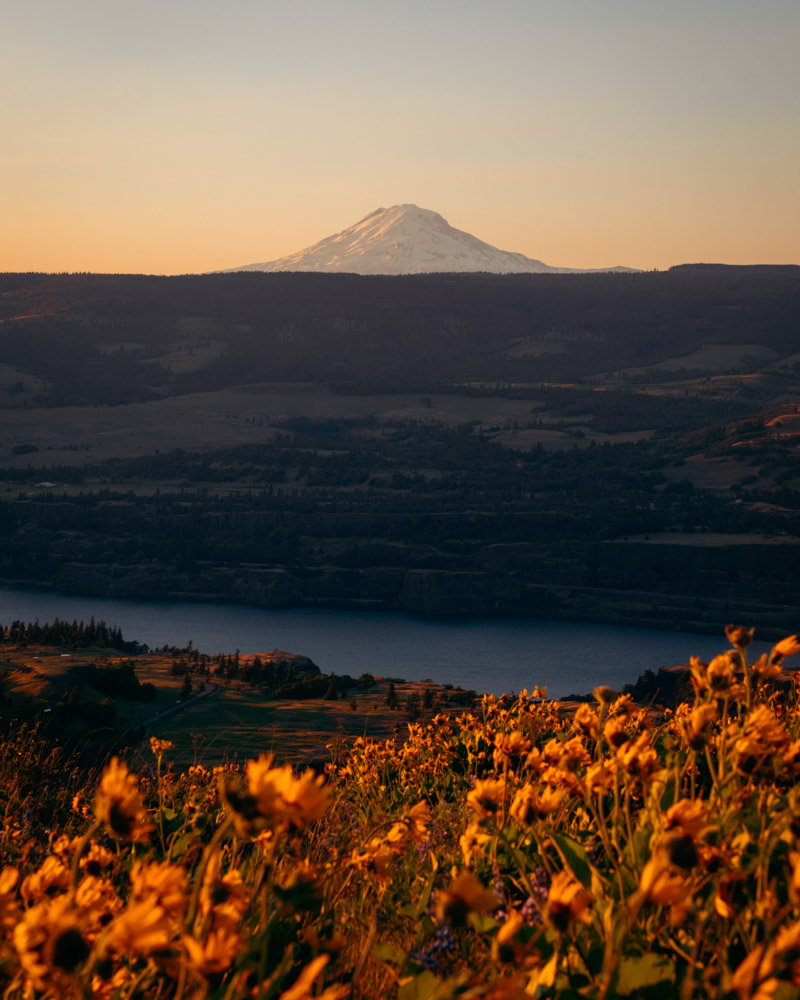
Tom McCall Point (Oregon Side)
Moderate climb with maximum color
Tom McCall Point adds elevation and payoff to the Rowena area, with steady climbing, sweeping views, and excellent wildflower variety.
Stats
- Distance: 3.4 miles round trip
- Elevation gain: ~1,000–1,200 feet
- Difficulty: Moderate
- Time: 2–3 hours
Why it’s worth it
- Big Gorge and Mount Hood views
- Excellent wildflower diversity
- Less crowded than Dog Mountain
Best time: April
Good to know: Trail closed Nov 1–Mar 31. Dogs not allowed. Watch for ticks and poison oak.
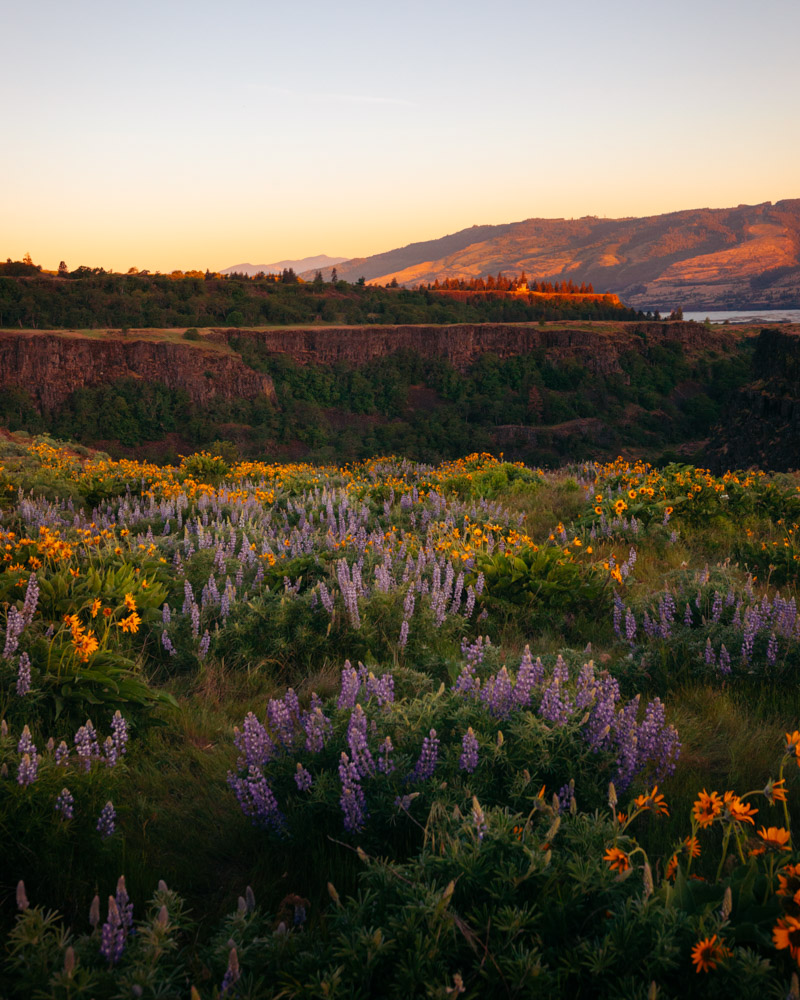
Rowena Crest (Oregon Side)
Minimal effort, maximum views
Rowena Crest is less a single hike and more a network of short trails and viewpoints. It’s ideal for photography, sunrise/sunset stops, or pairing with Tom McCall Point.
Stats
- Distance: 1–2 miles total
- Elevation gain: Minimal
- Difficulty: Easy
- Time: 30–60 minutes
Best time: April
Good to know: Stay on trails to protect fragile wildflowers.
Combine Wildflowers + Waterfalls
Spring is ideal for pairing wildflower hikes with peak-flow waterfalls.
Good combos:
- Dalles Mountain Ranch + Rowena Crest
- Lyle Cherry Orchard + Wahclella Falls
- Dog Mountain + Panther Creek Falls
👉 See my full guide:
Best Waterfall Hikes in the Columbia River Gorge
Where to Stay for Wildflower Season
Staying on the Washington side often means easier parking and quieter mornings.
Good bases:
- Carson or Stevenson (WA)
- Hood River (OR) for walkable dining
- Columbia Hills State Park for camping
👉 Full breakdown here:
Spring in the Columbia River Gorge: Waterfalls, Wildflowers + Where to Stay