Best Things to Do in Washington State in Winter (Snow, Storms & Cozy Escapes)
Last Updated: February 2026 | Reading Time: 18 minutes
Washington in winter isn’t always snowy. Most of the time, it’s gray. Misty. Moody. And honestly? That’s the magic of it.
It’s stormy beach walks on the coast. Ferry rides. Waterfalls at their loudest. Fog drifting through Deception Pass, the evergreens glowing against the gray. A weekend in the Columbia River Gorge when the river feels big and dramatic and the crowds are gone.
If you want snow, you can absolutely find it — snowshoeing near one of the mountain passes, sledding with the kids at a Washington sno-park, or staying in a cozy cabin just close enough to the mountains to wake up to fresh powder. But winter here isn’t just about chasing snow days.
Winter in Washington isn’t one thing. It’s snow when you want it — and quiet, moody beauty when you don’t.
This guide covers everything from easy winter day trips from Seattle to overnight stays across Washington — snow when you want it, and other options when you don’t.
If you’re deciding between snow-focused and “moody west side” weekends, start with my 23 Easy Winter Hikes in Washington (best for low-effort winter days) and my Start Snowshoeing in Washington guide (best if you want a true snow day).
Disclosure: Some links in this post are affiliate links, which means I may earn a small commission (at no extra cost to you). I only recommend what I actually use and trust.
Head West: Olympic Peninsula in Winter
If you don’t want to think about snow levels or mountain passes, head west.
The Olympic Peninsula is one of the easiest winter moves in Washington. You get forest, lake, and coast — all at lower elevations.
Winter here isn’t dramatic. It’s steady. Wet. Quiet.
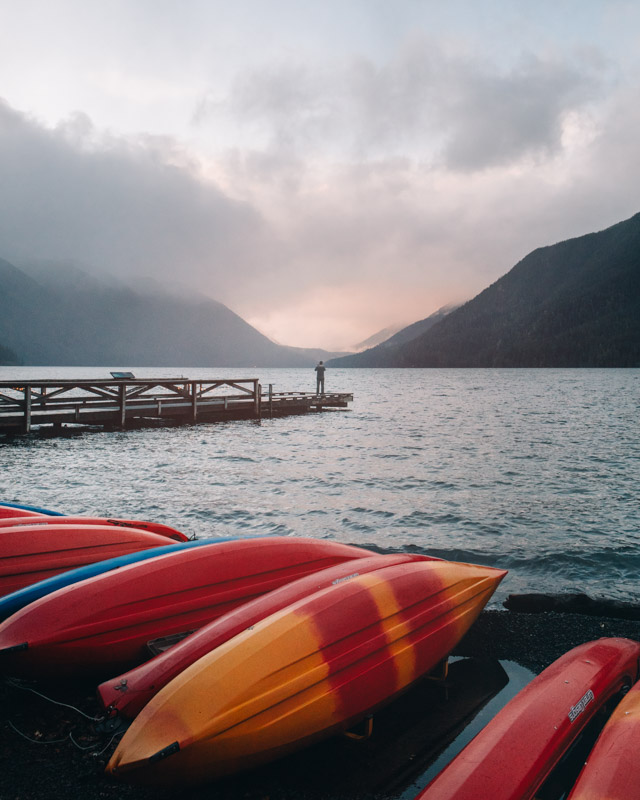
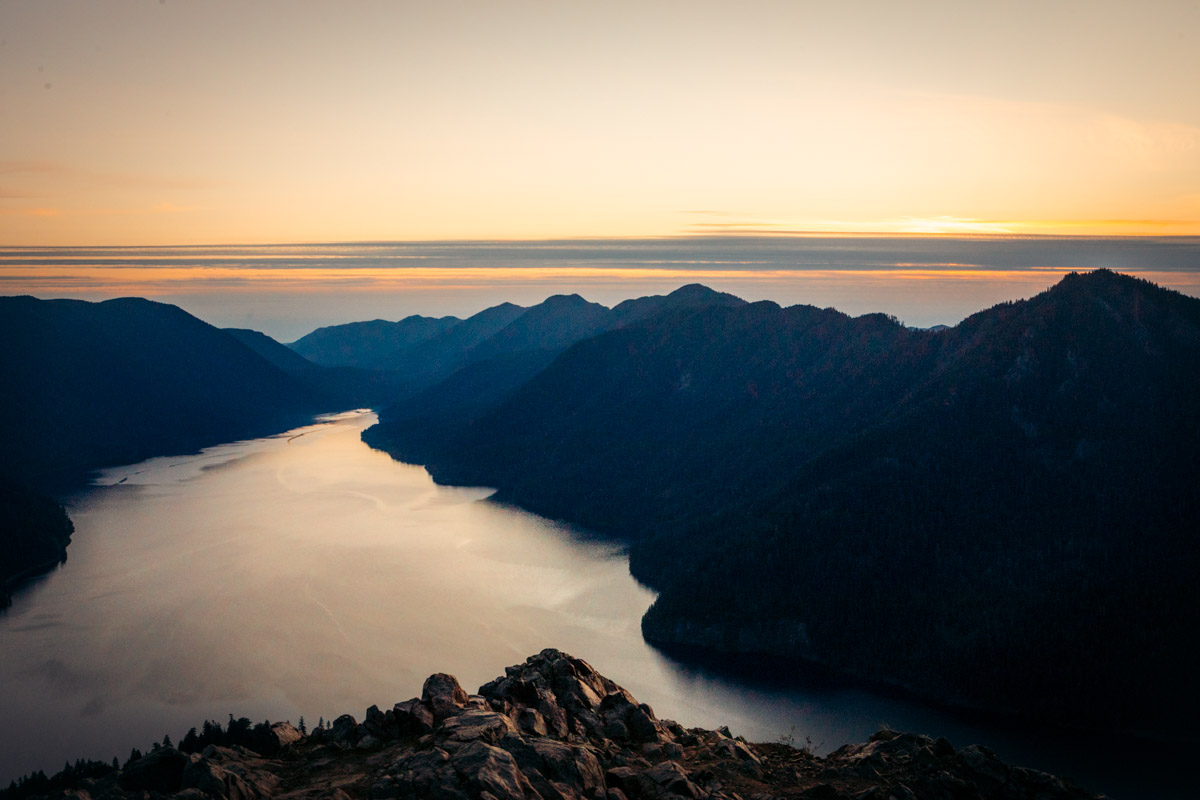
Lake Crescent
Lake Crescent is especially good in winter.
Less traffic. Fewer people on the trails. The lake feels still and the fog on the water in the morning is a sight.
Marymere Falls is an easy, reliable stop — short trail, big payoff, and better after rain. If you just want movement without committing to a long hike, walk the shoreline to Devil’s Punchbowl instead.
If you’re looking for something more substantial, Mount Storm King is always there. Just know that the final stretch involves steep sections with fixed ropes — it’s manageable for confident hikers, but it’s not casual, especially if conditions are wet.
If you want a more detailed breakdown of where to stay, what to prioritize, and how to structure a full weekend, I’ve mapped that out in my Olympic National Park weekend guide.
Waterproof boots matter more than traction here. Expect mud. If you don’t already have a truly waterproof pair, a mid-height hiking boot with a waterproof membrane is perfect. I also keep a pair of merino socks in the car for the drive home — changing into dry socks after a wet hike feels like a luxury.
If you’re staying nearby — Lake Crescent Lodge or a cabin — winter evenings feel calm and unhurried. No need to plan much beyond dinner and a short walk.

Olympic Coast Beaches
From Lake Crescent, the coast is an easy add-on.
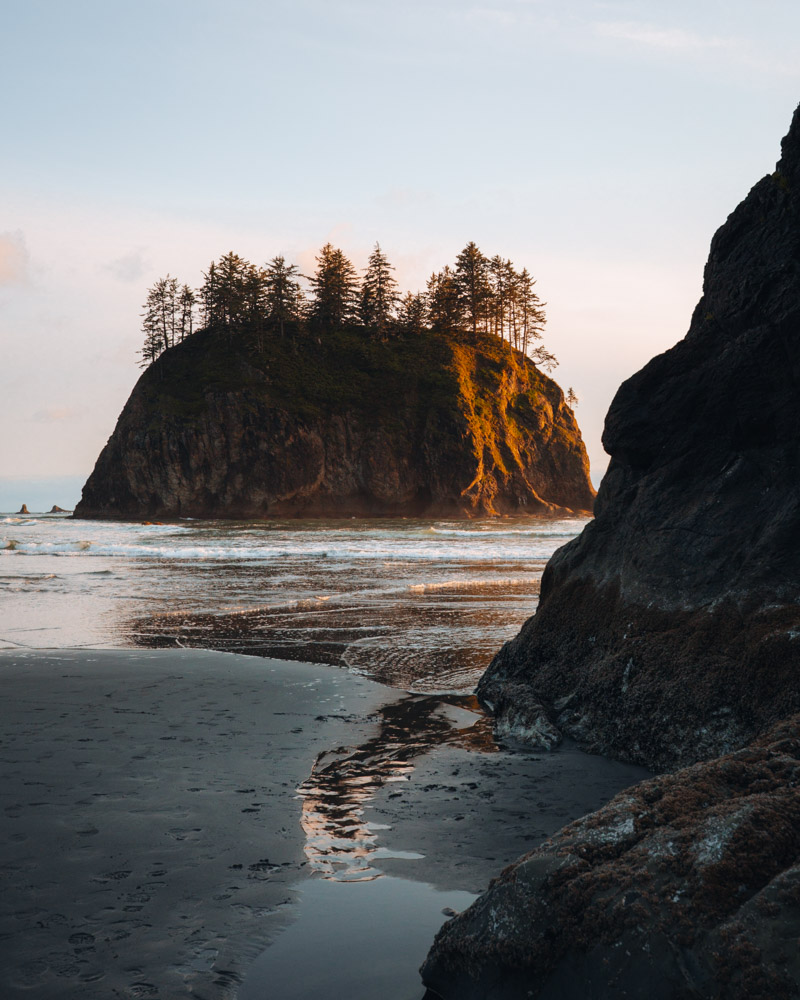
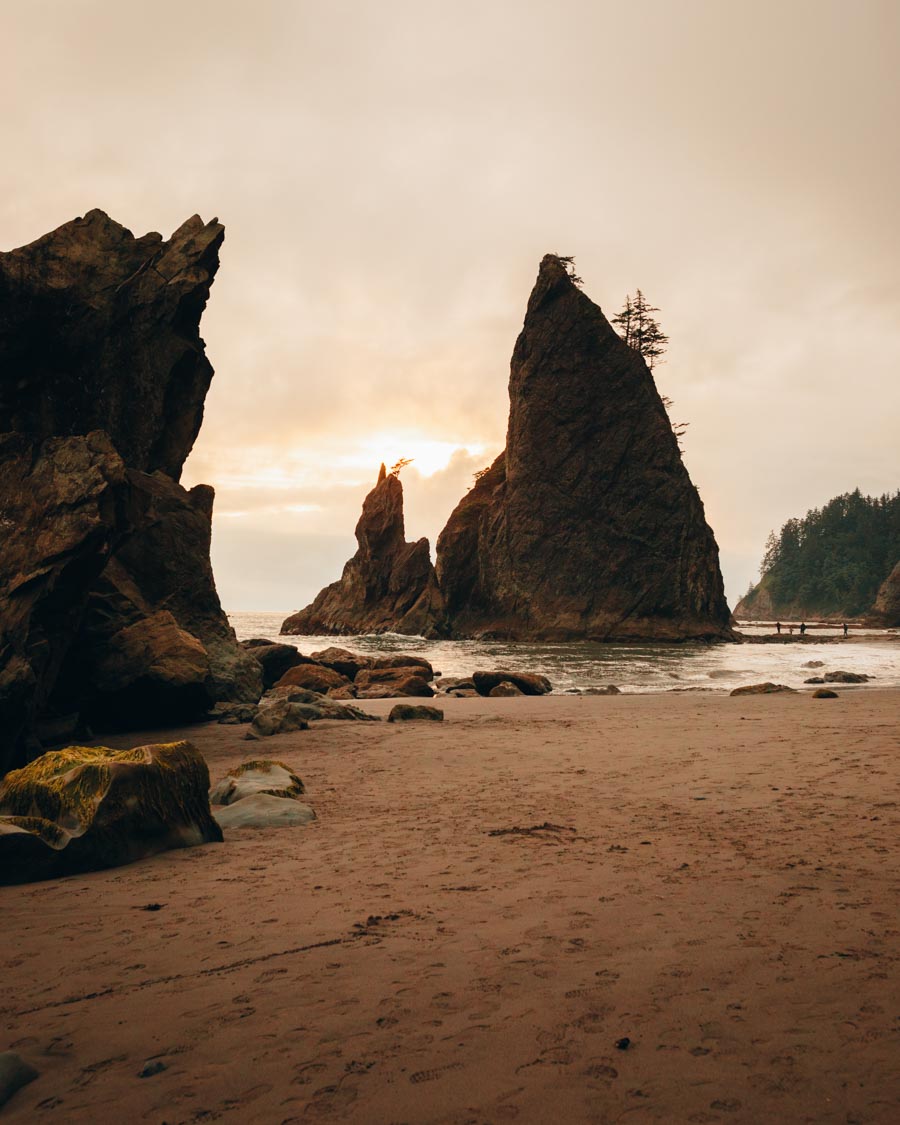
Rialto, Second Beach and Ruby Beach are especially good in winter. The sea stacks stand out more when there aren’t crowds. Parking is easier. You can walk for a while and almost feel alone.
This isn’t a sun day most of the time. It’s a wind-and-layers day. And that’s part of what makes it special — the mood is the draw. Gray skies and waves moving hard against the shore. It feels quintessential PNW.
A true waterproof shell matters more than insulation here — I wear the Outdoor Research Aspire Jacket in winter and it blocks wind off the ocean without feeling stiff. I also keep a simple thermos in the car for winter coast days — hot coffee or tea makes the whole “wind and layers” thing feel cozy instead of miserable.
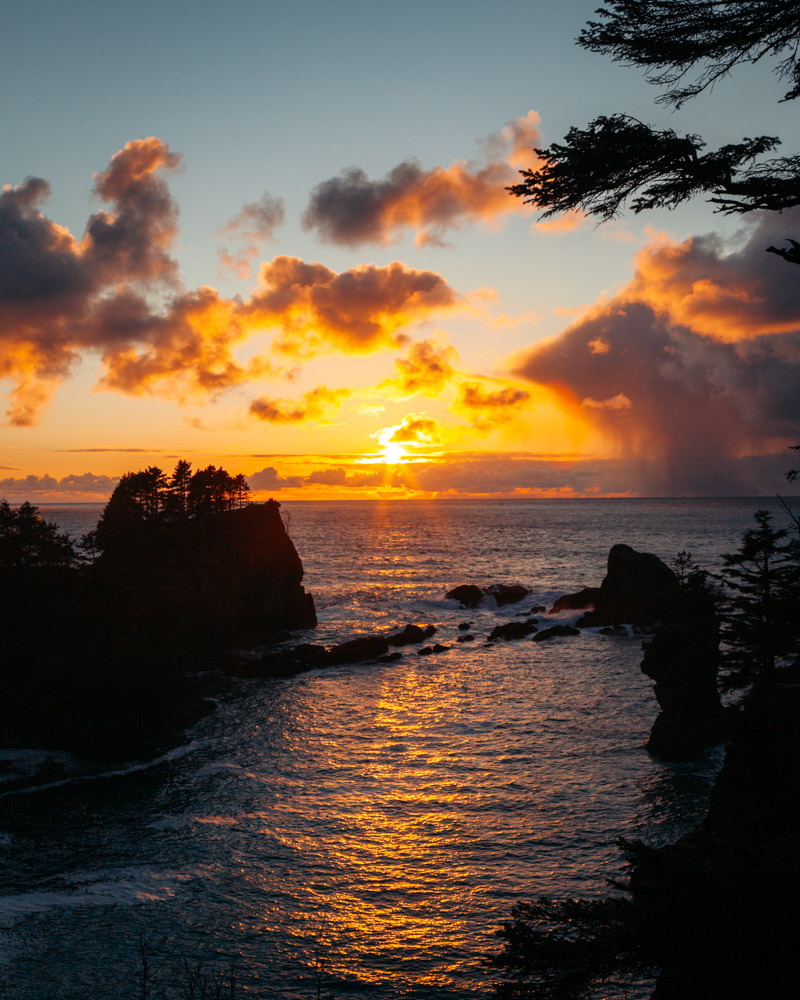
But if you do catch a clear winter day, the sunsets out here can be second to none. Cold air, low light, wide horizon — it feels bigger than summer.
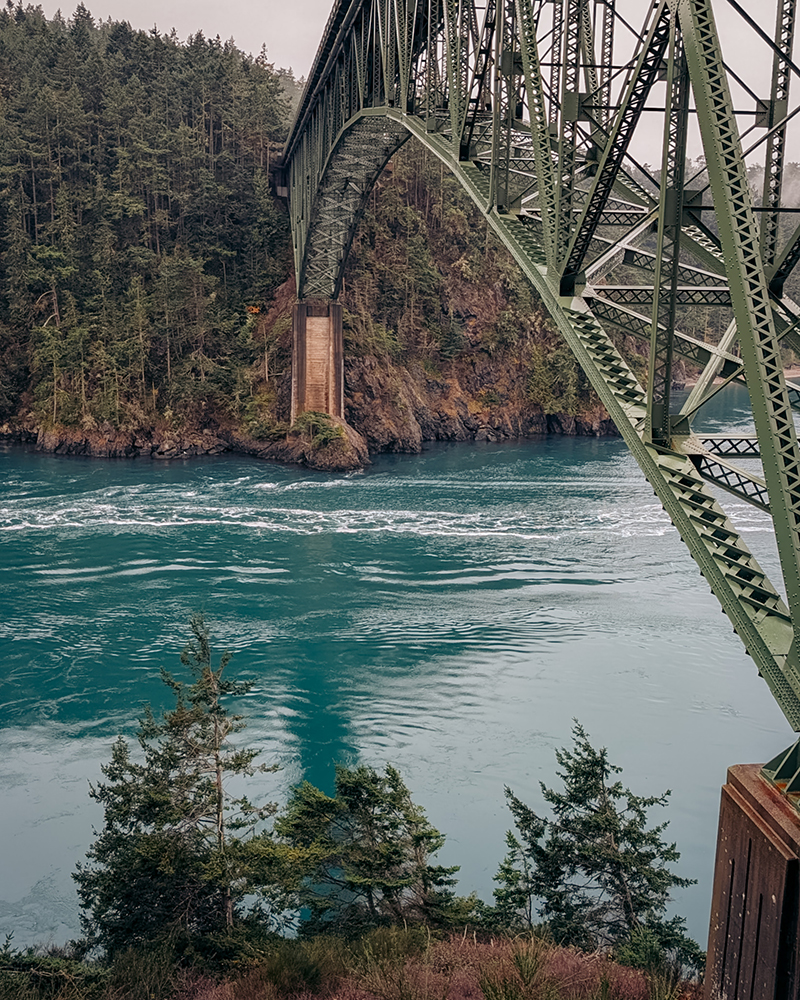
Ferry Days on Whidbey + Deception Pass
One of the simplest winter day trips from Seattle? A ferry ride.
Winter ferry decks are quiet and offer amazing views (especially if paired with sunrise or sunset) for very little money. The mountains appear and disappear between clouds and the fog is a mood. You’ll see more eagles than tourists. I like bringing a small daypack with an easy-access rain cover for ferry days — the weather changes fast, and it keeps your layers and snacks from getting soaked. If you’re the type who loves spotting eagles and seals, compact binoculars are surprisingly fun here.
Drive onto the Mukilteo–Clinton ferry. Once you land on Whidbey, make a day of it.
Start in Langley for coffee and a slow wander through town. In winter it feels especially cozy — fewer crowds, more space, and the cutest shops that you can spend hours in. I can’t recommend the risotto enough at The Braeburn Restaurant. You will thank me later.
Head north to Ebey’s Landing for a short hike. The bluff views are wide open and depending on the weather you can have stunning views of the Olympic mountains.
Stop in Coupeville for lunch on the waterfront. Wander the dock. Winter makes parking easy and the town feels unhurried.
Finish at Deception Pass.
In winter, the cliffs look sharper and the greens more vibrant. The bridge feels dramatic instead of crowded. Rosario Head and Bowman Bay are beautiful even in steady drizzle — and it’s not unusual to find yourself nearly alone.
No traction devices needed.
Just a rain shell and good shoes.
It’s simple. It’s low stress. And on a gray January day, it’s the perfect outing.
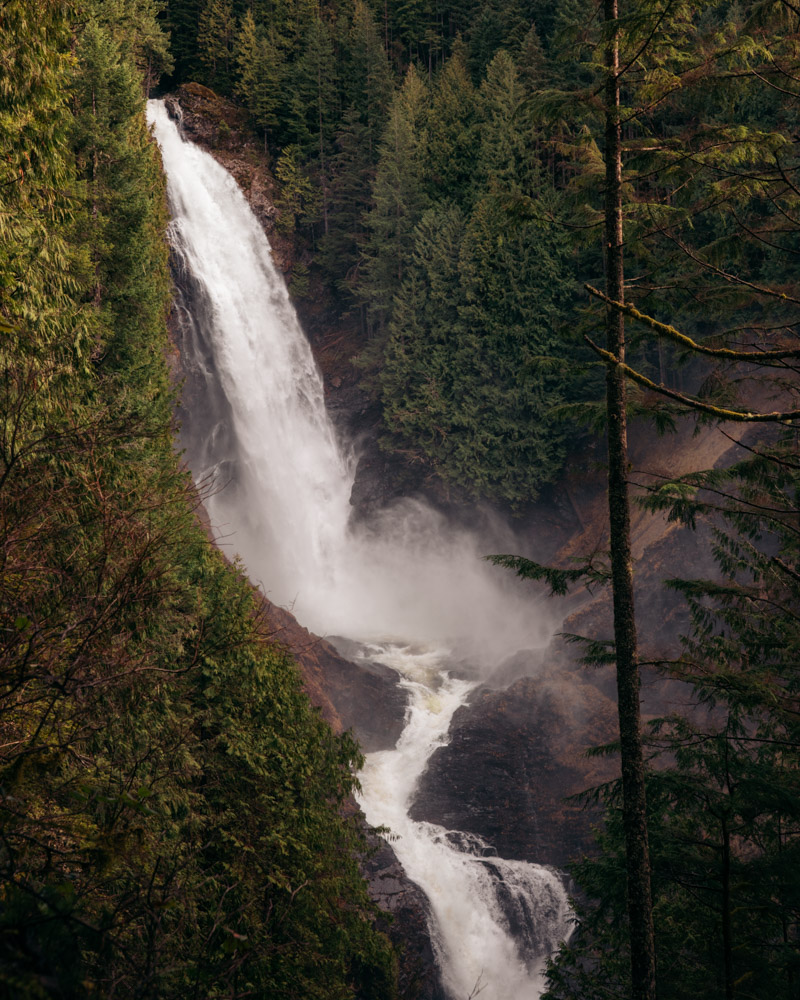
Chase Waterfalls (Winter Is Peak Season)
Winter is when Washington’s waterfalls are loud.
More rain means more flow. Fewer people means more space. And when temperatures dip, you get ice formations you won’t see in July. One winter note: trail conditions around waterfalls can be slippery — mud + ice in the same half-mile. I don’t always bring traction, but I’m happy when I have microspikes in the car on cold mornings, and trekking poles help a lot on the steep, rooty approaches.
This isn’t about blue skies. It’s about drama.
Here’s where I go.
Highway 2
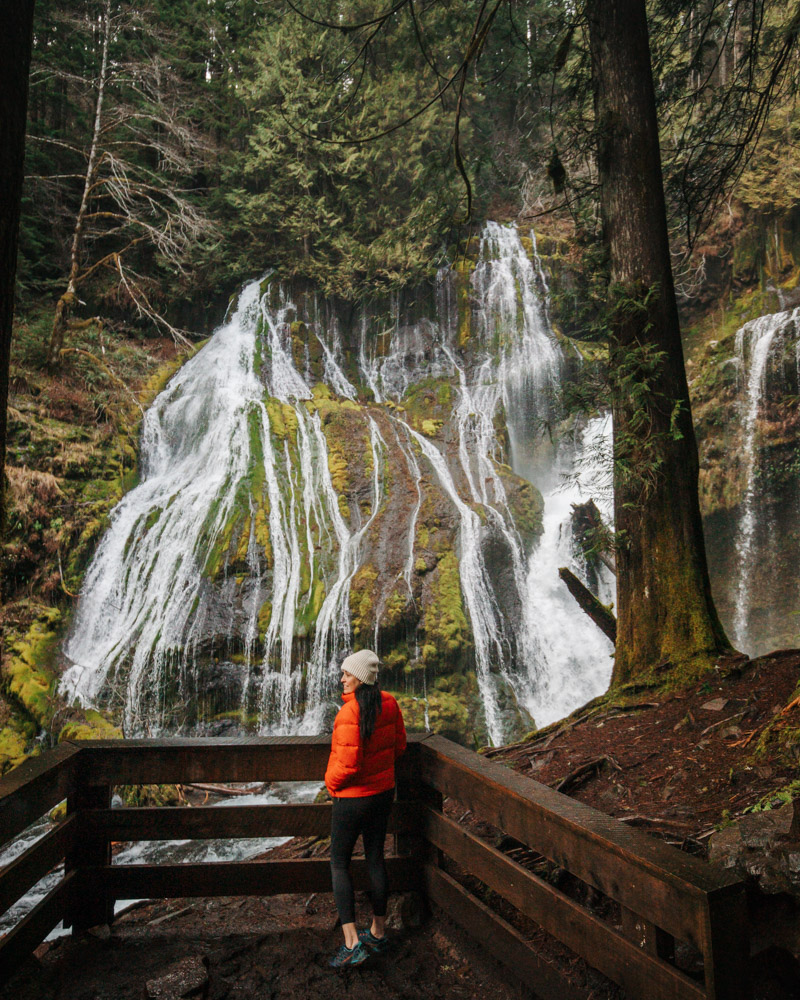
Wallace Falls (Gold Bar)
Reliable and steady. The middle and upper falls are especially powerful in winter. It’s a climb, but not technical, and it handles rain well.
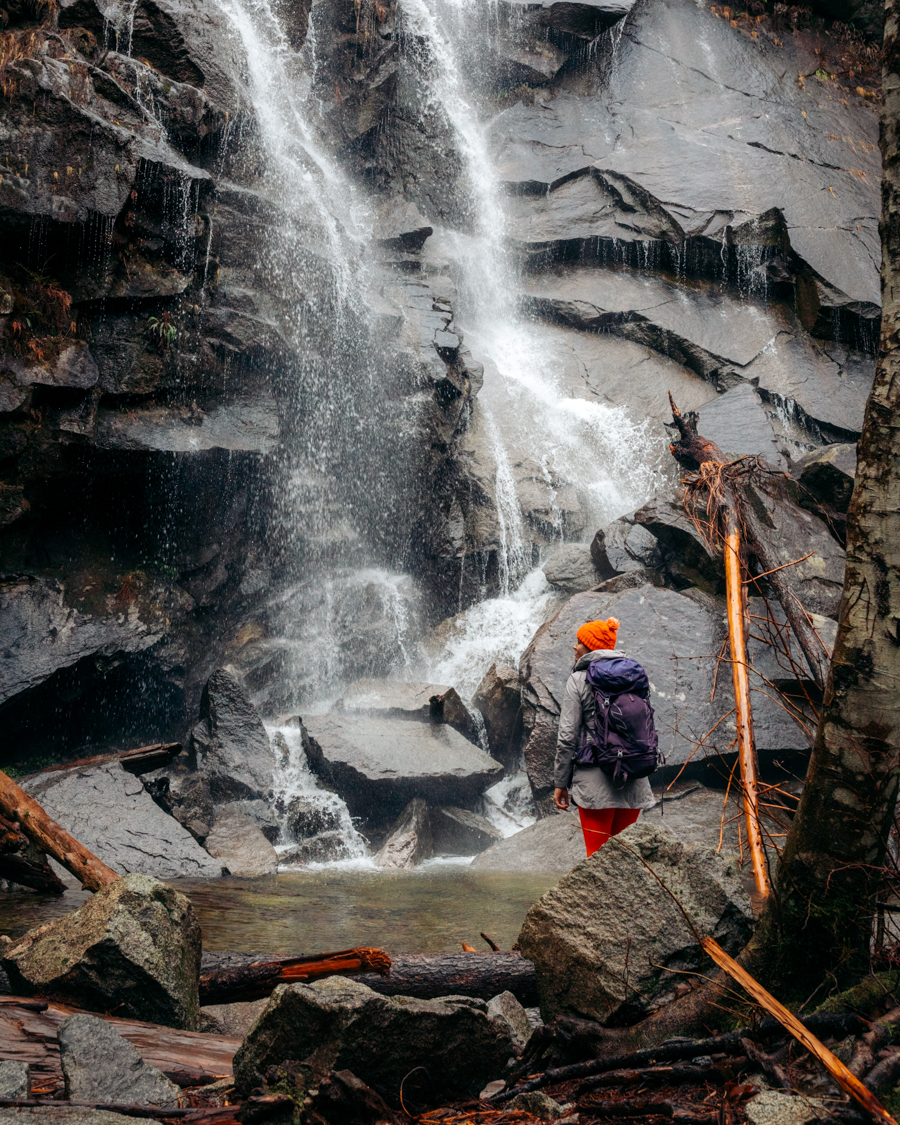
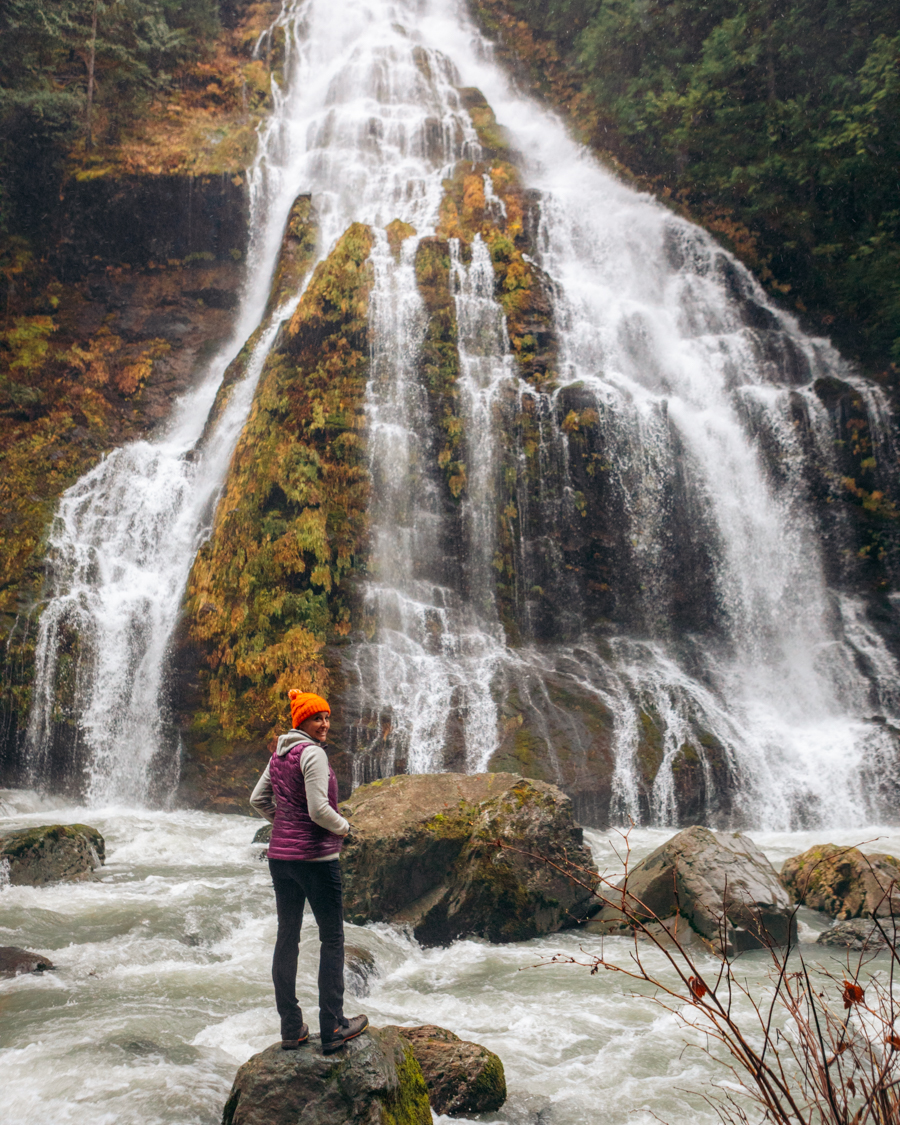
Bridal Veil Falls (Near Lake Serene)
Short, punchy, and worth it. You can do just the falls if higher elevations are snowy.
Mini Day Plan:
Waterfall hike → coffee at the Espresso Chalet → home before dark.
Boulder River Trail (Near Darrington)
This one deserves its own line.
The road in is pothole-heavy but manageable. It’s not glamorous, but it’s fine.
The full trail runs about eight miles out and back — but you don’t need to do all of it. Within the first mile and a half, you’re already at a beautiful, powerful waterfall.
After heavy rain, the river is loud and the forest feels deep and green.
It’s one of those hikes that works especially well in winter because you’re not chasing views — you’re leaning into the mood.
Snowshoeing in Washington (Pick the Right Zone)
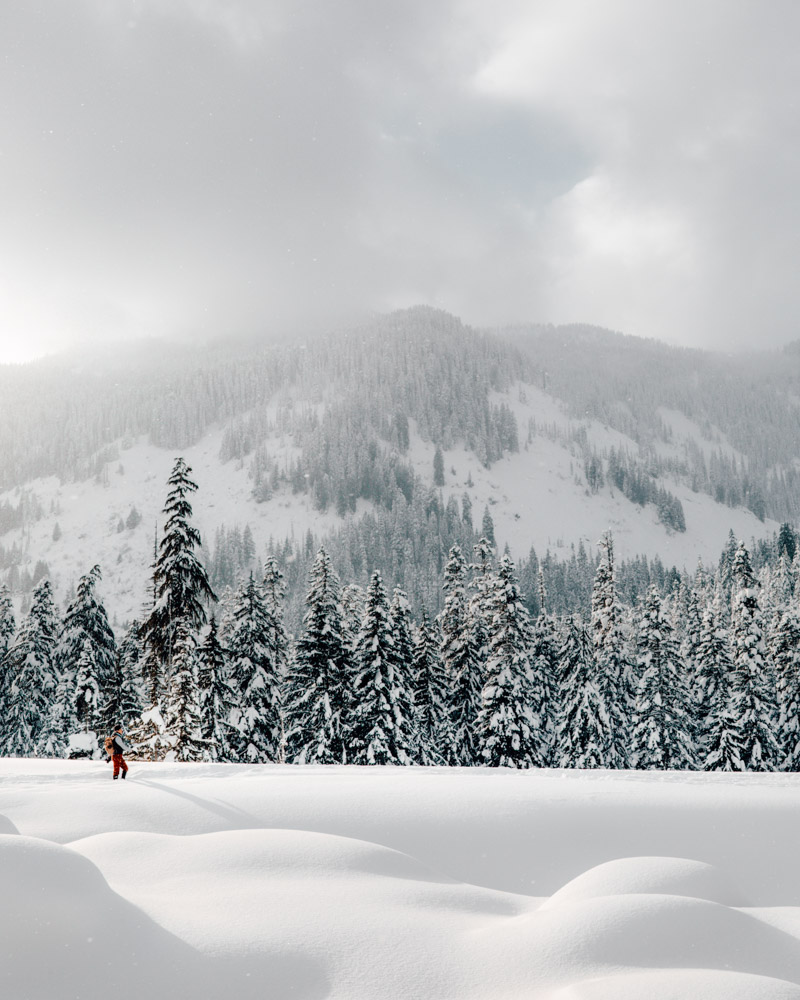
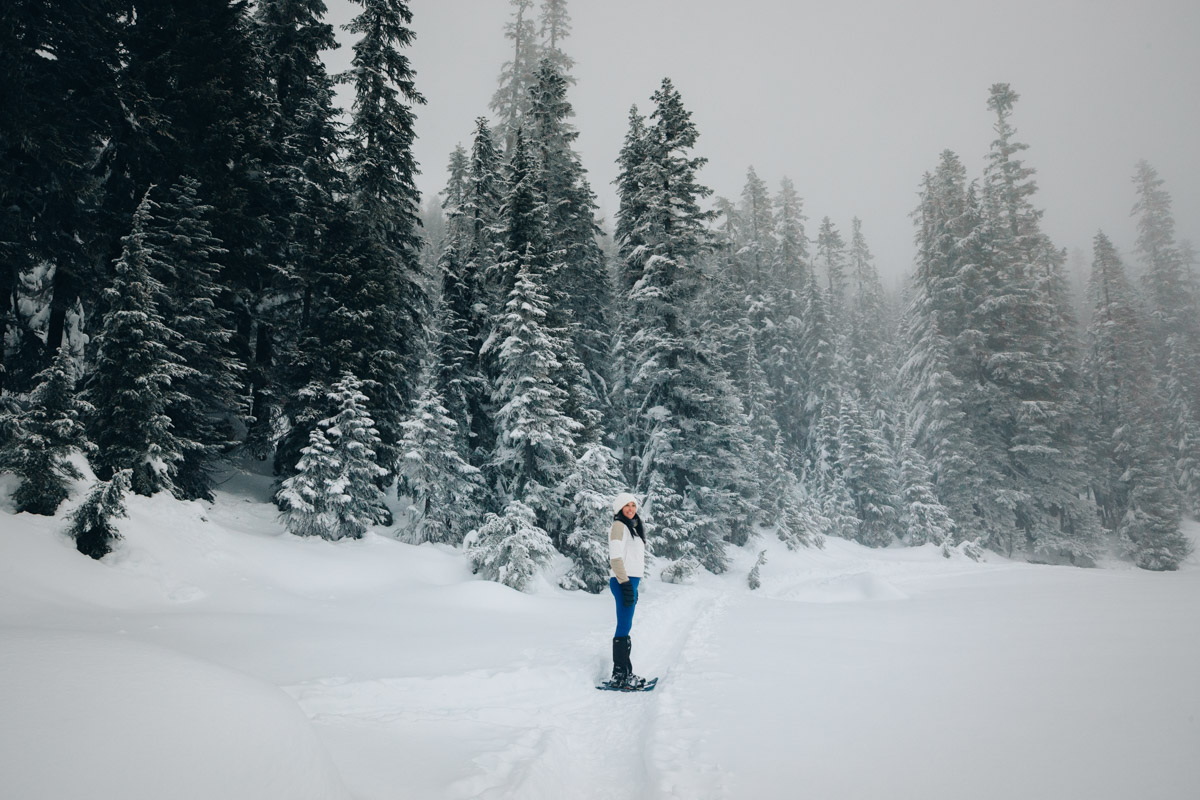
Snowshoeing is the most accessible way to get into Washington’s winter landscape without needing ski skills.
But elevation and road access matter more than mileage.
Here’s how I choose where to go.
If you’re new to snowshoeing, you don’t need to overthink gear. I use the MSR Evo Trail Snowshoes — they handle PNW conditions well and work for beginners and experienced hikers alike. Pair them with OR Crocodile Gaiters to keep snow out of your boots. Trust me on the gaiters — one post-hole without them and you’ll understand.
One more thing that makes winter days easier: a simple foam sit pad. It’s tiny, cheap, and it means you can actually sit down for a snack without soaking your pants.
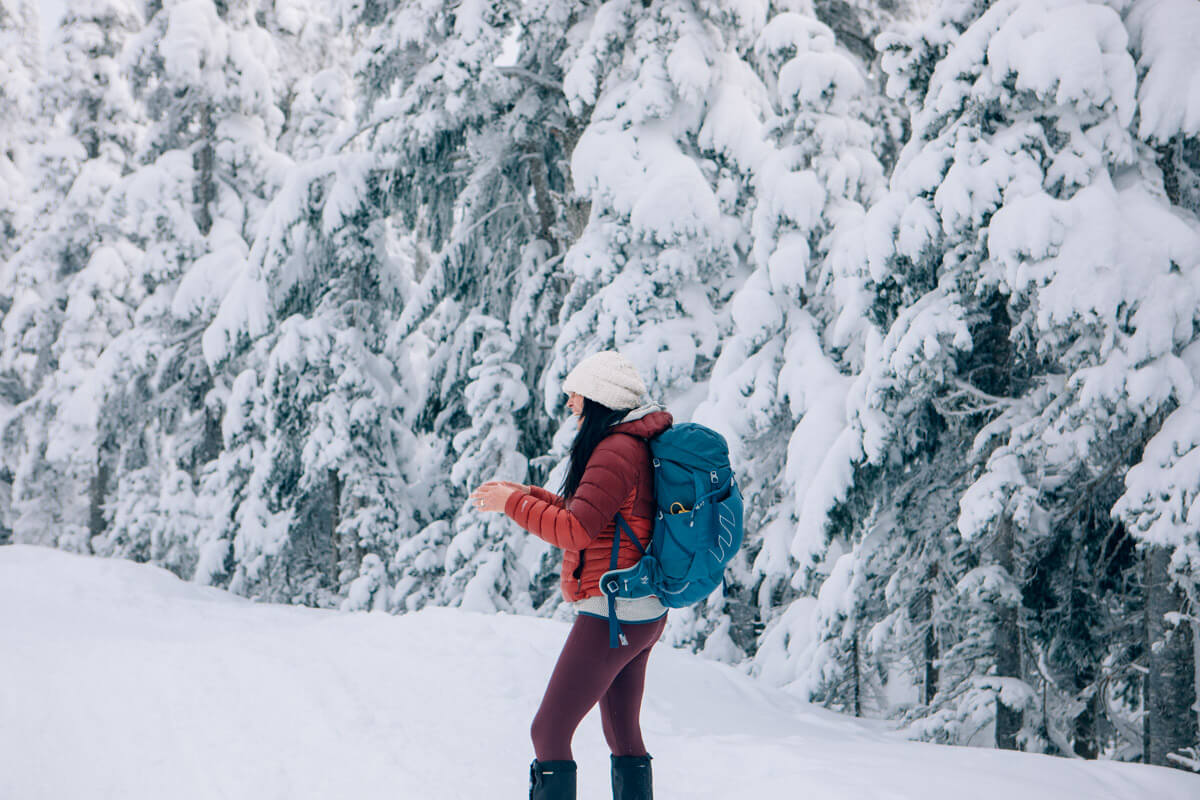
Snoqualmie Pass (Closest, Easiest Snow Access)
This is the simplest snow zone from Seattle. It’s predictable, plowed, and usually accessible even when other passes feel uncertain.
Gold Creek Pond
Flat, scenic, ideal for beginners and kids. You’re looping through snow-covered forest with open mountain views. Hard to mess up.
Wearing the Smartwool Classic Merino Wool Baselayer under your shell makes a bigger difference than adding a heavier jacket. Merino regulates temperature so you’re not overheating on the hike and freezing when you stop for hot chocolate.
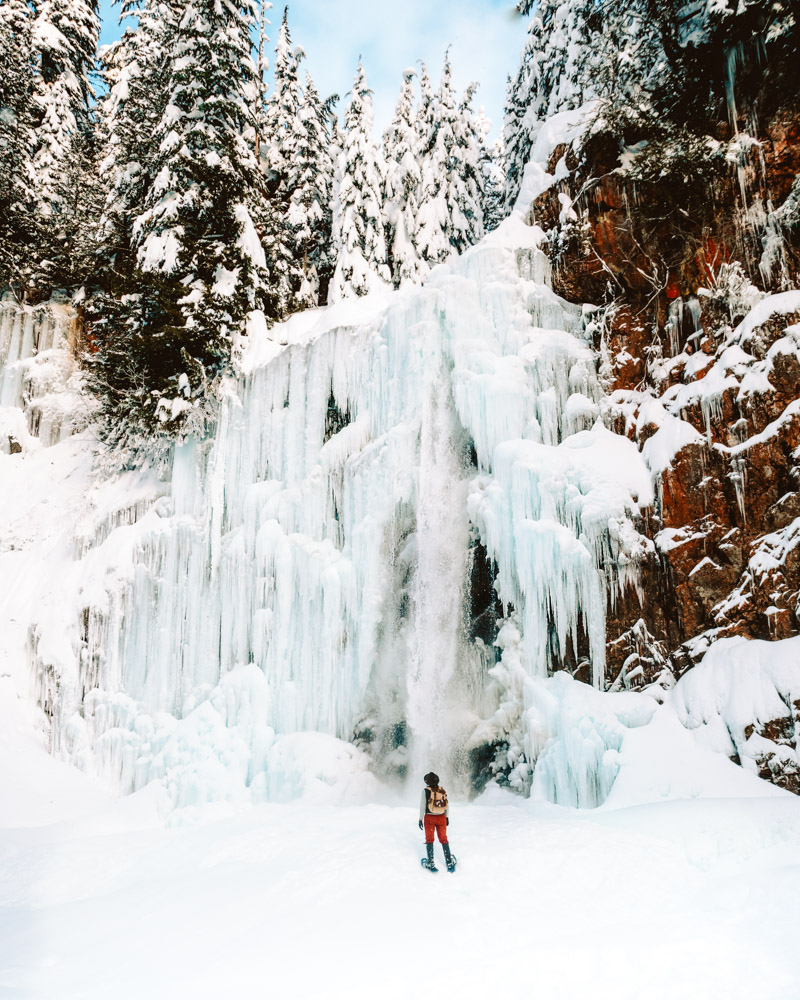
Franklin Falls (Winter Route)
Important distinction: the winter route follows a different approach than the summer trail. It’s slightly longer but accessible and leads to a frozen waterfall that feels dramatic without requiring a huge effort.
Expect company on weekends. Go early if you want quiet.
Mini Day Plan:
Morning snowshoe → lunch at Dru Bru or Commonwealth at the Pass → home before dark.
It’s a very low-friction snow day.
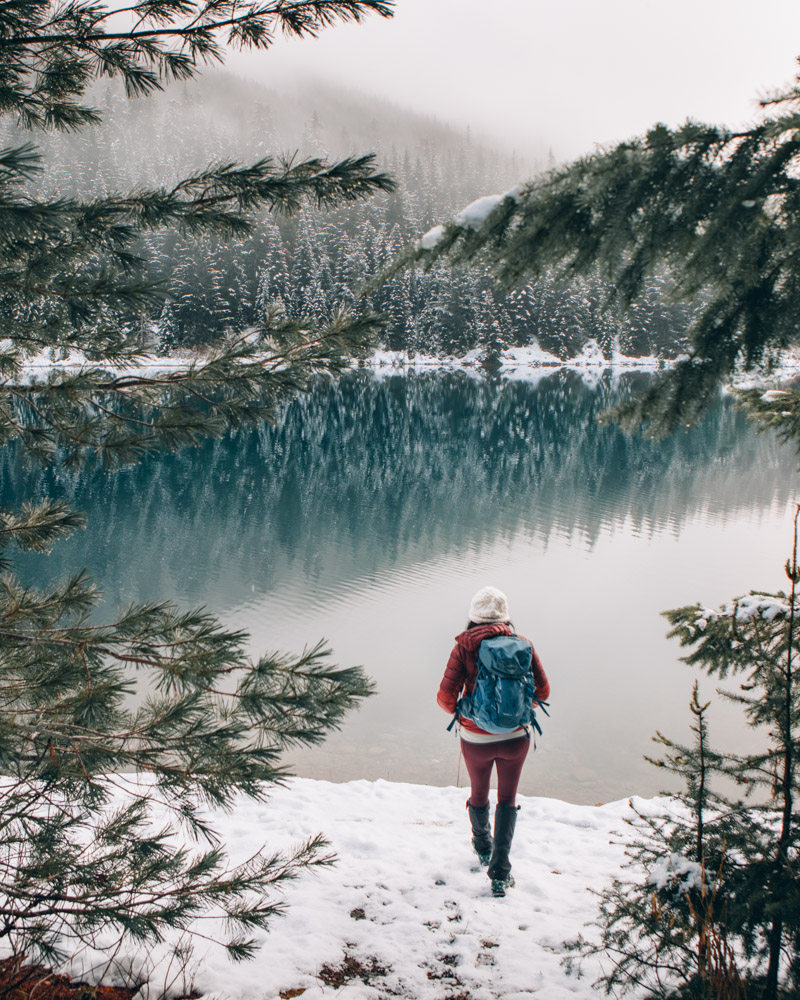
Stevens Pass + Skyline Lake (More Effort, Bigger Payoff)
If you want something slightly more alpine, Skyline Lake near Stevens Pass is one of the better winter snowshoe options.
It’s short but steady, and the views open up in a way that feels more “mountain” than Snoqualmie. Snow levels here are typically solid mid-winter.
You also have Nordic skiing and sledding at the Stevens Pass Nordic Center if you want to mix it up.
This zone gives you range — hike, ski, or keep it mellow depending on the day.
Mount Rainier (Paradise = Reliable Snow)
If you want guaranteed winter, Paradise is the the answer.
Chains are required to carry November through April and are often required to install — even for AWD. Plan accordingly.
Marked winter routes and ranger-led snowshoe walks make it structured and manageable. The snowpack here is consistent, and Rainier above you never gets old.
This is where I go when I don’t want to guess whether there will be snow.
Mini Day Plan:
Snowshoe loop → sledding hill → warm up at the visitor center → drive back down before dark.

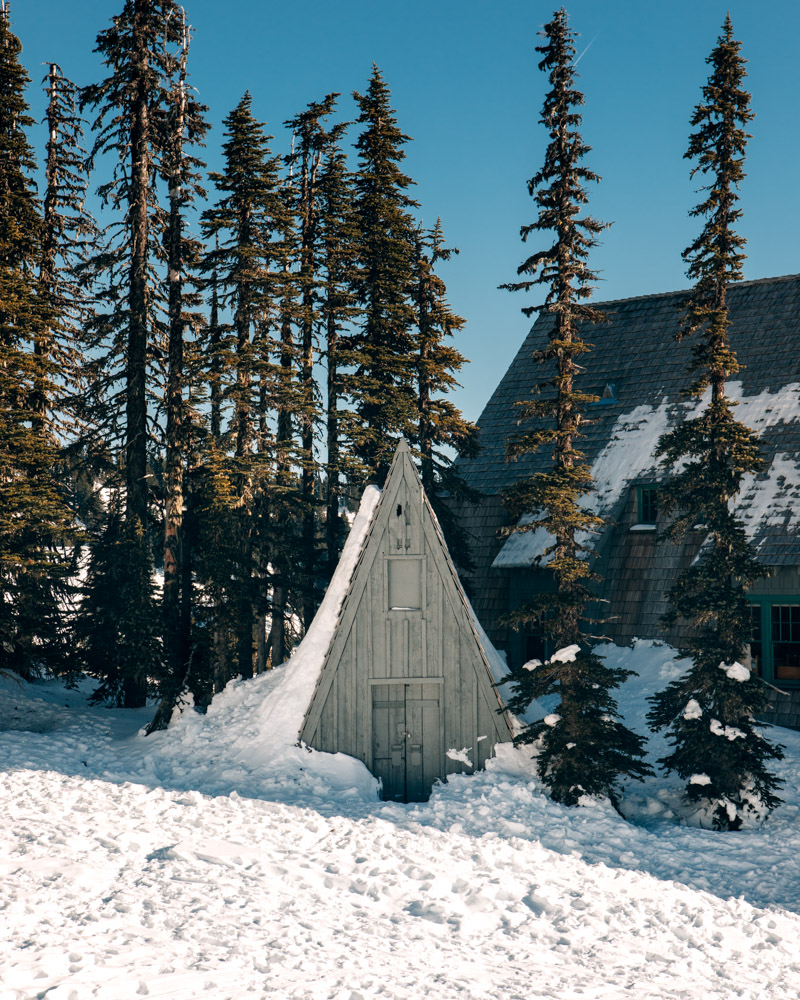
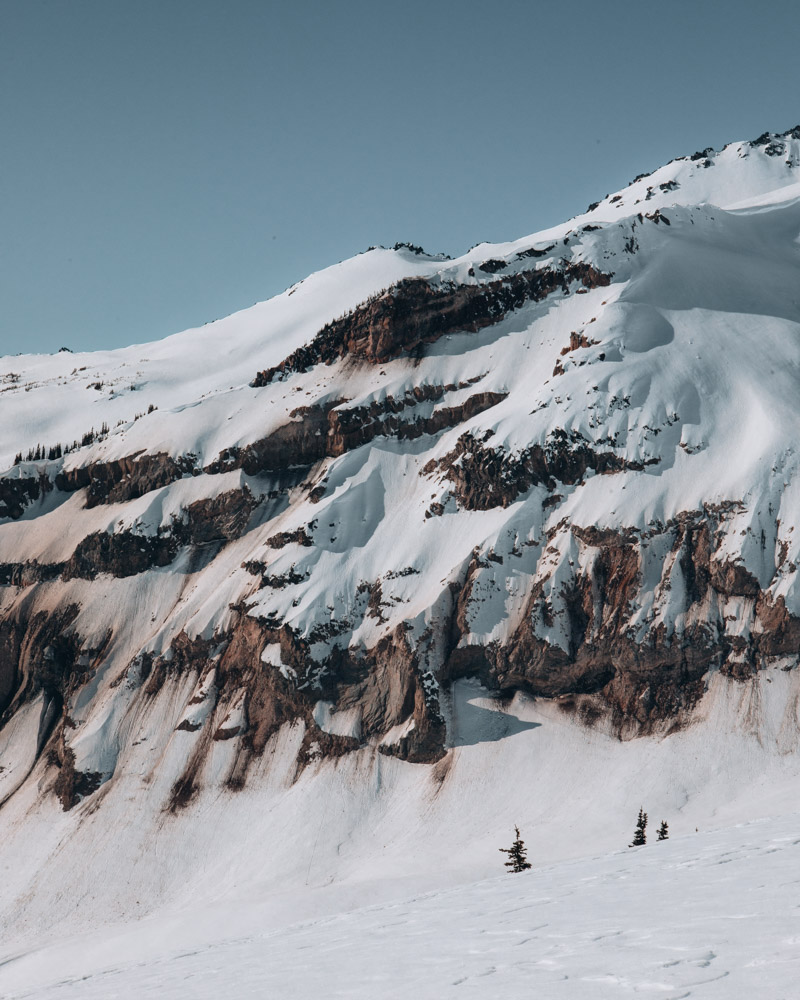
Mount Baker / Artist Point (Conditions Matter)
The Mount Baker ski area gets hammered with snow.
In winter, the road to Artist Point closes, so you snowshoe up from the ski area. It adds distance and exposure.
On a clear day, it’s one of the most dramatic winter views in Washington. On a storm day, it can feel like a white room.
This one rewards weather awareness.
Snowshoeing here isn’t about chasing miles.
It’s about choosing the right elevation, checking WSDOT before you go, and keeping the day simple enough that it feels worth it.
Some days are three miles and hot chocolate.
Some days are alpine light and wide-open views.
Play in the Snow (No Summit Required)
Not every winter day needs mileage.
Sometimes the goal is simple: find deep snow, park, and stay put.
Building a snow cave, digging a tunnel, sledding until gloves soak through — this is the kind of winter that sticks with kids.
And honestly, adults too.

Mount Baker / Heather Meadows
If you want deep, reliable snow, this is the place.
The Baker zone gets hammered all winter. You don’t need a long hike — just space and layers.
On a clear day, it feels alpine. On a gray day, it still works.
Snoqualmie Pass + Mountain Loop Highway
Snoqualmie Sno-Parks (Hyak, Gold Creek) are the obvious choice for quick snow days close to Seattle.
But Mountain Loop Highway deserves more attention in winter.
Lower elevations stay green and moody most of the season — but as you drive toward the winter gate closure, snow usually starts to build. There are small pull-offs where you can stop and play without committing to a long hike.
If you park at the gate and walk toward Big Four, it shifts. It feels alpine. The cliffs rise up, snow stacks along the road, and the scenery is bigger than people expect that close to home.
It’s accessible. It’s dramatic when you want it to be. And on a gray Sunday afternoon, that’s often exactly enough.
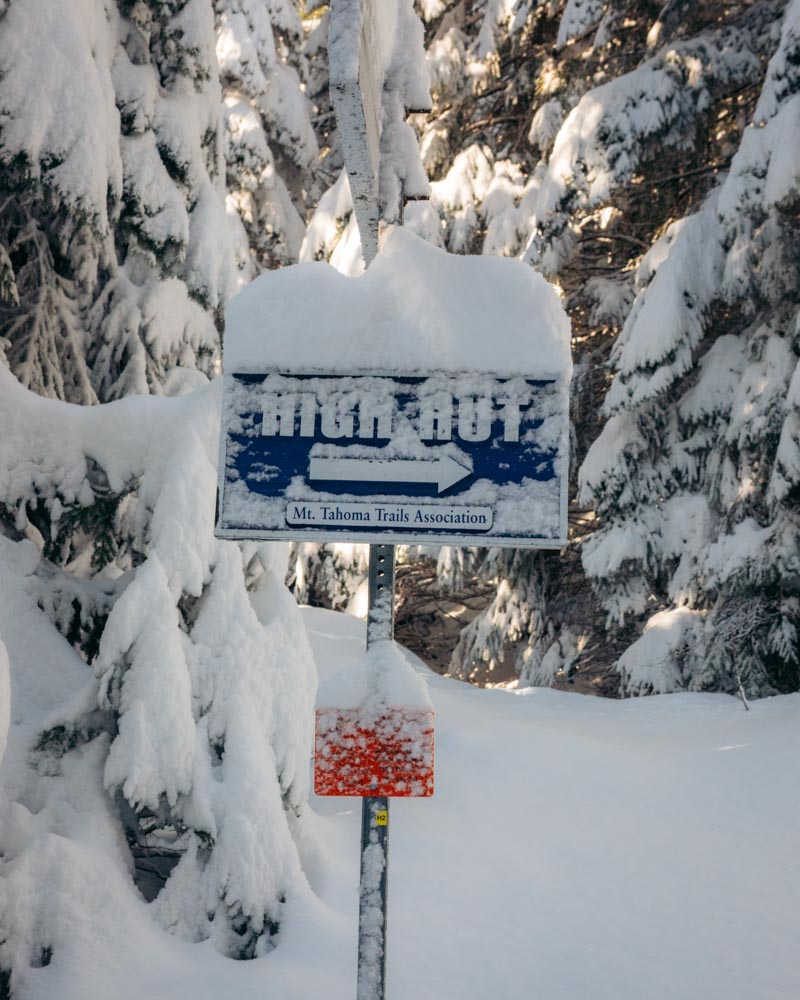
Snowshoe to a Winter Hut (Tahoma Trails + Beyond)
If you like the idea of winter camping but don’t want to sleep in a tent, huts are the middle ground.
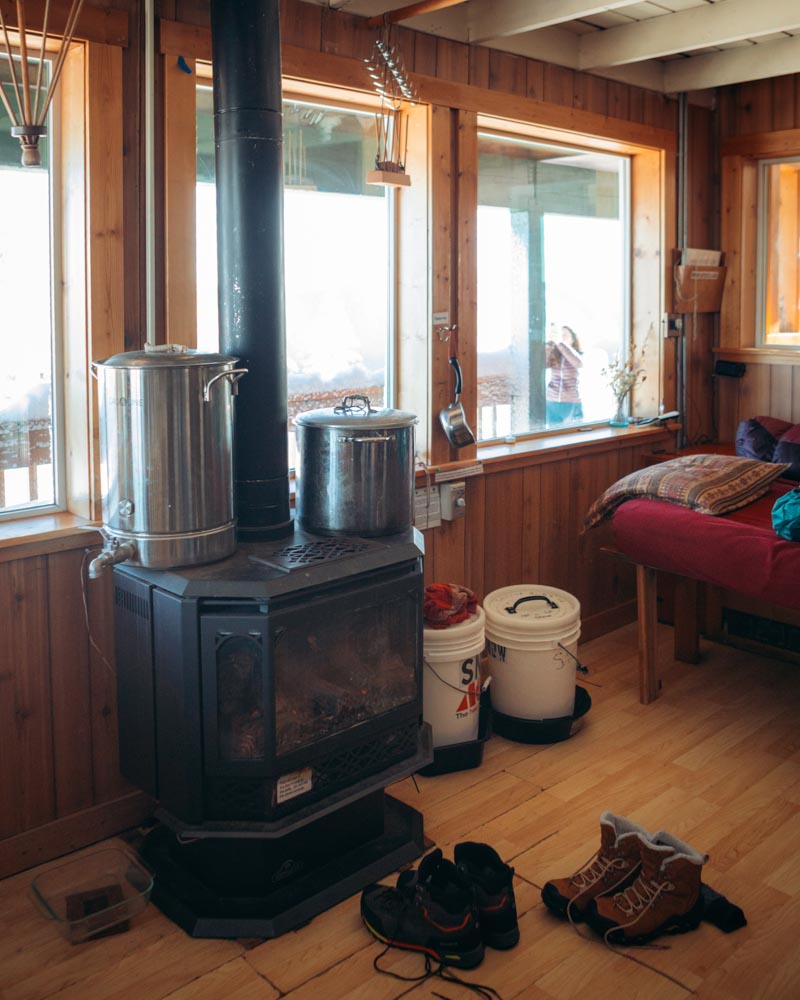
You earn the stay with a steady snowshoe climb — but end the day inside with a wood stove, bunks, and real walls.
It feels adventurous, but contained.
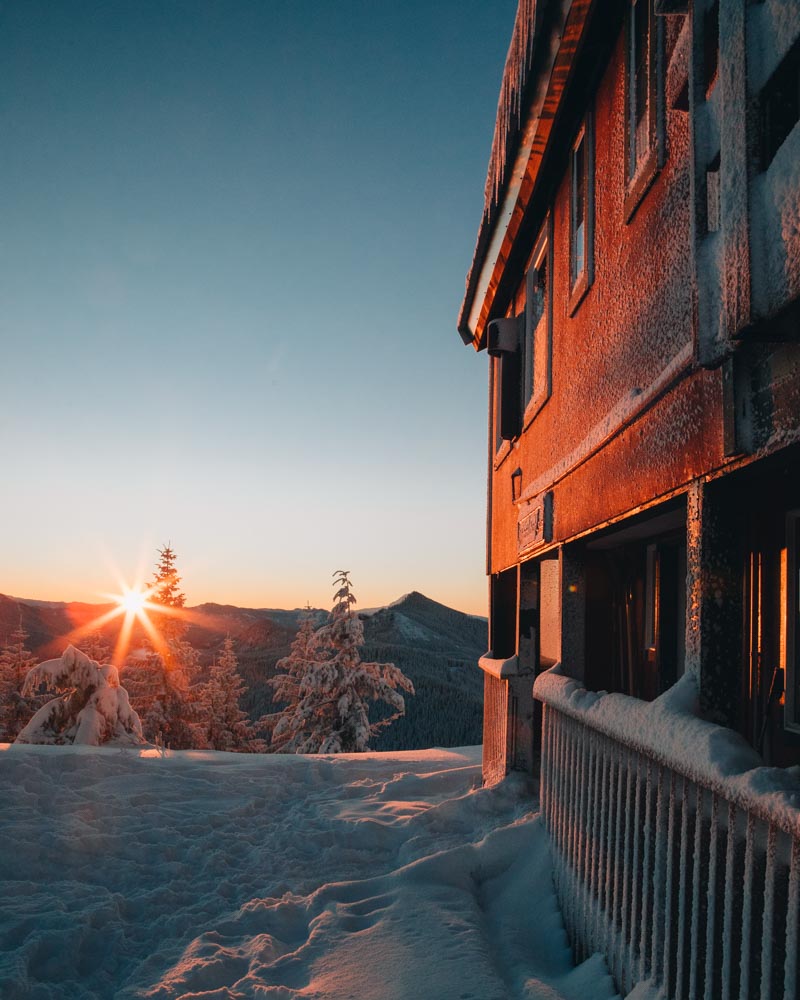
High Hut (Tahoma Trails, Near Mount Rainier)
High Hut is the one most people talk about — and for good reason.
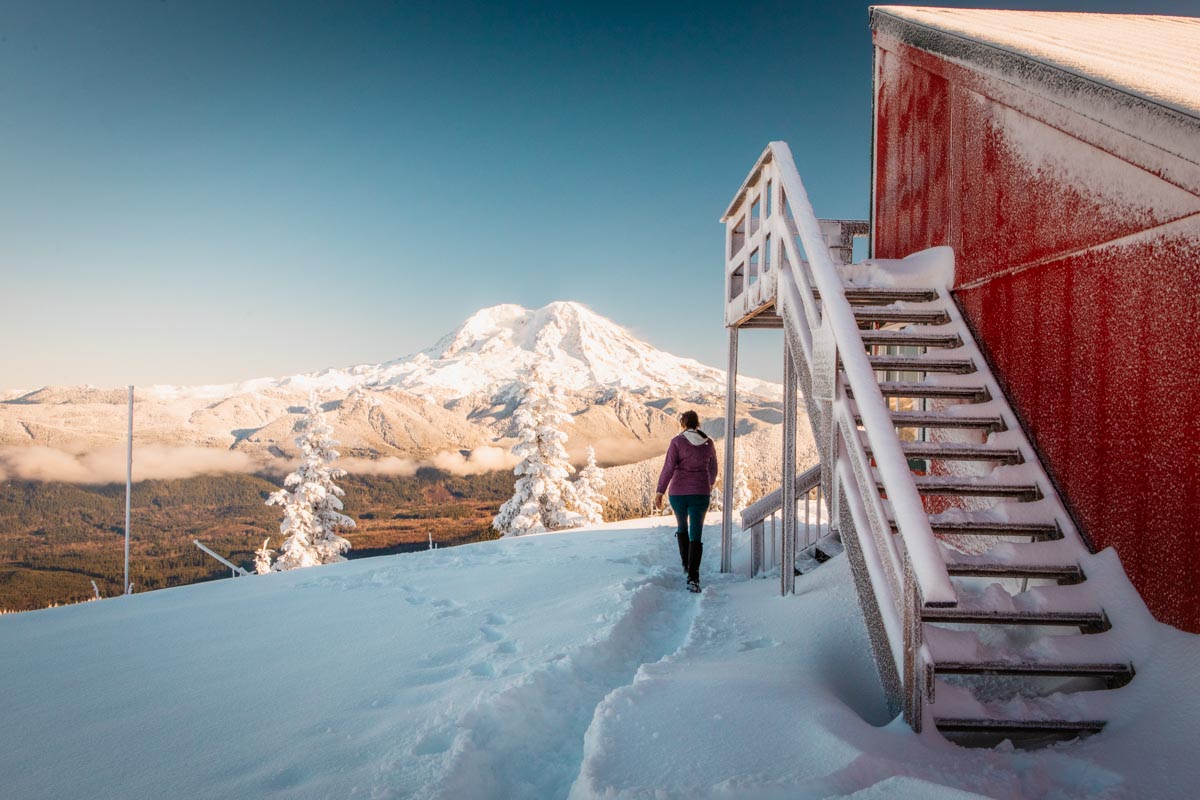
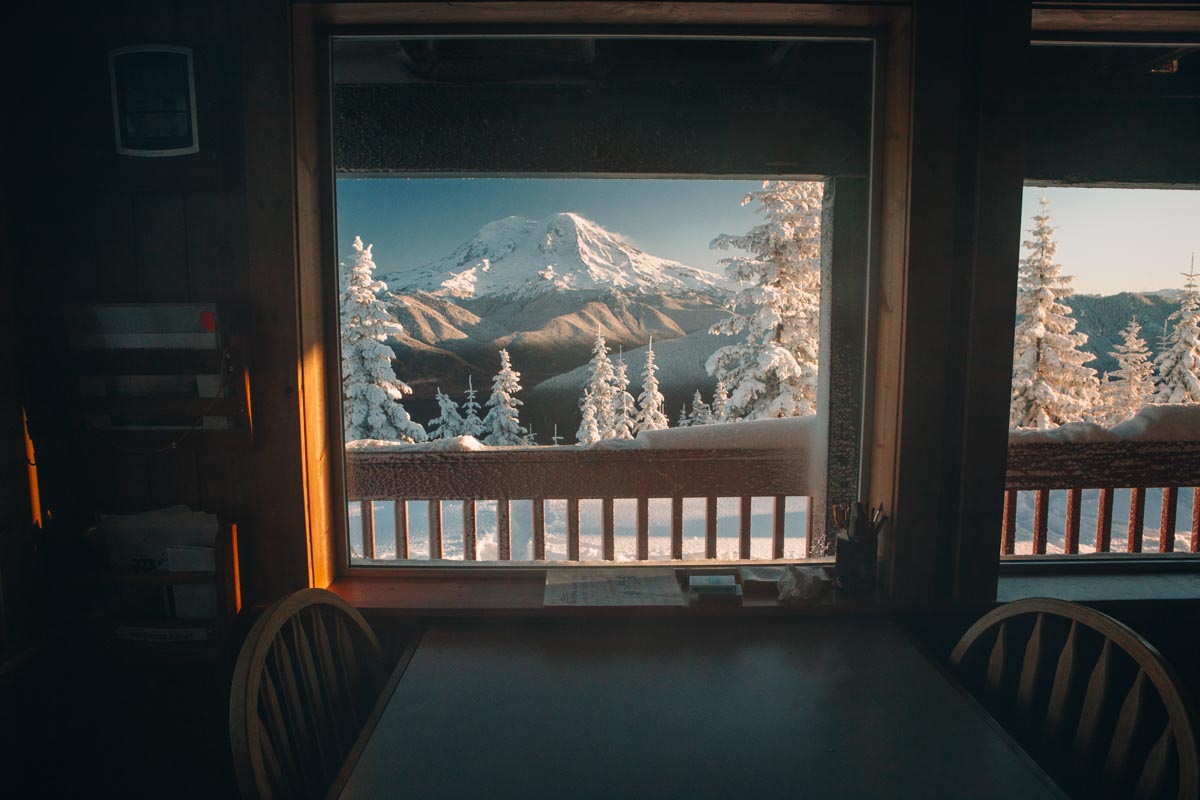
The snowshoe approach is steady and uphill, but manageable. When you reach the top, Rainier dominates the skyline. On a clear winter day, it feels expansive. On a storm day, it feels wild.
Inside, it’s simple but comfortable:
- Bunks
- Wood stove
- Shared cooking space
You bring your sleeping bag and food. The hut brings the structure.
Tahoma Trails also offers other cabins and yurts in the area — so if High Hut is booked or you want something slightly less exposed, you have options.
Mini Plan:
Snowshoe up late morning → settle in before dark → slow evening by the stove → sunrise coffee with Rainier → snowshoe out before midday.
It’s one of those trips that feels bigger than it is.
Methow Valley Huts (Rendezvous System)
If you prefer east-side sunshine, the Rendezvous Huts in the Methow Valley offer a hut-to-hut setup accessed by ski or snowshoe.
This is better if you:
- Enjoy cross-country skiing
- Want more reliable cold, dry snow
- Don’t mind committing to mileage
Reservations fill quickly here, especially mid-winter weekends.

Sleep in a Fire Lookout (Winter Stays)
I’ve stayed in ten fire lookouts across Washington and Oregon, and winter changes the experience completely.
Some are simple and rugged. Some (especially a few in Oregon) feel slightly more built out, with sturdier wood stoves and tighter seals against the wind. But regardless of the state, winter makes them quieter and more intentional.
It’s not luxury. It’s elevation and exposure and early darkness.
And it’s absolutely worth doing in Washington if you’re prepared for what it is.
If you want the full list of the best ones (and which are realistic overnights), start here: Best Fire Lookout Hikes in Washington.
Washington Lookouts That Work in Winter
North Mountain Lookout
Drive-up in summer, snow-covered road approach in winter. Harder to book, but the open views make it feel properly elevated once you’re up there.

Steliko Lookout
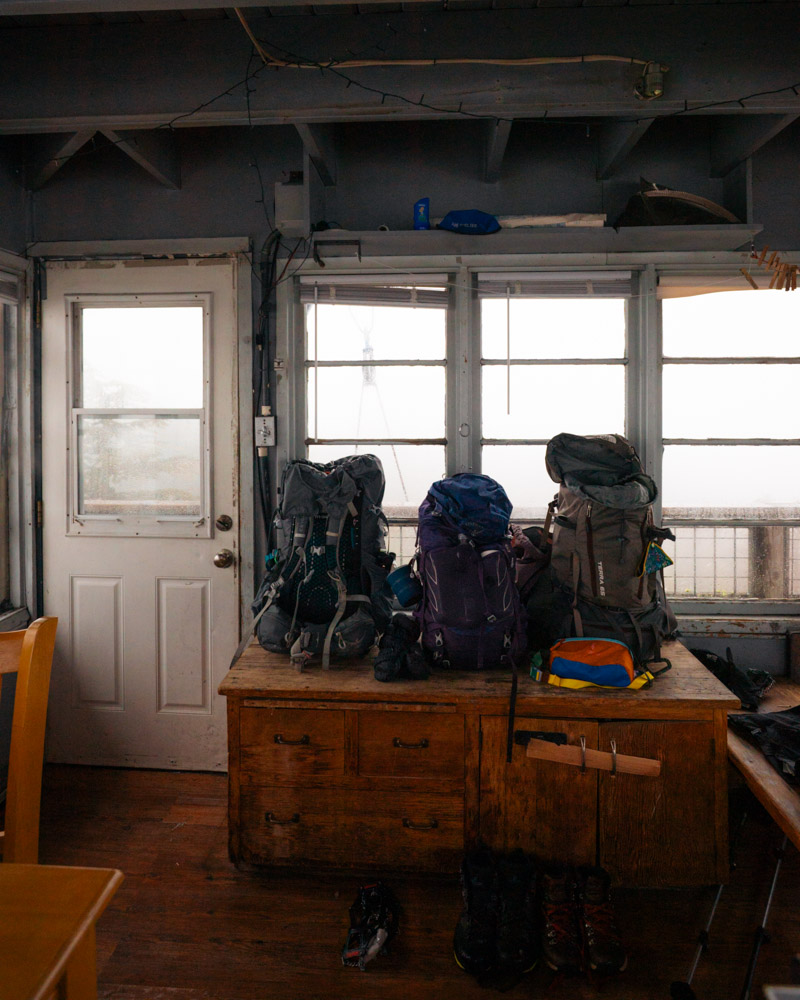
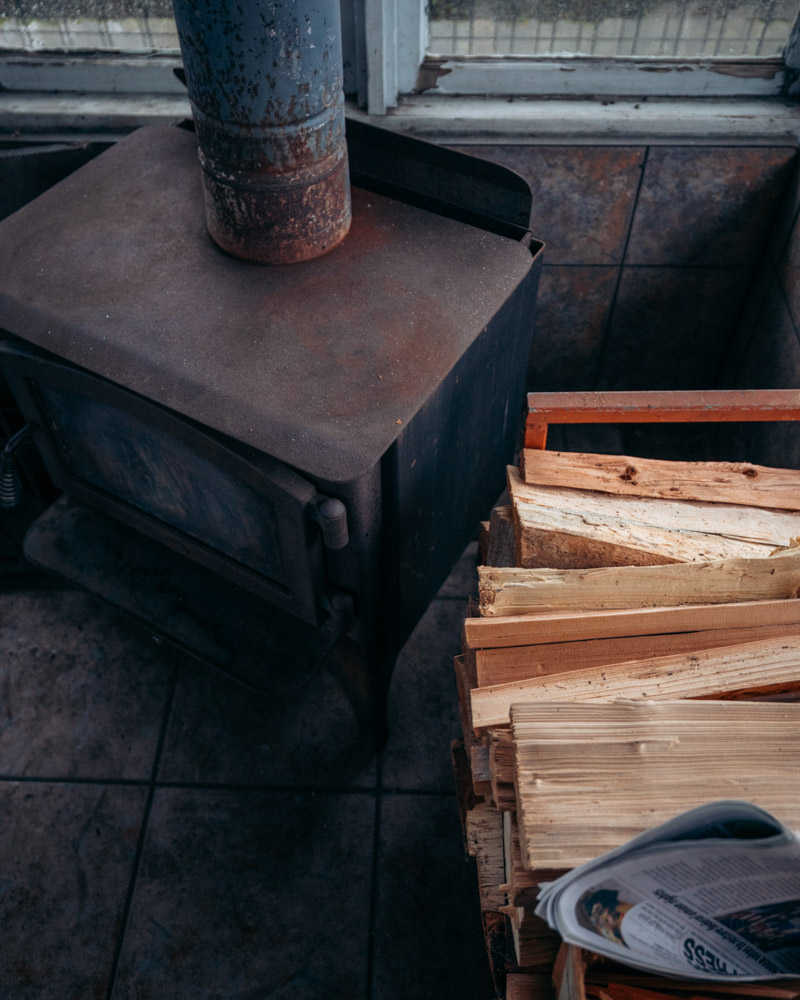
I’ve stayed here multiple times. In winter, the road approach becomes a steady snow-covered climb. It’s manageable but quiet. If weather rolls in, you feel it. If skies clear, you wake up above clouds.
It’s simple — and that’s what makes it good.
Heybrook Lookout
Short hike, big payoff. Because it’s so close to Highway 2, it’s one of the more accessible winter overnights — and one of the most competitive to reserve.
If you’re new to lookouts, this is a realistic place to start.
Washington lookouts tend to feel more rugged than some of the Oregon ones I’ve stayed in. Expect cold floors, basic setups, and no running water.
But that simplicity is part of the draw.
Book a Cozy Cabin: Snow + Wood Stove + Views
Sometimes the best winter plan is to lower the bar.
Change scenery. Light a fire. Go outside once. Come back in. Play some games.
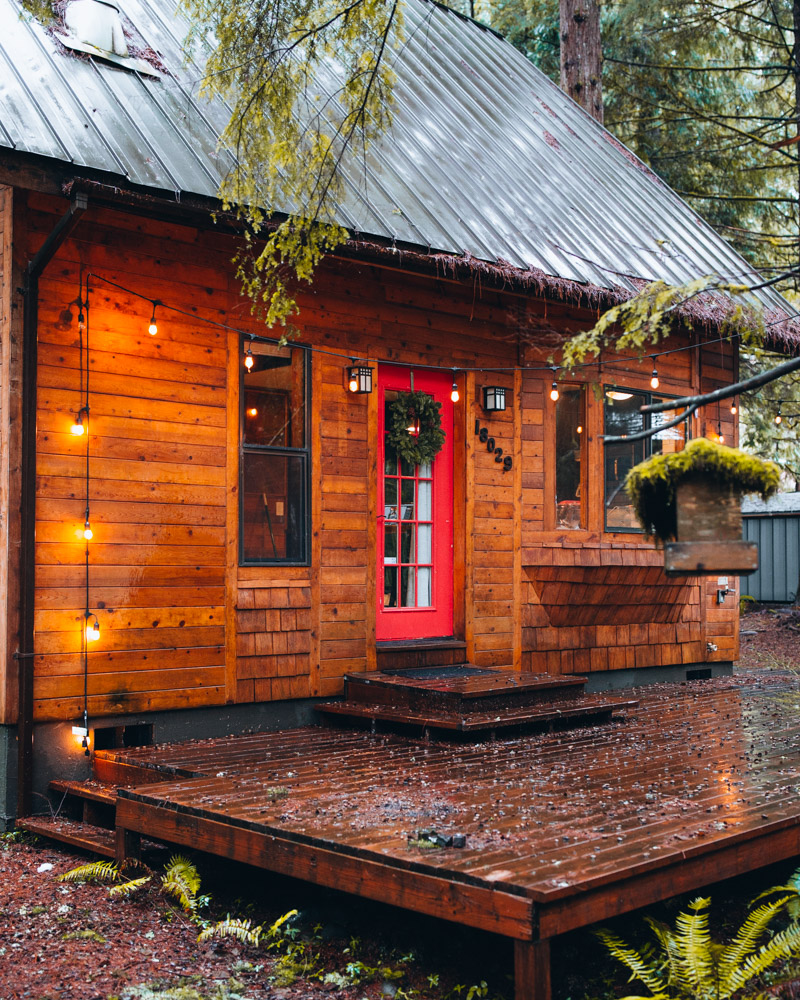
Cabins work in winter because they make the season feel intentional instead of something to get through.
Here’s how I think about where to go.
Methow Valley (Mazama + Winthrop)
If you want sun and reliable snow, go east.
Mazama and Winthrop sit in the Methow Valley, which gets colder, drier winter conditions than the west side. That means brighter days and snow that actually sticks around.
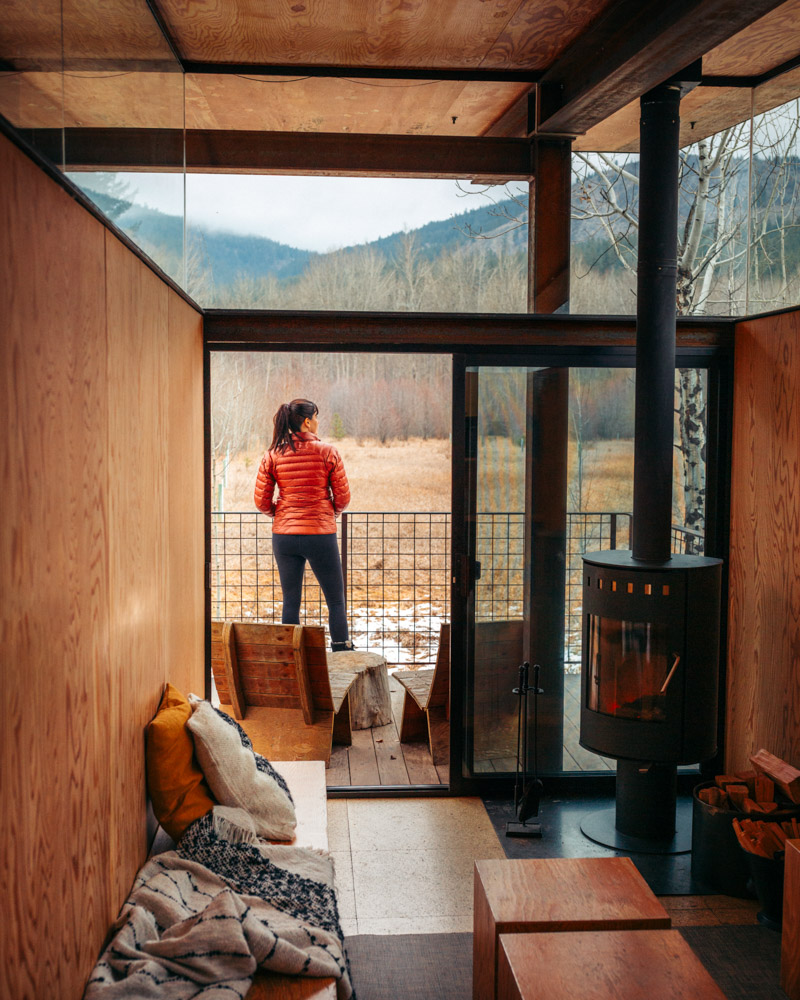
The Rolling Huts in Mazama are one of my favorites — modern, simple, wood stoves, and Nordic ski or snowshoe access right out the door. It’s easy to do a short loop and be back inside before it feels like too much.
Winthrop adds a walkable downtown and access to one of the largest groomed cross-country ski systems in the country. Even if you’re not skiing hard, the groomed trails make winter feel manageable.
Just check pass conditions — getting there means committing to the drive.

Mt Baker Area (Snow Above, Wet Below)
This one requires nuance.
The Mount Baker ski area and Artist Point zone get serious snow. But the town of Glacier often stays wet and rainy at lower elevations.
So the cabin strategy here is different.
Stay in Glacier or along the Mount Baker Highway for access — but plan your snow time higher up near Heather Meadows or the ski area parking lot.
On a clear winter day, snowshoeing toward Artist Point is incredible. On a warm, rainy stretch, you may be driving up to find snow. But you can easily find a few lowland hikes like Nooksack Falls and the Horseshoe Bend Trail.
Hot tubs are a bonus. And if you stay at Snowater Resort they have two pools which are a hit with kids.
Leavenworth (Low friction winter)
Leavenworth is the easy button.
Snowshoe trails nearby. Tubing hills. Walkable town with a cultural German vibe. No guesswork.
It’s popular for a reason — winter is straightforward here.
If you want predictability with a little structure, this is it.
Index + Highway 2 (Flexible Winter Corridor)
Highway 2 gives you range.
Stay near Index and you’ve got low-elevation forest hikes that are often green and moody all winter — Wallace Falls, Bridal Veil, Heybrook Ridge. Perfect when you want movement without committing to deep snow.
Drive higher toward Stevens Pass and it’s full winter:
- Alpine skiing at Stevens Pass
- Nordic skiing and sledding at the Stevens Pass Nordic Center
- Snowshoe routes right off the pass
This is the “choose your level” winter base.
Ski one day.
Waterfall hike the next.
Or pivot based on weather.
It’s one of the easiest winter setups from Seattle because you don’t have to overthink it.
Ashford (Mount Rainier Base Without the Crowds)
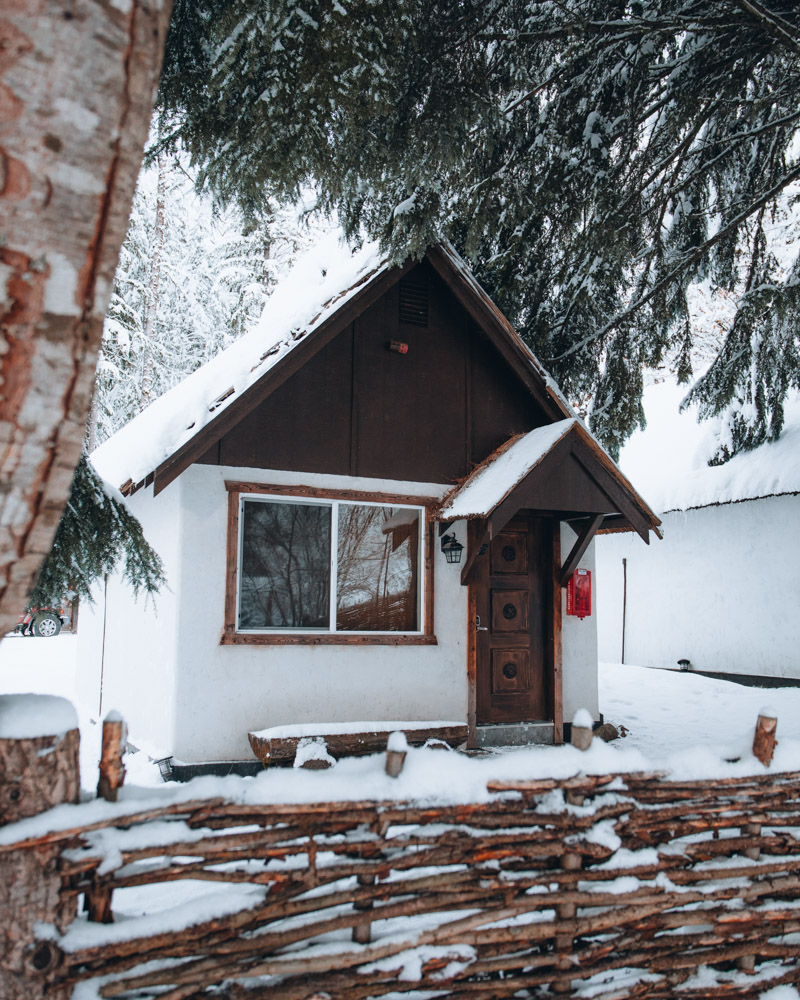
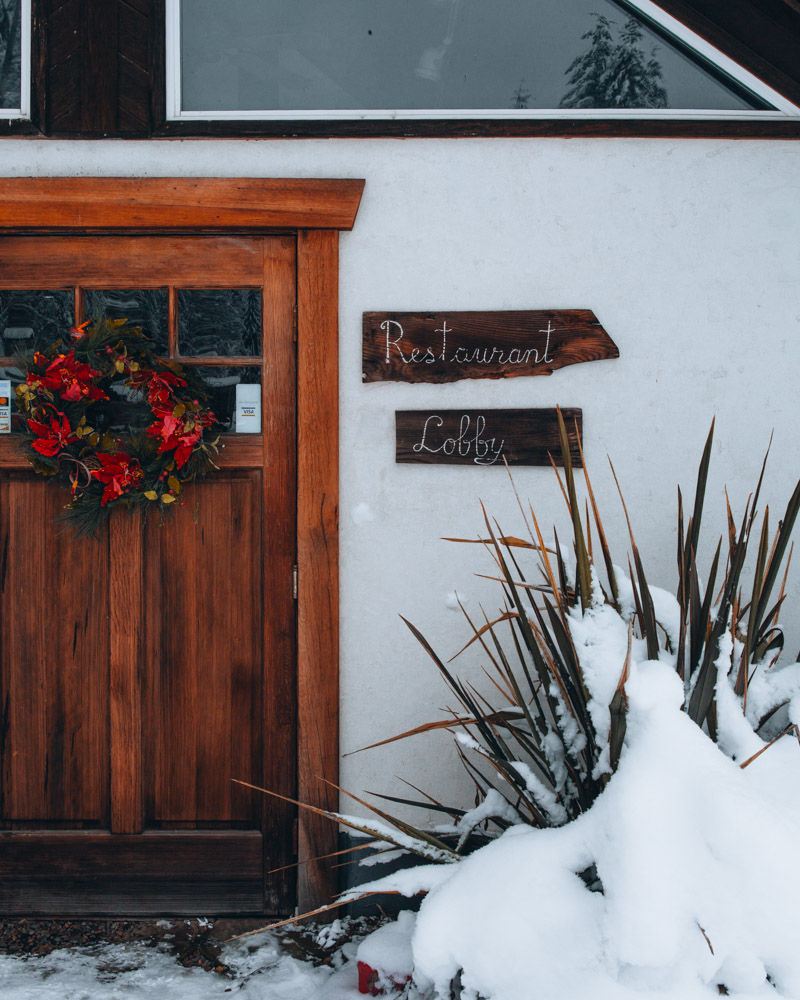
Ashford works in winter because Paradise almost always has snow — even when lower elevations don’t.
You can stay in a cabin with mossy forest views and drive up into real winter within 30–40 minutes. Snowshoeing, sledding, ranger-led walks — it’s all there. Then you come back down to quieter roads and a warm place to land.
This is a good choice if you:
- Want reliable snow without crossing a pass
- Like structured snow access (groomed areas, parking, facilities)
- Prefer short winter outings over full-day missions
Just remember: snow at Paradise doesn’t mean snow at your cabin. Elevation changes quickly here.
Soak in a Hot Spring After a Winter Hike
Cold air + hot water is the whole point of winter soaking.
But winter access changes the experience. Snow adds mileage. Darkness comes early. And hiking out wet at 4:45pm in January feels very different than July.
These are the ones I’d consider.
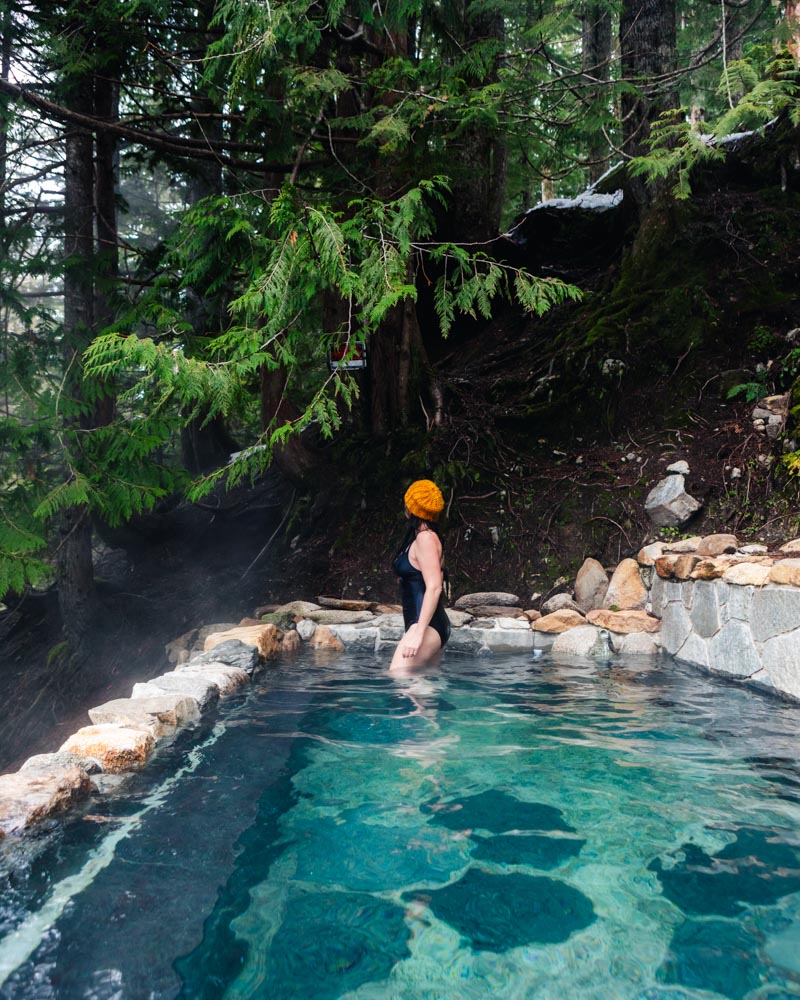
Scenic Hot Springs (near Stevens Pass)
The most popular — and still worth it.
A moderate hike leads to soaking pools nestled in the trees. In winter, snow often covers sections of the trail and traction right before the pools can be helpful depending on conditions. It gets a bit steep and trafficked so it can be very slippery.
Reservations are required and they book fast. Access details and trail updates can shift seasonally, so I always check before heading up. If you want a full breakdown of the trail, booking process, and what to expect, I’ve written a complete guide to Scenic Hot Springs here.
Goldmyer Hot Springs (Cascade foothills)
More remote. More effort.
It’s a 4.5-mile hike one way — longer and slower in winter. Limited capacity keeps it from ever feeling crowded, and the setting feels small and intimate once you’re there.
Reservations are required, and the access road is no joke in winter. Mud, snow, and changing conditions can make the drive part of the adventure. If you can get there, though, it’s worth it.
And yes — nudity here is real. It’s clothing-optional, and that’s part of the experience. Go in knowing that and it’s completely fine.
Plan carefully. Give yourself extra daylight. This one rewards you for being prepared.
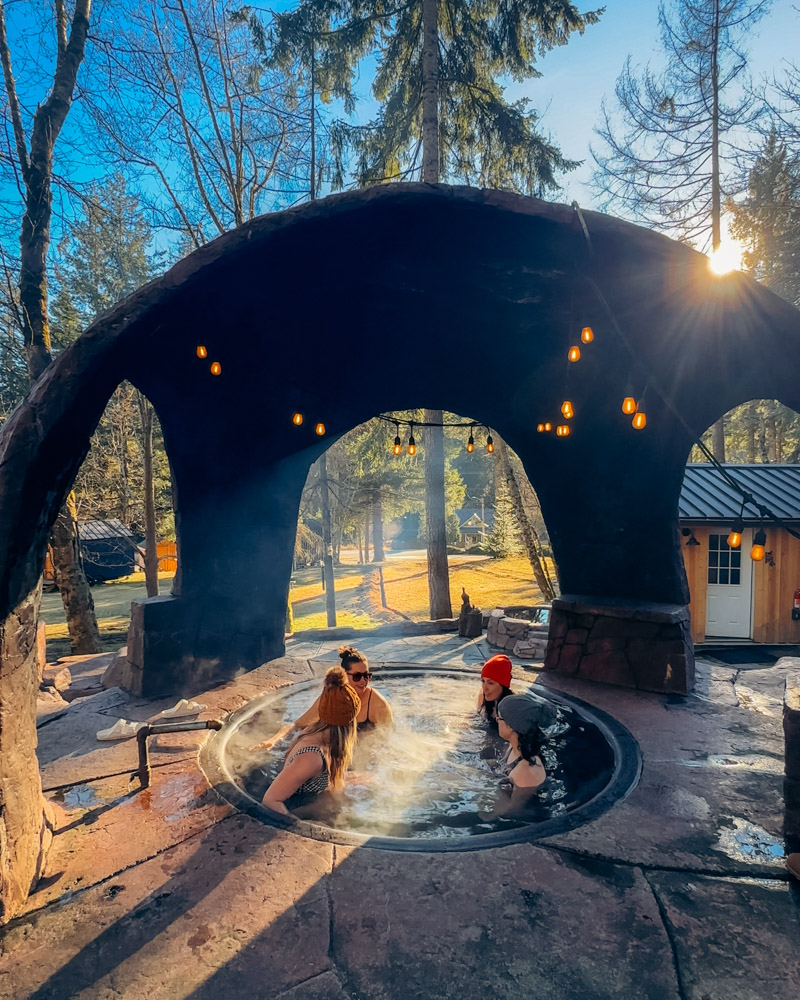
Cannibal Hot Tub (Ashford, near Rainier)
Not a natural hot spring, but a private wood-fired outdoor tub you can reserve. (bonus they have a sauna and a cold plunge) You can check more about it here.
If you’re already near Mount Rainier, this is the easy option — no long hike, no icy trail exit in the dark.
It pairs well with a Paradise snowshoe day or a quiet Ashford cabin weekend.
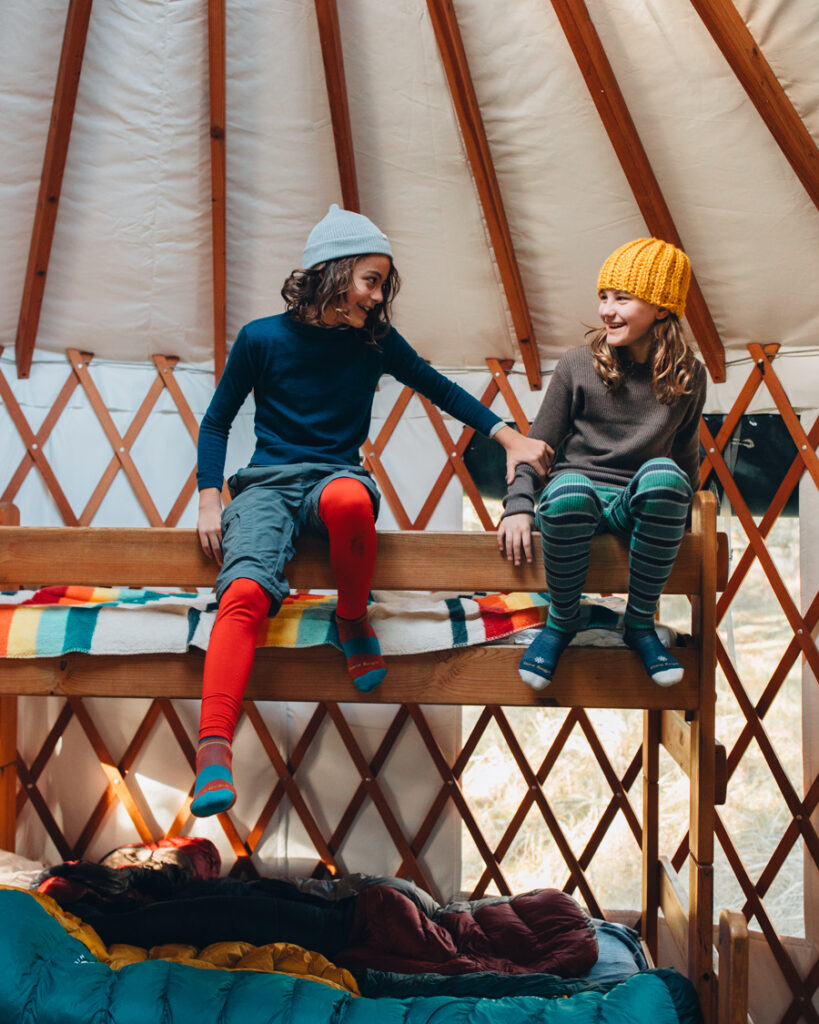
Book a Yurt on the Coast (Storm-Watching Without Tent Camping)
If you love the winter coast but don’t love tent camping in sideways rain, yurts are the best compromise.
You get the moody beach energy — wind, sea stacks, empty shoreline — without spending the night wet and cold. You can cook dinner inside, dry your layers, and still walk out to the water whenever the light looks good.
Winter is actually a great time to do this. The beaches feel quieter, the weather feels dramatic in a good way, and you don’t have to fight for parking or campsite space.
Book through Washington State Parks, and if you’re aiming for a weekend, reserve early. The most popular parks still fill up even in the off-season.
Cape Disappointment State Park
This is my favorite.
Heated yurts tucked into coastal forest, just a short walk from Benson Beach. You’ve got two historic lighthouses, miles of trails, and some of the best storm-watching in the state. Even when it’s raining, it doesn’t feel like a “wasted” weekend — you can do a short hike, walk the beach, then come back and get warm.
If you want a full weekend plan — what to pack, what it’s really like inside, and how we structure the days — I wrote it all out here: Yurt Camping at Cape Disappointment.

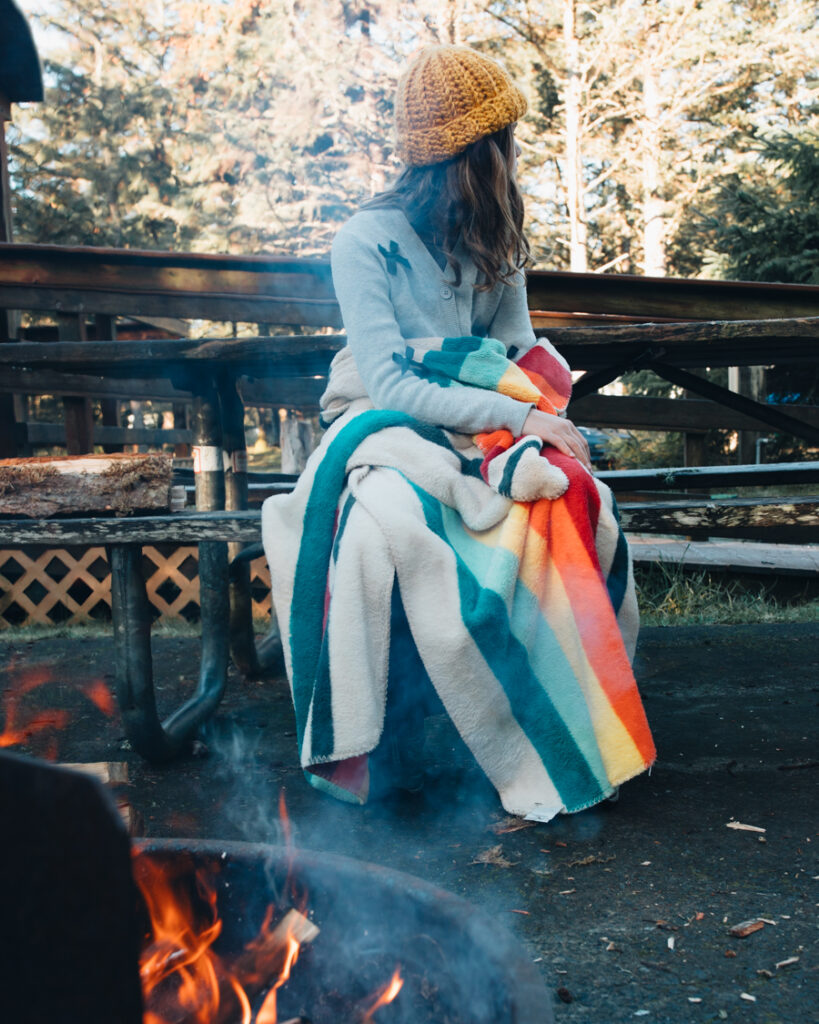


Pacific Beach State Park
This is the “ocean right in front of you” version. Beach access is easy and the vibe is wide-open and exposed — perfect for watching waves and low winter sunsets when the sky clears.
Grayland Beach State Park
Simple, family-friendly, and easy. A good choice when you want the coast without a big itinerary — just beach walks, warm drinks, and an early night.
Kanaskat-Palmer State Park
Not coastal, but worth including if you want a yurt weekend closer to Seattle. It’s forested and quiet, right on the river — a good option when you want the “warm base + cold walk” rhythm without committing to a long drive.
Yurts make winter feel doable. You still get the mood. You just don’t have to suffer for it.
Want the full guide? Check out: Yurt Camping at Cape Disappointment
Try Luge Sledding at Loup Loup Ski Bowl (Worth the Drive)
This is one of the most unexpectedly fun winter activities we’ve done in Washington.
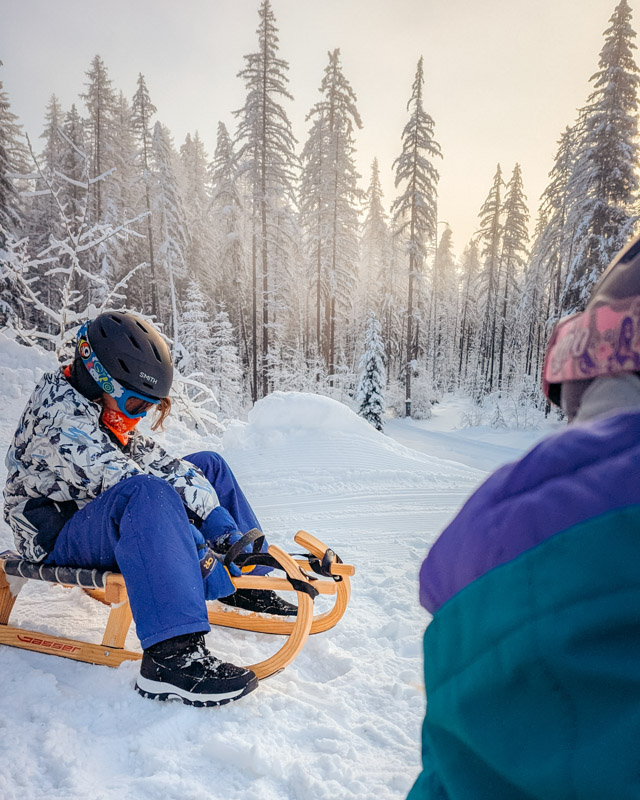
Loup Loup Ski Bowl near Winthrop offers luge sledding — a groomed 1,500-foot run down the mountain on a wooden sled. You get a quick lesson, a snowcat ride to the top, and then you do multiple runs back-to-back.
It’s fast, it’s smooth, and it feels completely different than normal sledding.
This is the kind of winter outing that works especially well with kids because it’s exciting without being complicated. No gear to rent. No full-day lift tickets. Just show up, bundle up, and have a ridiculous amount of fun.
What to Know Before You Go
Dress warmer than you think — the wind at the top can bite.
Bring goggles or sunglasses if it’s snowing or bright.
Book ahead for weekends (spots can fill).
Plan for about 2–3 hours total.
If you’re already doing a Methow Valley weekend — Winthrop or Mazama — this is the perfect “one big activity” day: luge, hot chocolate, dinner, early night. Easy.
It’s one of those things you’ll talk about all the way home.
My Simple Winter Day Kit (What I Actually Use)
- Waterproof rain shell
- Merino baselayer
- Microspikes
- Snowshoes + gaiters
- Thermos + hand warmers for the car
- Offline maps app
Winter Logistics + Tips
Sno-Park Permits
Required at most winter trailheads November through April. $25/season or $5/day. Buy online or at REI.
Road Conditions
- Check WSDOT before mountain passes
- Carry chains November through April (required by law on many passes)
- AWD helps you go; it doesn’t help you stop
Avalanche Safety
If you’re heading into the backcountry beyond groomed trails, check NWAC (Northwest Avalanche Center) for current conditions. They offer free one-hour classes to learn how to read forecasts.
Cell Service
Expect spotty or no service at most trailheads and backcountry locations. Download offline maps before you go.
Winter in Washington rewards the people who go anyway
Winter here isn’t a season to wait out. It’s a season to choose on purpose.
Most days won’t be bluebird. They’ll be gray and wet and a little inconvenient — the slushy parking lots, the late sunrise, the “are we sure?” feeling at the trailhead.
But those are the days that end up being memorable.
The waterfalls are louder. The coast feels wilder. The ferry decks are quiet. And when you do find snow, it feels like a bonus instead of a requirement.
Pick something that fits the day. Layer up. Check WSDOT. And go anyway.
Frequently Asked Questions
Where can you snowshoe near Seattle?
Snoqualmie Pass is the closest and easiest option — Gold Creek Pond and Franklin Falls (winter route) are both accessible and beginner-friendly. Stevens Pass and Mount Rainier’s Paradise area offer more alpine terrain with reliable snowpack.
Are there hot springs in Washington?
Yes. Scenic Hot Springs near Stevens Pass requires a reservation and a moderate hike. Goldmyer Hot Springs is more remote at 4.5 miles each way. For something easier, the Cannibal Hot Tub near Ashford offers a private wood-fired soak with no hiking required.
What are the best winter day trips from Seattle?
A Whidbey Island ferry day (Langley, Ebey’s Landing, Deception Pass), waterfall hikes along Highway 2 (Wallace Falls, Bridal Veil Falls), and snowshoeing at Snoqualmie Pass are all doable in a single day.
Can you visit Mount Rainier in winter?
Yes. The road to Paradise is open in winter and offers snowshoeing, sledding, and ranger-led walks. Chains are required to carry and often required to install, even with AWD.
Do you need a Sno-Park permit in Washington?
Yes — required at most winter trailheads November through April. A season pass is $25 or a day pass is $5. Available online or at REI.
More Winter Adventures
- Winter Hiking: 17 Easy Winter Hikes in Washington — Family-friendly trails for cold weather
- Snowshoeing Guide: Start Snowshoeing in Washington — Complete beginner’s guide
- Fire Lookouts: Best Fire Lookout Hikes in Washington — History, views, and overnight stays
- Winthrop Weekend: Winter Weekend in Winthrop — Snow, sunshine, and luge sledding
- Bend Oregon: Winter Weekend in Bend — If you want to head south for skiing
❄️ Pro Tip: The best winter adventures often happen on the grayest days. Don’t wait for perfect weather — layer up and go anyway.