Is Hiking Maple Pass Loop Worth the Hype? (I Avoided It for Years)
I’ll be honest: I avoided hiking Maple Pass Loop for years. Not because I didn’t think it was beautiful—but because it was too popular. I’m that person who hears “everyone loves this trail” and immediately thinks “well, there must be better, quieter options.”
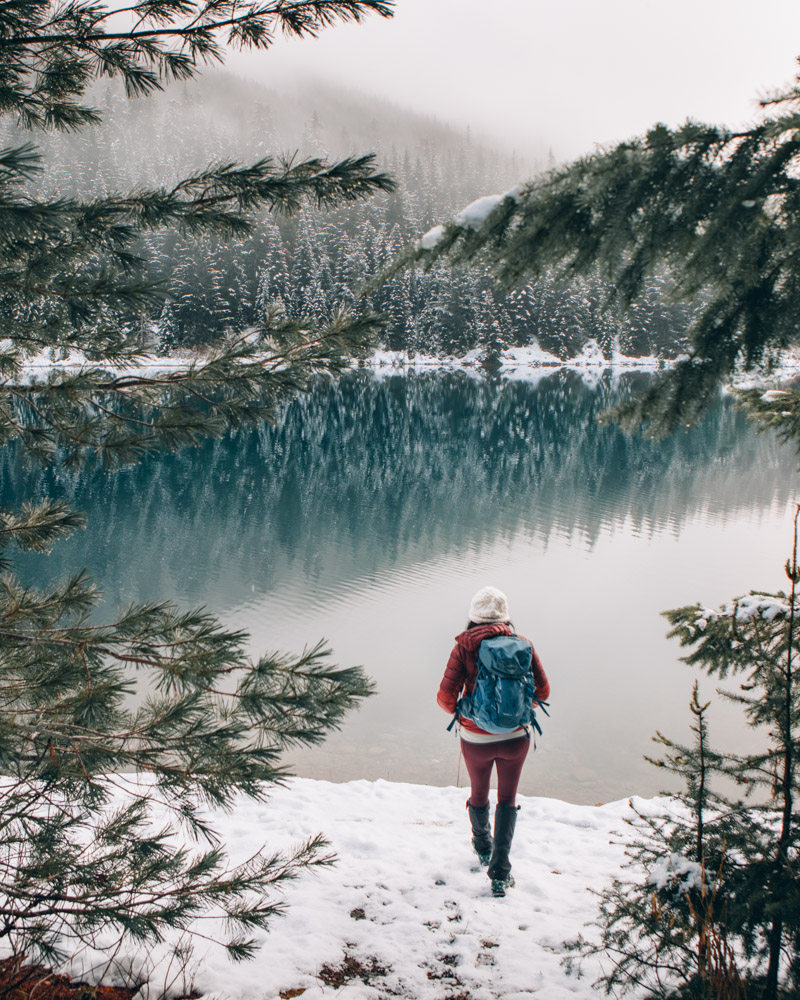
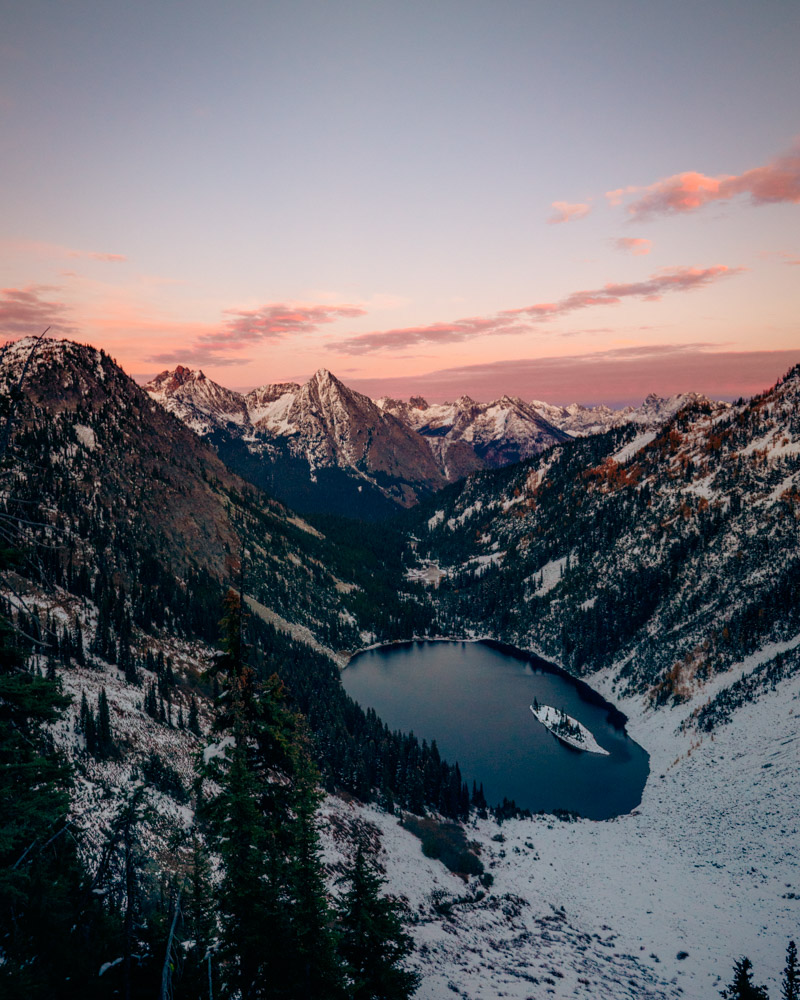
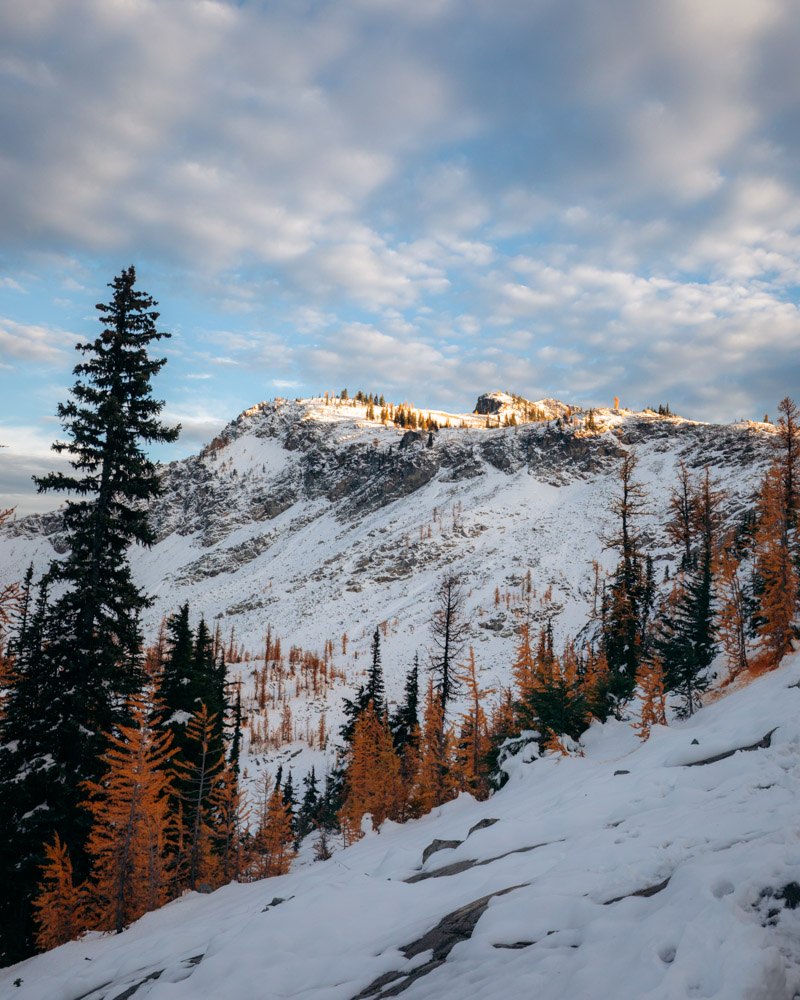
But after finally hiking Maple Pass Loop multiple times again recently— sunset, peak larches, even in the snow (I was trying for a sky with lots of color) —I have to admit I was wrong. This trail is famous for a reason. It’s not overhyped. It delivers more alpine beauty per mile than almost any other accessible trail in the North Cascades, and it does it in a way that works for hikers of all levels.
Yes, it gets crowded during peak larch season. But the crowds exist because the experience is genuinely exceptional—and with the right timing, you can have your sunrise-lit ridge line moment too.
→ Planning a full North Cascades trip? See my 3-Day North Cascades Itinerary or the Complete Guide to the North Cascades.
At a Glance
| Distance | 7.2 miles (loop) |
| Elevation Gain | 2,000 ft |
| Time | 4-6 hours |
| Difficulty | Moderate |
| Trailhead | Rainy Pass Picnic Area, Highway 20 |
| Pass Required | Northwest Forest Pass or America the Beautiful |
| Dogs | Allowed on leash |
| Best Season | July-October (peak larches early-mid October) |
| Crowds | Heavy during larch season; moderate in summer |
The truth is, Maple Pass is popular because it offers something rare: a legitimate alpine experience that doesn’t require extreme fitness, technical skills, or a multi-day commitment. That’s not a weakness—that’s actually what makes it brilliant.
Not everyone can (or wants to) hike 15 miles with 4,000 feet of elevation gain. Not everyone has the skills for route-finding or scrambling. But everyone deserves to see golden larches glowing on a ridge line, to stand above alpine lakes, to feel that North Cascades magic. Maple Pass delivers that—and it does it spectacularly.
Why Maple Pass Loop Actually Earns Its Reputation
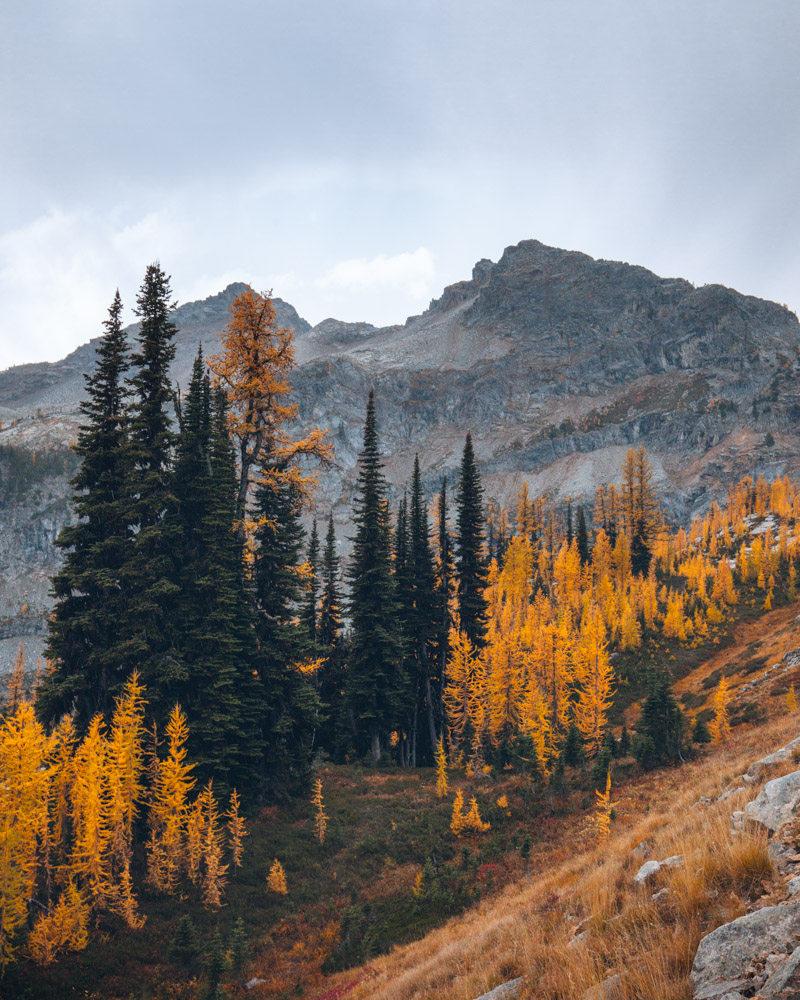
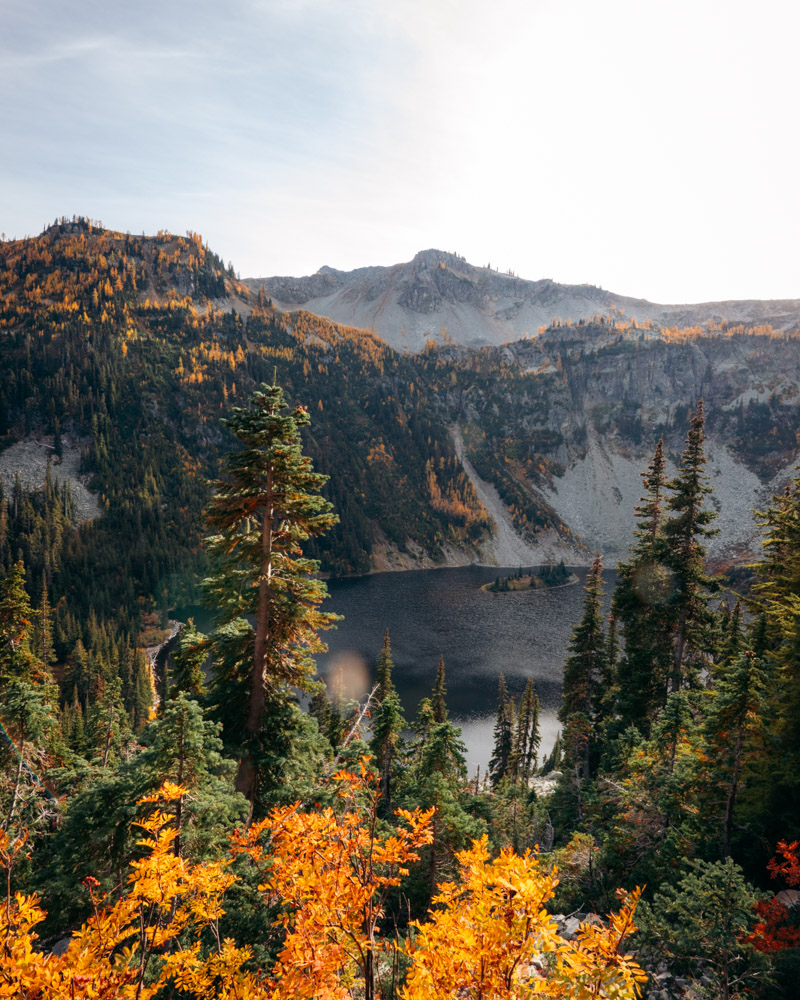
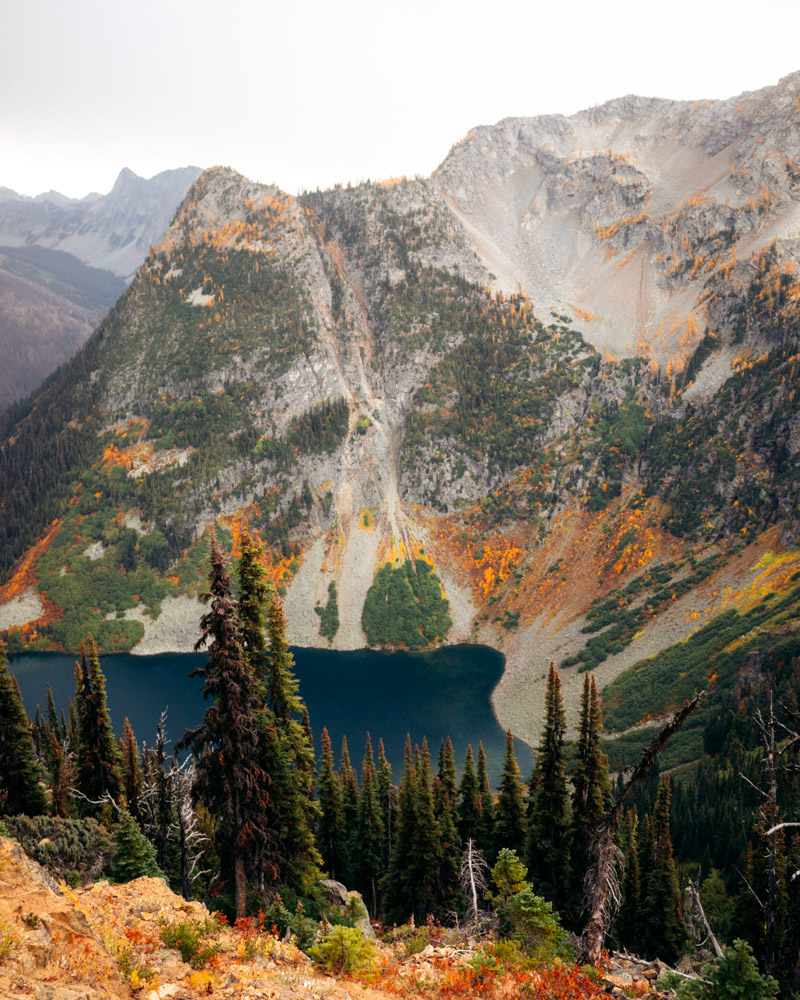
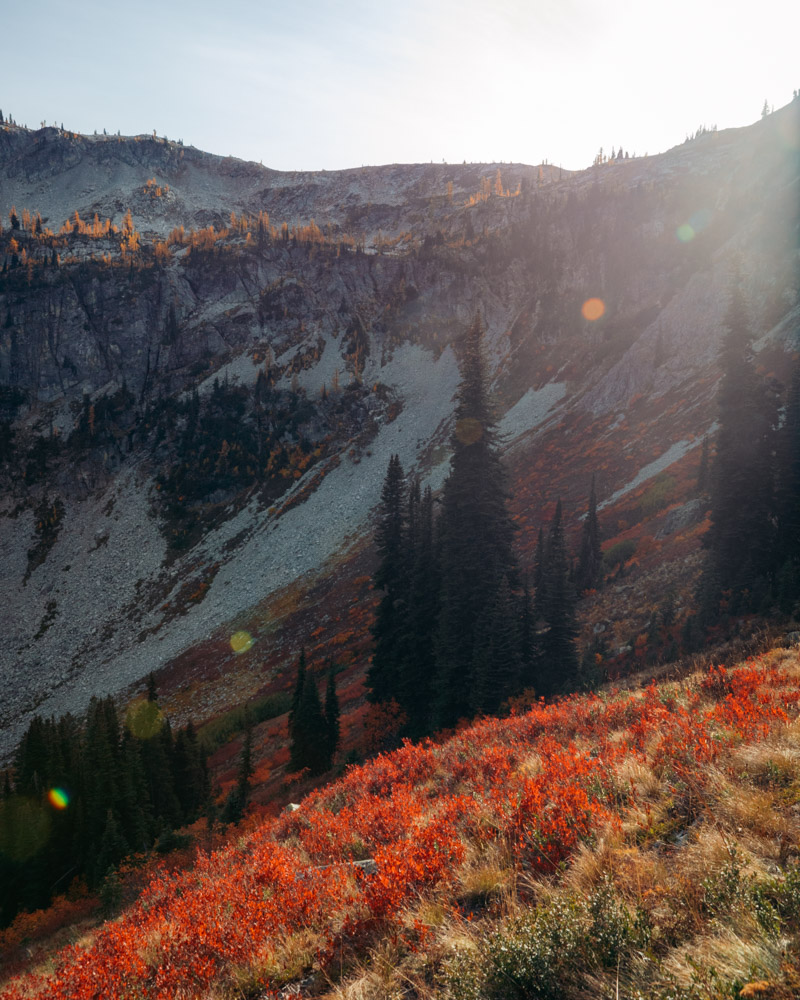
- It’s more than just larches. Sure, the golden larches in October steal the show—but Maple Pass delivers vibrant fall color (reds, oranges, yellows), alpine lakes, and 360° ridgeline views that don’t quit. Summer wildflowers are equally spectacular. This isn’t a one-season wonder.
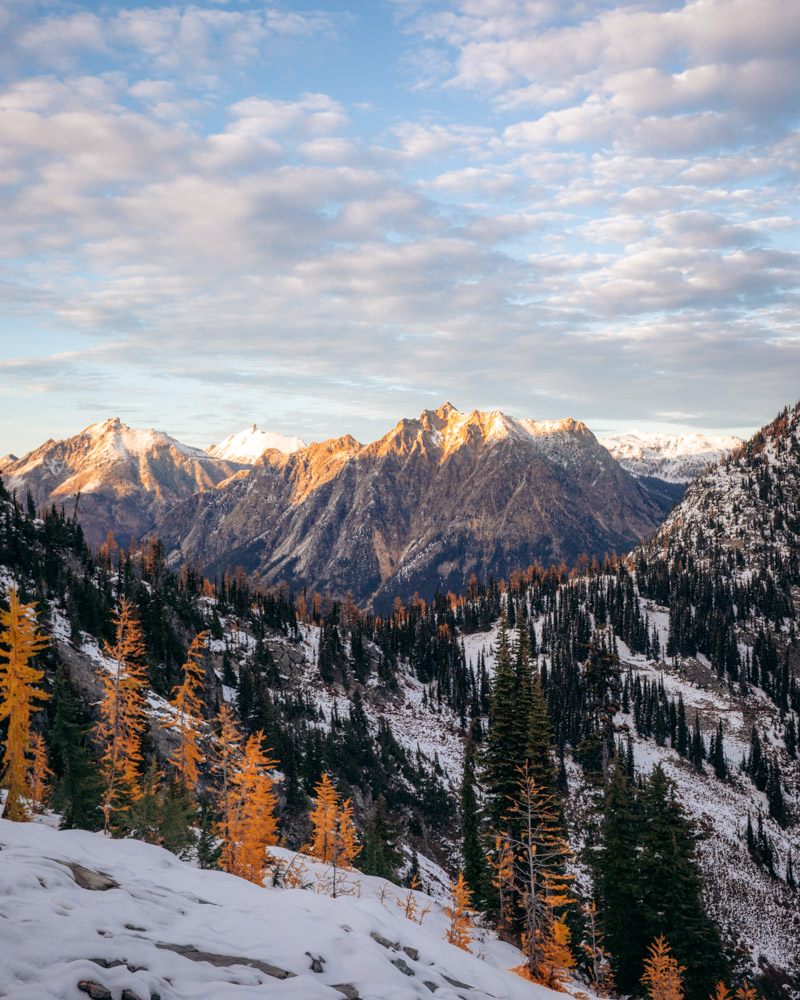
- Views for days, literally the entire way. Unlike many trails where you hike through forest for miles to reach one viewpoint, Maple Pass puts you on exposed ridges with constantly changing perspectives of the North Cascades. There’s no “just push through this boring section”—it’s all payoff.
- Accessible for multiple fitness levels. At 7.2 miles with 2,000 feet of elevation gain, it’s challenging enough to feel like an accomplishment but doable for hikers who aren’t ultra-fit. A moderately active person with some hiking experience can absolutely do this. That accessibility is what makes it the best introduction to North Cascades alpine hiking—and there’s nothing wrong with that.
- It’s a loop. No backtracking means you see different scenery the entire way. The counterclockwise route especially delivers constant visual rewards.
- Easy access off Highway 20. You don’t need a high-clearance vehicle, hours of forest road driving, or insider knowledge to find the trailhead. That matters when you’re trying to share hiking with friends or family who aren’t hardcore about it.
I used to think “popular = overrated.” Now I think: sometimes trails are popular because they’re genuinely that good.
Practical Details You Need to Know
Parking & Access:
- Parking lot holds approximately 30-40 cars
- During peak larch season (early-mid October), lot fills by 7-8am on weekends
- Overflow parking lines Highway 20 for up to half a mile—be prepared to walk to the trailhead
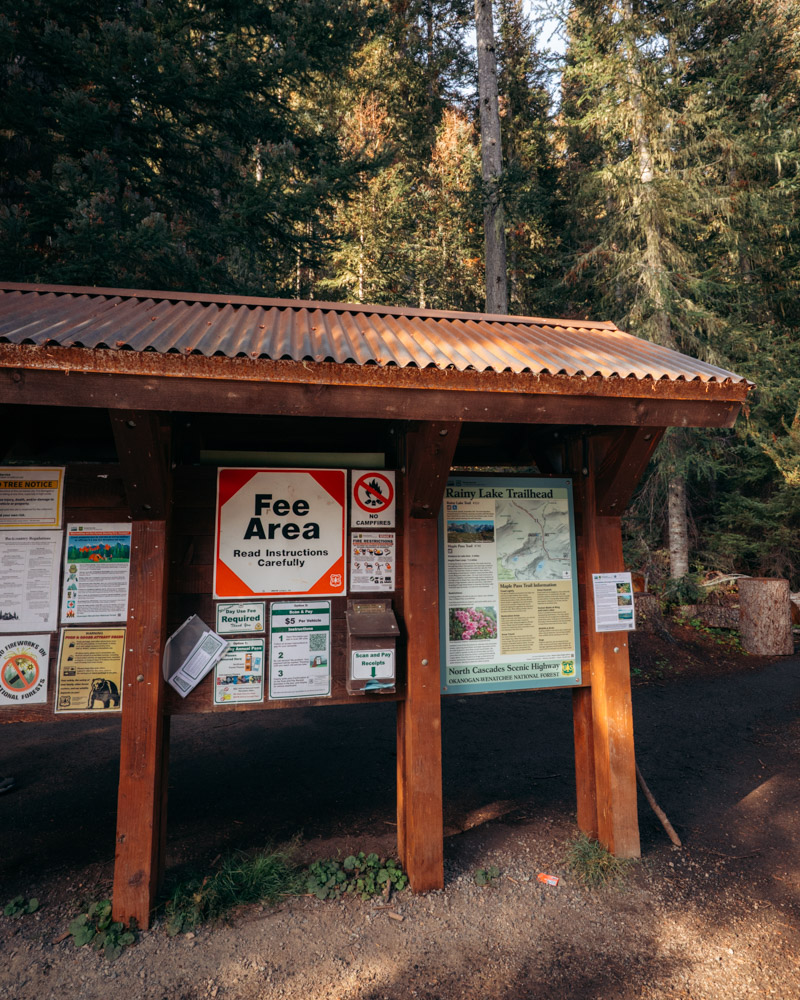
- Northwest Forest Pass or America the Beautiful Pass required
- No fee machine at trailhead—purchase pass in advance
Trail Conditions:
- Typically snow-free late June through October
- Early season (June-early July) may have snowfields on north-facing slopes
- Well-maintained trail, easy to follow
- Mostly exposed above treeline—bring sun protection and layers
Facilities:
- Vault toilet at trailhead
- No bathrooms on trail—plan accordingly
- No potable water—bring enough for the entire hike (2-3 liters recommended)
- There are streams and Lake Ann for filtering, but bring treatment
Cell Service:
- Spotty to none at trailhead
- Occasionally works on high ridgeline (depending on carrier)
- Don’t count on it for navigation—download offline maps
Pro tip: Download the trail on AllTrails or Gaia GPS before you leave cell service. The trail is well-marked, but it’s good backup.
The Crowd Reality (And How to Beat It)
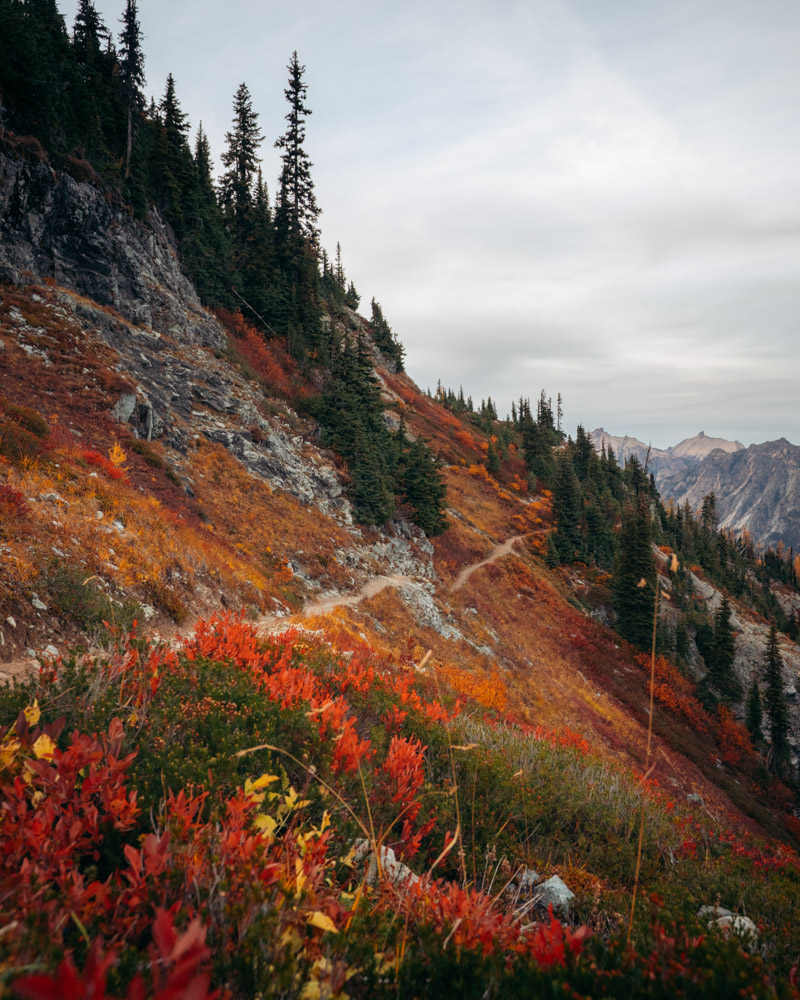
Let’s address the elephant on the trail: yes, Maple Pass gets absolutely packed during peak larch season (early-mid October). The parking lot overflows, cars line Highway 20 for half a mile, and you’ll pass dozens of other hikers.
But here’s what I learned: crowds are manageable if you plan strategically. And honestly? Seeing families, first-time alpine hikers, and people experiencing larch season for the first time actually made me appreciate the trail more, not less. This is what accessible alpine hiking can like—and that’s a good thing.
How to experience Maple Pass without the chaos:
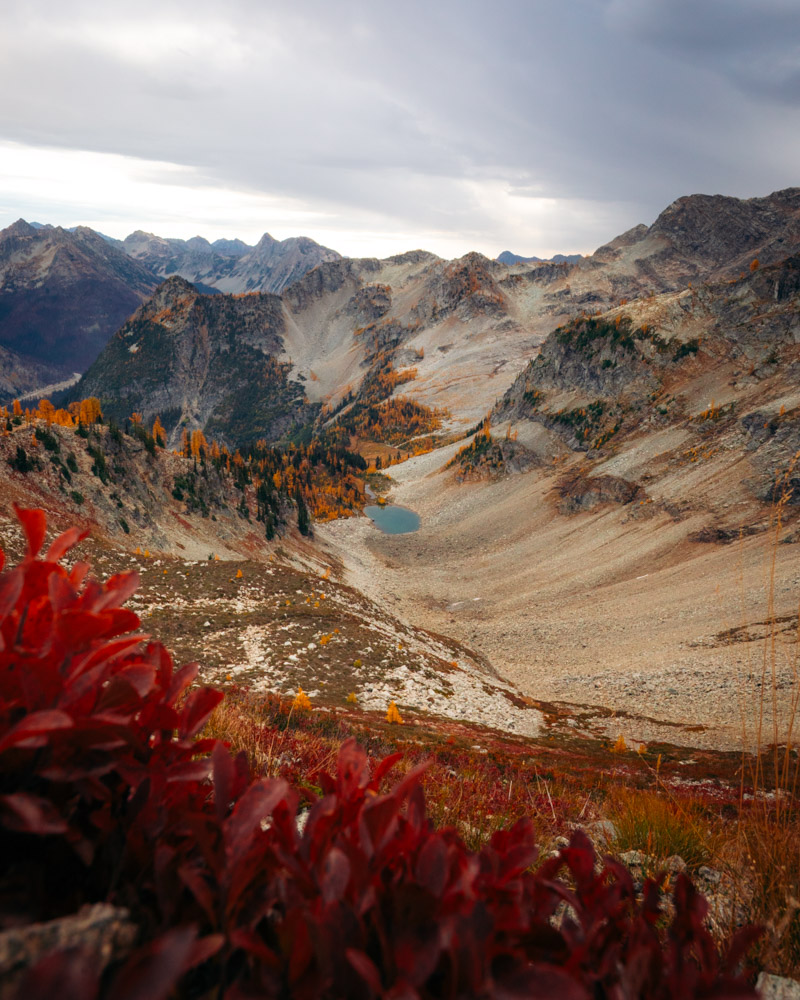
- Sunrise starts: Arrive before dawn (5:30-6am depends on the season). Not only do you beat the crowds, but you get golden hour light on the larches and ridges that will make you understand why photographers obsess over this trail. The parking lot fills fast after 8am on weekends—by arriving early, you’ll have the trail nearly to yourself for the first few hours. This is when the magic happens.
- Sunset hikes: Most day hikers finish by mid-afternoon. Starting later (2-3pm) means you’ll pass people heading down while you’re heading up. You get sunset alpenglow on the peaks, the ridgeline bathed in golden light, and a much quieter experience. Bring a headlamp for the descent—you’ll finish in the dark but it’s worth it.
- Weekdays: Even during peak season, weekdays see half the traffic of weekends. If you can swing it, go Monday-Thursday. The difference is dramatic—instead of 200+ people, you should see way less.
- Early or late season: Late September (larches just starting to turn) or mid-late October (past peak but still golden) have fewer people. You trade perfect peak color for more solitude and often still get stunning conditions.
The crowds don’t ruin Maple Pass—they’re just part of the calculation. Time it right, and you’ll get the experience you came for. I promise the sunrise ridge walk is worth setting an alarm for.
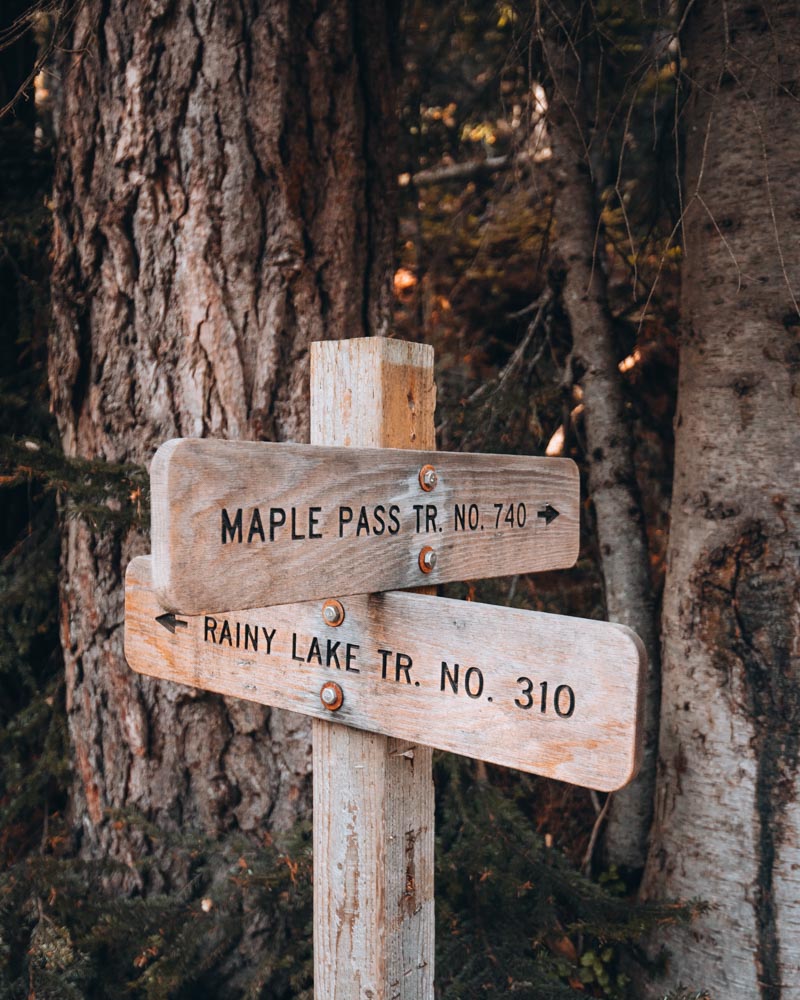
Pro tip: Hike counterclockwise (up Lake Ann trail, return via Heather Pass). You’ll climb earlier when you have more energy, and the best views unfold gradually instead of hitting you all at once.
Don’t Miss These Spots on Trail
Specific viewpoints and moments to watch for:
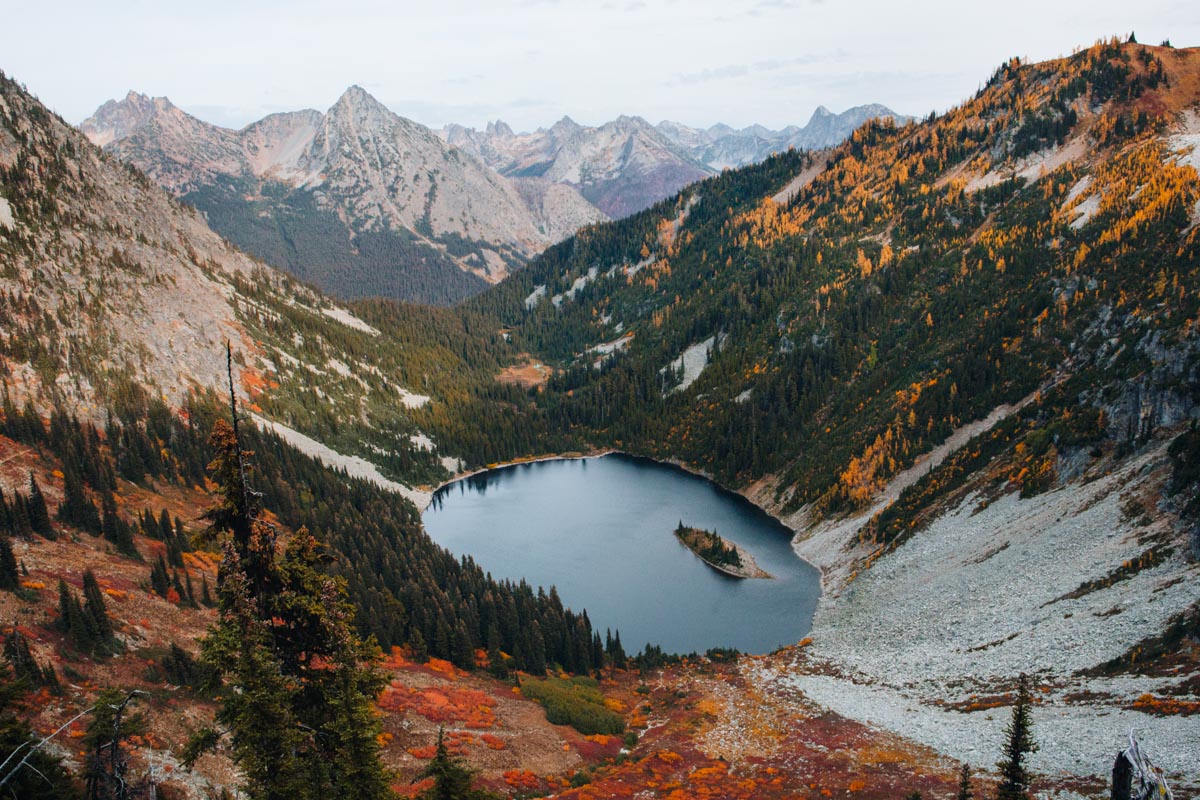
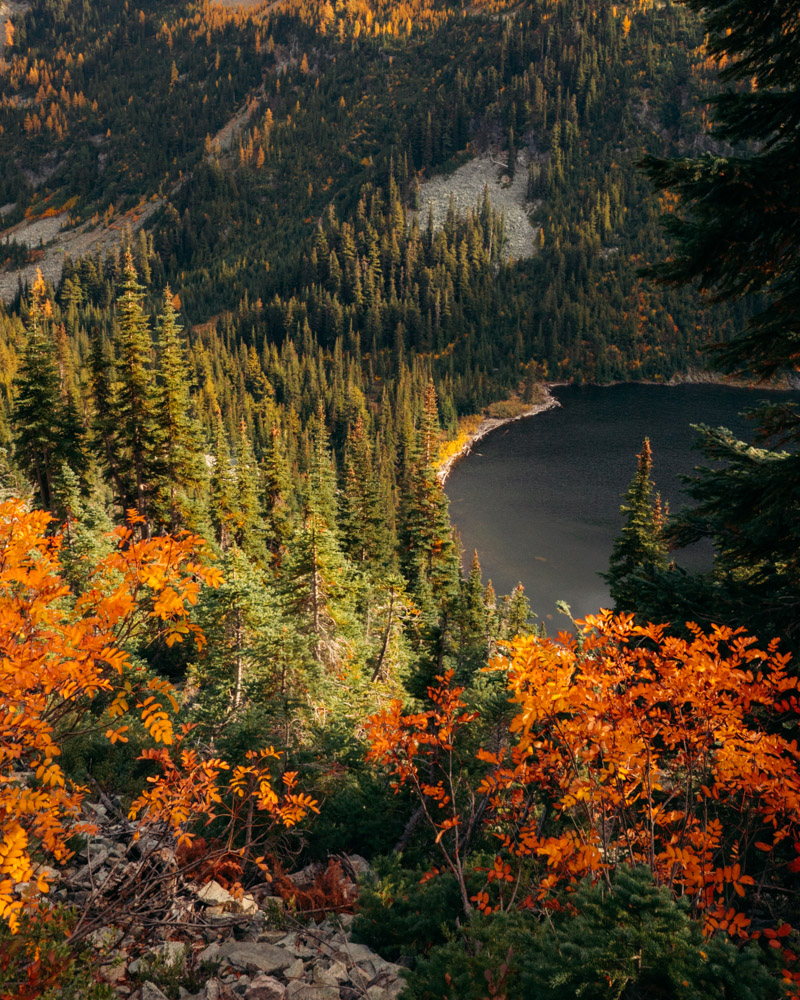
- Lake Ann (1.5 miles in): First big payoff. Turquoise alpine lake with Mount Shuksan reflecting in the water. This is where you realize the hike is going to deliver.
- Heather Pass junction (3 miles): Decision point in the loop. Go right for the gradual ridge climb (recommended). Views open up immediately.
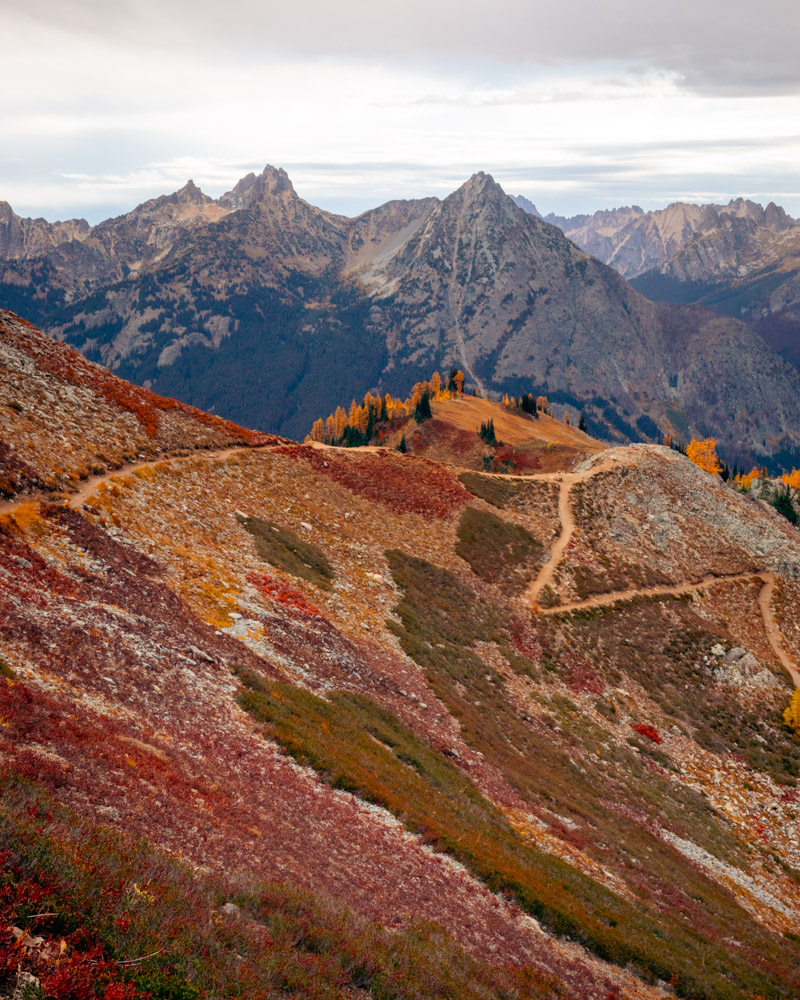
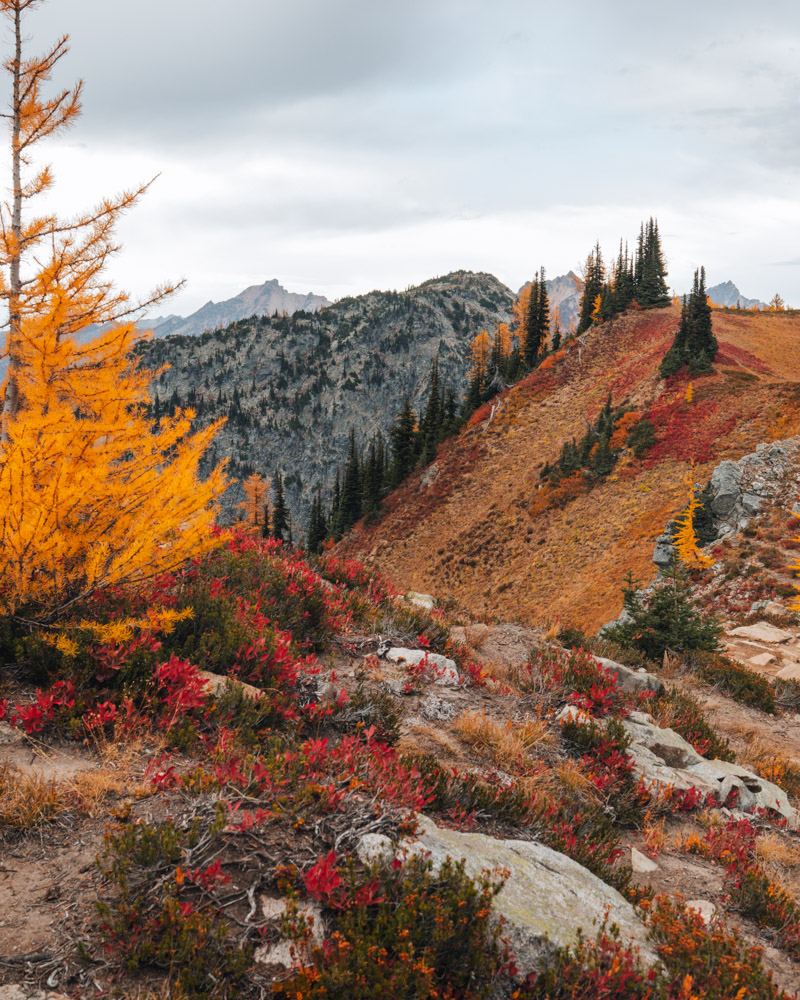
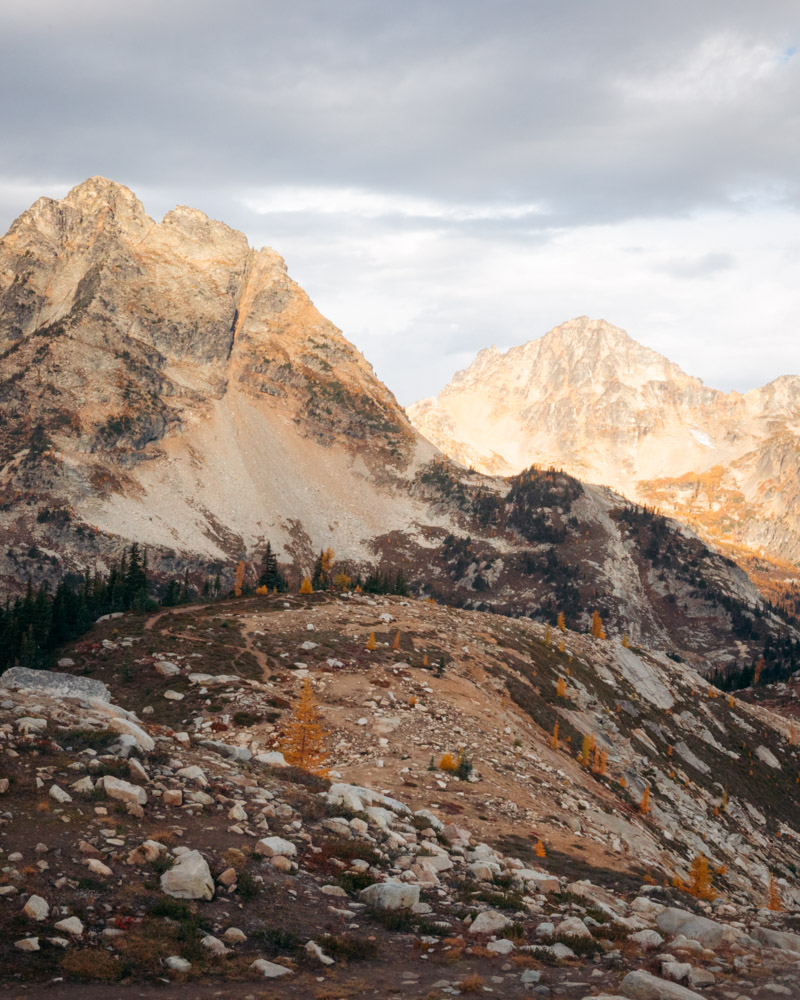
- The high point (around 4 miles): This is THE spot. The Picket Range, countless North Cascades peaks. In fall, you’re surrounded by golden larches. This is the money shot everyone posts on Instagram—and it’s absolutely worth it. Take your time here.
- The ridge traverse (miles 4-6): Don’t rush this section. The views keep changing as you traverse the ridgeline. Every turn reveals different peaks, different angles. This is why you came.
Pro tip: At the high point, walk a few feet down to get away from the crowds for photos. You don’t need to go far—10-20 feet gives you clear shots without other people.
What to Pack
The right gear makes a big difference on exposed alpine terrain:
Daypack — 20-25L for layers, water, snacks → Osprey Tempest 20
Trekking poles — Helpful on the descent, especially if knees are cranky → Black Diamond Trail Ergo Cork
Layers — Weather changes fast; mornings are cold → REI Magma Down Hoodie
Rain jacket — Always in the pack, even on sunny days → Xero Cloud 3L Rain Jacket
Headlamp — Essential for sunrise/sunset starts → Black Diamond Spot 400
Microspikes — After early October, trail can be icy → Kahtoola MICROspikes
Sun protection — Exposed ridgeline = intense sun → Hat, sunglasses, sunscreen
Water — No reliable sources; carry 2-3 liters
What Makes This the Best “Gateway” North Cascades Hike
This trail can turn casual day hikers into alpine enthusiasts.
- You get the full alpine experience in one hike: Ridgelines, wildflowers or larches (depending on season), glaciated peaks, and massive views. It’s a North Cascades sampler platter that shows you exactly what this mountain range has to offer.
- It’s challenging but not extreme: Unlike some North Cascades trails that require scrambling, route-finding, or serious endurance, Maple Pass is straightforward. Well-maintained trail, clear signage, moderate mileage. If you can hike 7 miles with some consistent elevation, you can do this.
- High reward-to-effort ratio: You get stunning alpine scenery without committing to a 15-mile day. For the effort required, few trails deliver this much visual impact.
- It builds confidence: Successfully completing Maple Pass shows people what they’re capable of in the alpine. It’s a gateway to harder North Cascades trails.
Experienced hikers might prefer more remote trails (I still do, sometimes). But for introducing someone to alpine hiking in Washington? For showing them why the North Cascades are special? Maple Pass is unmatched.
When to Hike Maple Pass Loop
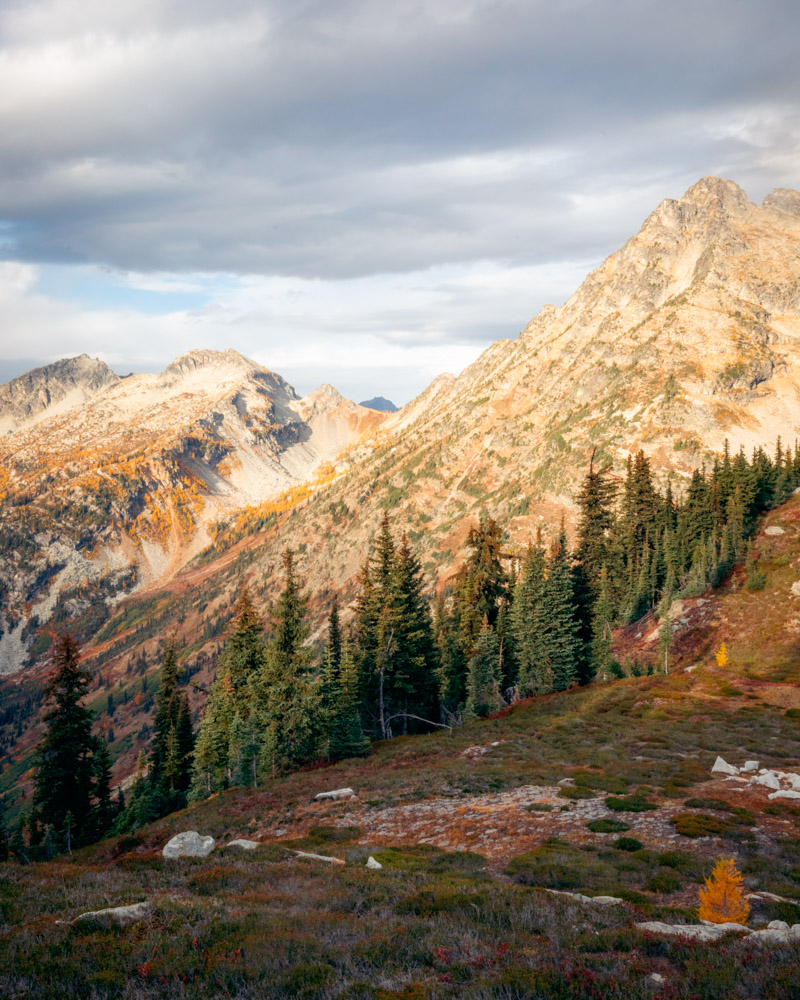
Peak Larch Season (Early-Mid October):
- Usually October 1-15, but varies by year (check WTA trip reports for current conditions)
- Golden larches at their most vibrant
- Brilliant fall color on shrubs and ground cover (reds, oranges, yellows)
- Most crowded time—but also the most spectacular
- Weather can be unpredictable—bring layers
- Strategy: Sunrise or sunset starts, weekdays if possible
Shoulder Season (Late September or Late October):
- Larches beginning to turn (late Sept) or past peak (late Oct)
- Still beautiful, significantly fewer crowds
- Higher chance of weather turning or early snow
- By late October, expect cold temps and possible trail closures
Summer (July-August):
- Wildflower meadows instead of larches—equally stunning but completely different
- Lupine, paintbrush, heather in full bloom
- Longer days, more stable weather
- Still popular but not October-level crowds
- Snow-free trails (check conditions—early summer may still have snowfields)
- Wildflowers peak late July-early August
Seasons: Summer vs. Fall: Quick Comparison
| Summer (July-August) | Fall Larch Season (Oct 1-15) | |
|---|---|---|
| Scenery | Wildflower meadows, green alpine | Golden larches, fall color |
| Crowds | Moderate | Heavy (especially weekends) |
| Weather | More stable, longer days | Unpredictable, shorter days |
| Trail conditions | Snow-free | Possible ice/snow after Oct 5 |
| Best for | Solitude seekers, wildflower lovers | Photographers, first-time larch chasers |
Summer vs Fall: Which Should You Choose?
If you can only hike Maple Pass once, should you go for larches in fall or wildflowers in summer?
Choose Fall (Larch Season) if:
- You’ve never seen larches before (they’re magical, worth the crowds)
- You want the most dramatic, iconic photos
- You can handle crowds and are willing to time it strategically
- You want the full “Washington fall color” experience
Choose Summer (Wildflowers) if:
- You prefer more solitude
- You want longer days and more stable weather
- You love wildflower meadows
- You’ve already done larch hikes and want something different
My honest answer: Go in fall for larches at least once. It’s the iconic Maple Pass experience, and even with crowds, it’s genuinely spectacular. The golden larches against the ridgeline —that’s the image that lives in your head afterward.
But summer Maple Pass is underrated. The wildflower meadows are stunning, you get the same incredible views, and the experience is more peaceful. If you’re a Washington local, do both. They’re different enough to justify separate trips.
Pro tip: Summer also means you can pair Maple Pass with other nearby trails (like Blue Lake or Cutthroat Pass) in the same day if you start early. Fall’s shorter days make that harder.
Who Might Still Prefer Alternatives
Maple Pass is exceptional, but it’s not for everyone. Consider skipping it if:
- You absolutely cannot handle seeing other people on trail. Even with strategic timing, you won’t have it completely to yourself during peak season. If any crowds whatsoever ruin your experience, choose a more remote alternative.
- You’re chasing wilderness solitude above all else. There are quieter trails with similar scenery. Maple Pass is about the full package—accessibility plus beauty—not wilderness isolation.
Alternative Larch Hikes (if you want options):
- Cutthroat Pass – Similar ridgeline views with larches, slightly less traffic
- Golden Lakes Loop (Chelan-Sawtooth Wilderness) – Remote, more wilderness feel, incredible larch density
- Copper Glance Lake – Quieter alpine basin near Mazama
- Grasshopper Pass via Harts Pass – Expansive meadows and ridgelines, far fewer people
- Carne Mountain – Massive larch coverage, big views, less accessible (which keeps crowds down)
- Lewis & Wing Lakes – Near Maple Pass but much quieter
But here’s the thing: these are supplements to Maple Pass, not replacements. Even if you hike all of them, Maple Pass is still worth experiencing. Don’t skip it just because it’s popular—that’s the mistake I made for too long.
Final Verdict: Is Maple Pass Loop Worth the Hype?
Yes. Absolutely. I was wrong to avoid it for so long.
Unfortunately spent years being too cool for Maple Pass Loop, dismissing it as “too crowded to be worth it.” I wanted to believe there were secret, better alternatives.
The reality? Maple Pass is popular because it delivers an exceptional alpine experience to a wide range of hikers—and that’s something to celebrate, not dismiss.
Are there crowds? Yes. Can you work around them? Also yes. Go at sunrise or sunset. Choose a weekday. Accept that you’ll see other hikers and focus on why you’re there—the views, the larches, the fall color, the experience of being in one of Washington’s most beautiful places.
The trail is famous for a reason. It’s not overhyped. Not overrated. It’s just really, genuinely excellent at what it does: offering massive alpine wow factor with moderate effort and accessibility.
Worth the hype? Every bit of it. I should have hiked it years ago.
More North Cascades Adventures
- The Complete Guide to the North Cascades — Everything you need to plan your trip
- 3 Days in North Cascades: The Ultimate Itinerary — Day-by-day summer itinerary
- North Cascades Fall Larch Season Itinerary — 3 days of golden larches
- Blue Lake Trail Guide — Another stunning Highway 20 hike
- Colonial Creek Campground Guide — Lakeside camping on Diablo Lake
- Best Golden Larch Hikes in Washington — More trails for larch season
Have questions about hiking Maple Pass? Drop a comment below or reach out on Instagram @the.trekking.mama — I’m always happy to help with timing, parking strategy, or trip planning!