Pack Rain Suits and Let Them Chase Waves: An Oregon Coast Road Trip
Last Updated: December 2025 | Reading Time: 14 minutes
The forecast said rain for three days straight.
We’d already booked the campervan. The kids were packed. So we went anyway.
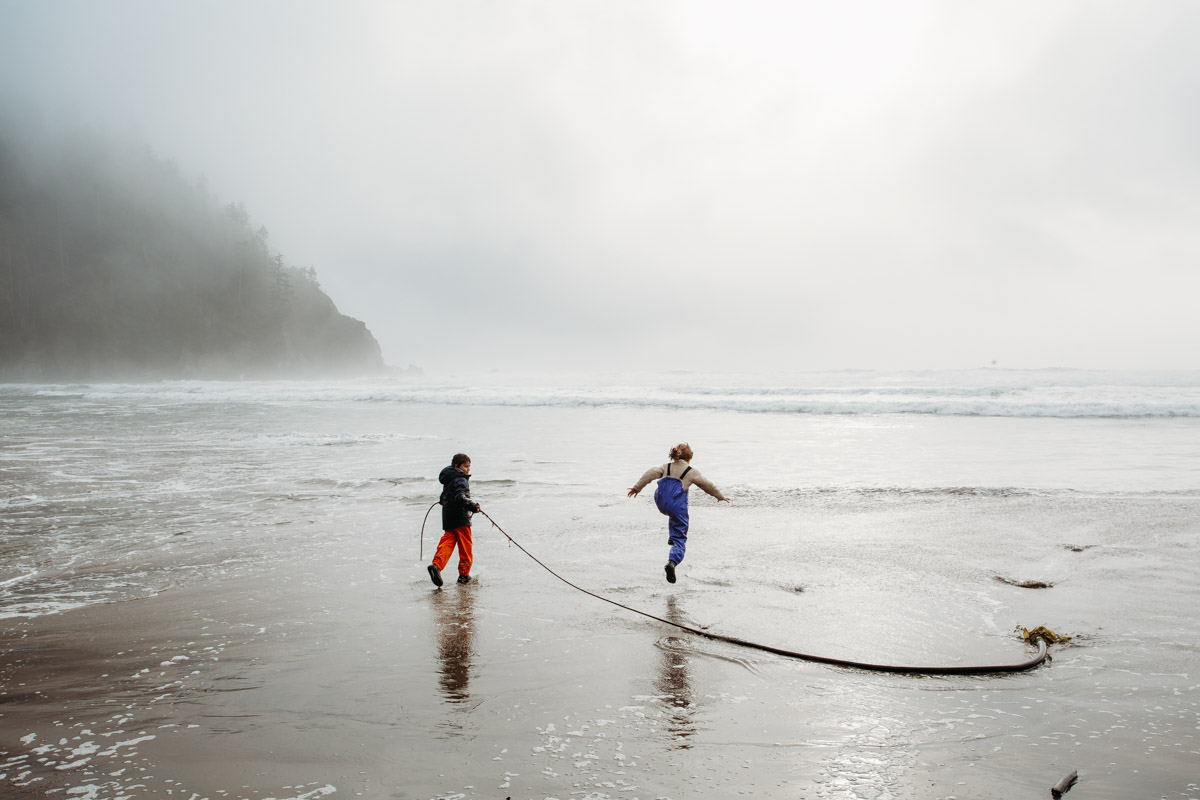
It rained the entire time—sideways, relentless, the kind of Pacific Northwest rain that laughs at your Gore-Tex. And my kids had one of the best trips of their lives.
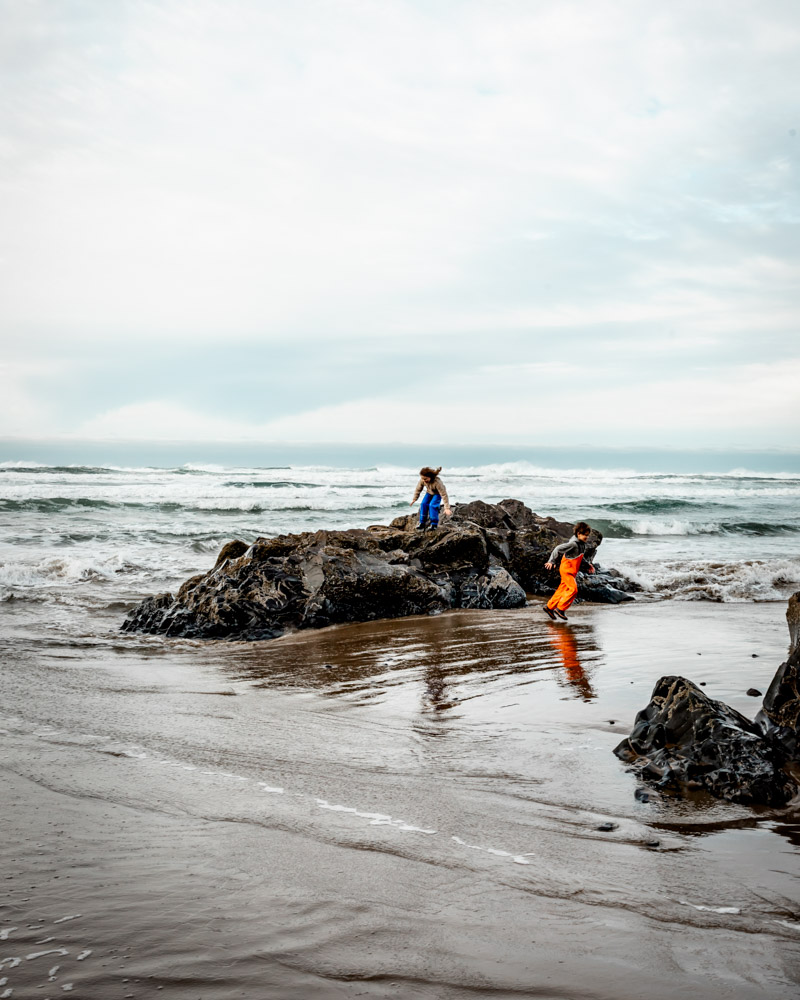
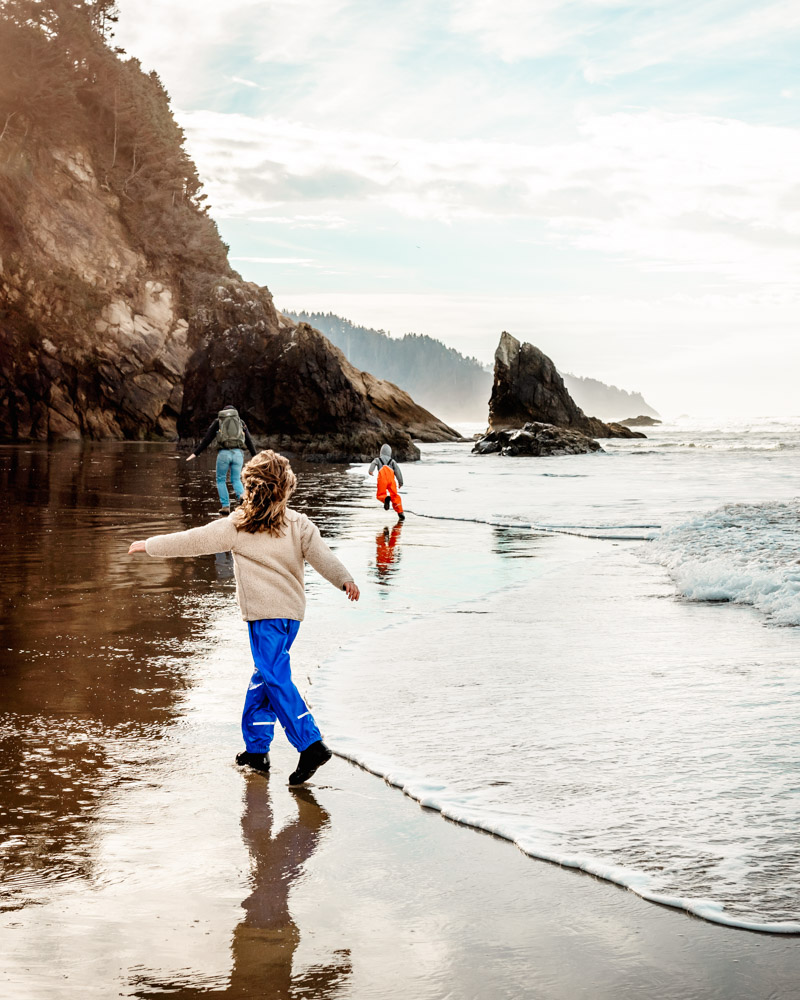
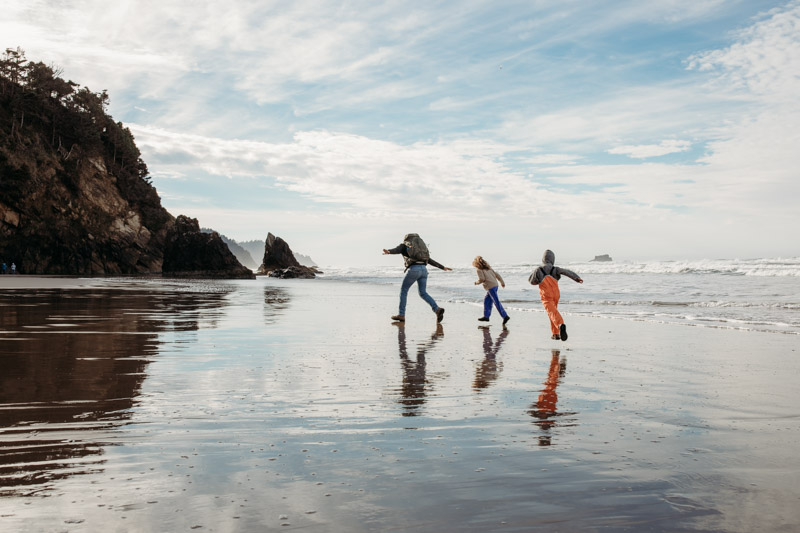
They wore rain suits and chased waves until they were soaked through. My kids got so sandy I found grains in their ears for a week. They fell asleep in the van to the sound of rain on the roof, faces still pink from wind and salt.
I’ve done the Oregon coast three times now—twice with kids, once with girlfriends. This is what I’ve learned:
The Oregon coast doesn’t need sunshine. (But sometimes it does appear)
It needs rain suits and a willingness to get wet.
Best for: families, shoulder-season travel, kids who don’t mind getting wet
Ideal trip length: 2–3 days (north coast) or 5–7 days (full coast)
Best months: March–May and October–November for fewer crowds
Non-negotiables: rain suits, tide charts, snacks
Biggest surprise: cloudy days are often the most magical
If you’re planning around tide pools, caves, or waterfalls (especially Hug Point), always check NOAA tide predictions before you go.
Three Trips, One Coastline
- Campervan in November: Kids, rain, three days straight—the trip that taught me to stop waiting for good weather
- Spring road trip: Epic sunsets, actual camping, the coast showing off
- Winter weekend with girlfriends: Winter sun with a mix of fog, a different kind of magic
This guide pulls from all three—but the rainy campervan trip is the one that changed how I think about the coast.

The Route: North to South
From Seattle: About 3 hours to the north coast. We usually cross at Longview or take I-5 to Portland and cut west.
Short on Time? Focus Here
- Weekend: North Coast (Short Sands, Hug Point, Cannon Beach)
- 3–4 days: North + Central Coast (add Cape Kiwanda)
- 5+ days: Full coast down to Bandon or Brookings
Stops (north → south)
- Short Sands Beach (Oswald West State Park)
- Hug Point
- Cannon Beach / Haystack Rock
- Elk Flats & Devil’s Cauldron
- Nehalem Bay State Park
- Cape Perpetua Scenic Area
- Cape Kiwanda
- Florence & the Oregon Dunes
- Sunset Bay State Park
- Shore Acres & Cape Arago
- Sisters Rock
- Samuel H. Boardman Scenic Corridor
- Bandon Beach (Face Rock)
- Brookings
You can’t do all of this in a weekend—and you shouldn’t try. Pick a section and give it time, or commit to the full drive if you have the days.
North Coast (Best for a Short Trip with Kids)
Forest hikes, protected coves, iconic sunsets.
Short Sands Beach (Oswald West State Park)
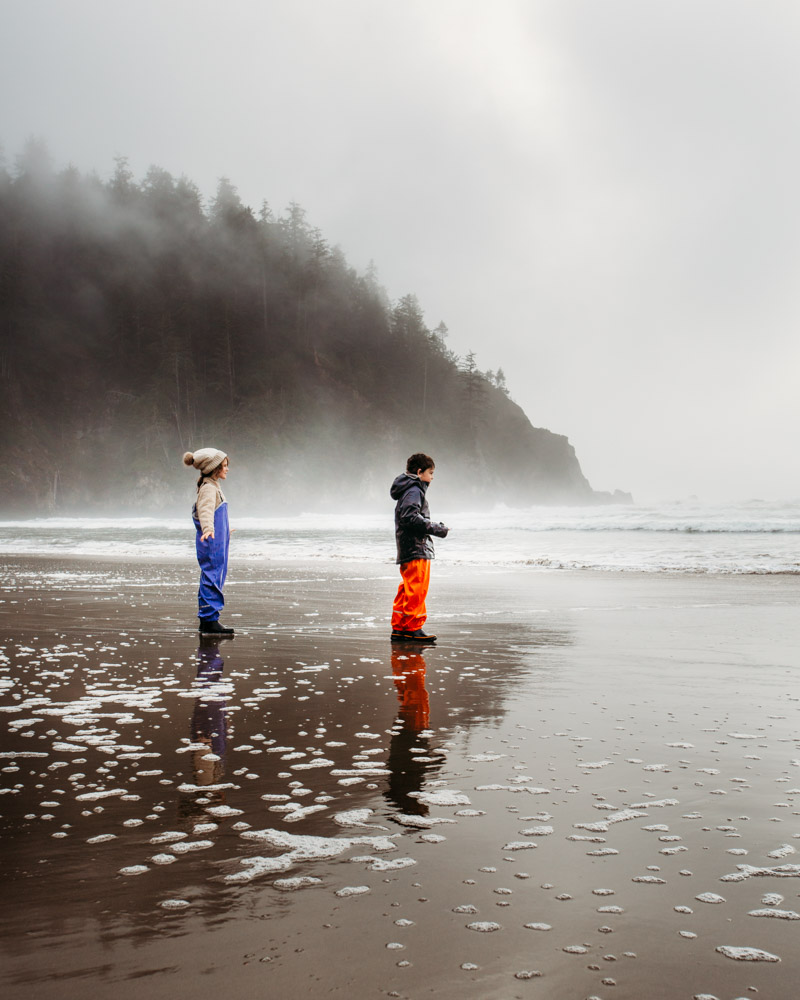
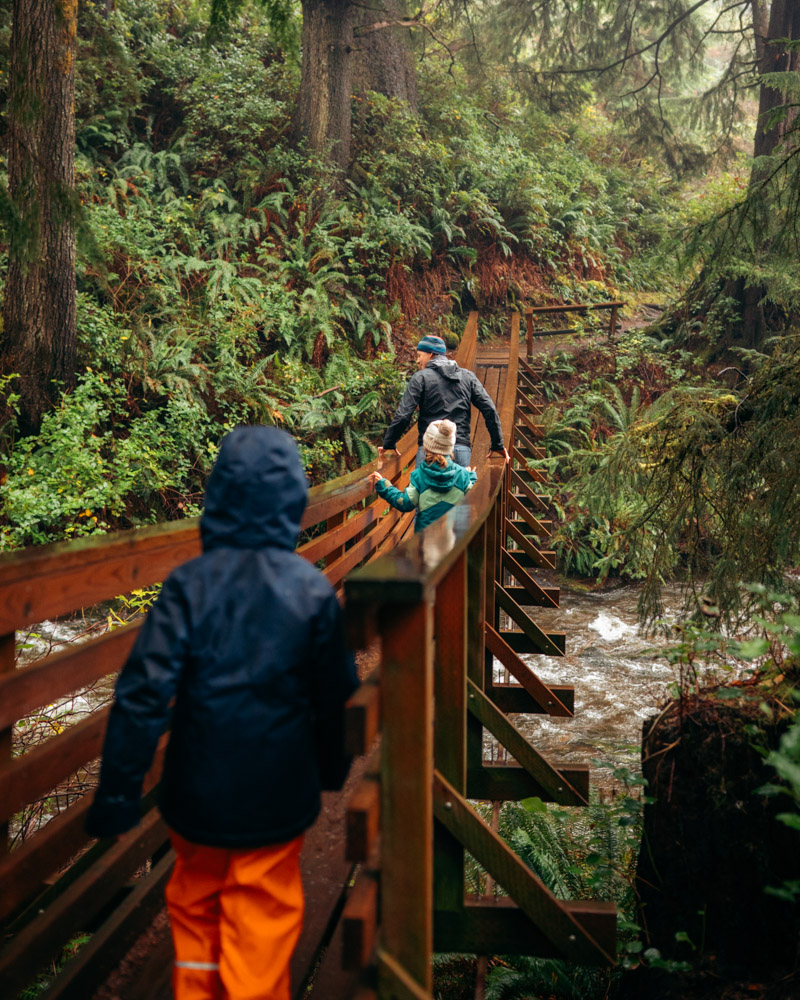
This is the beach that earns its place on almost every Oregon Coast itinerary—and somehow still manages to feel tucked away.
The approach is part of the magic. A short walk through mossy old‑growth forest opens suddenly onto a crescent‑shaped cove framed by cliffs. The sound changes first—waves echoing off rock—then the light opens up, often soft and filtered even on brighter days. Surfers dot the lineup year‑round, adding movement without making it feel busy.
With kids, this beach hits a sweet spot. The hike in feels like an adventure, not a chore, and the cove shape keeps things contained. There’s endless driftwood to climb on, kelp to drag around, and enough space to let kids roam while you stay relaxed.
Why this stop works: short hike, protected cove, high reward with minimal effort
Good to know: Parking fills fast even in the off‑season. The trail can be muddy after rain—waterproof shoes help.
Hug Point
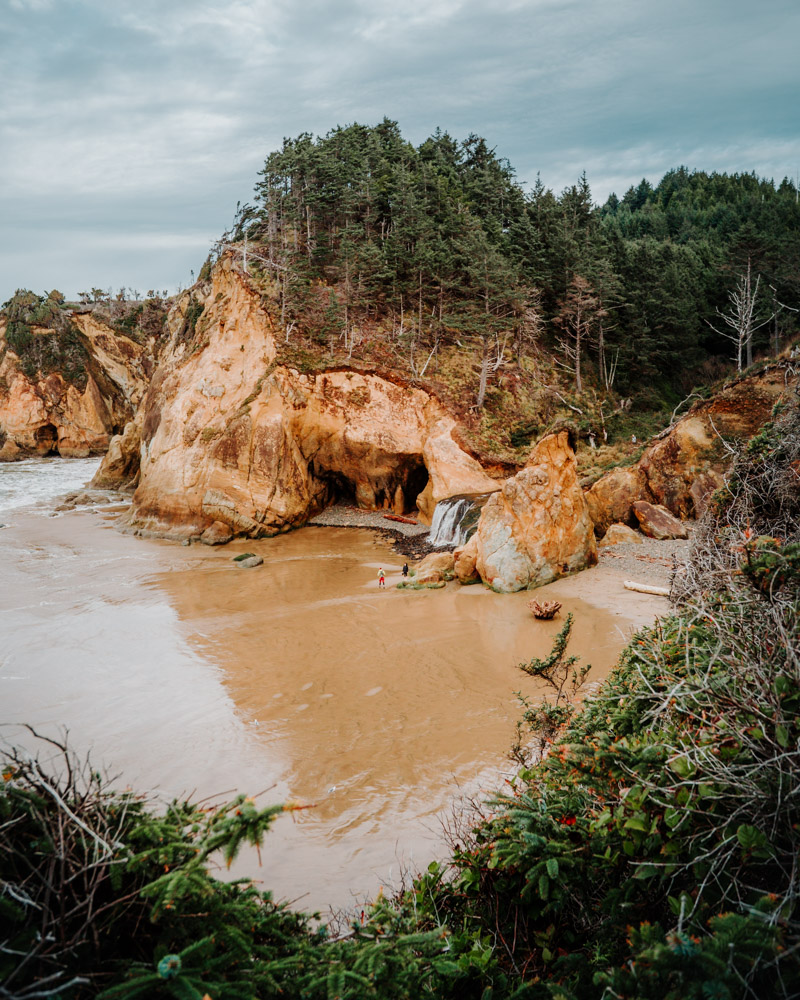
Hug Point feels like several beaches in one—but timing matters.
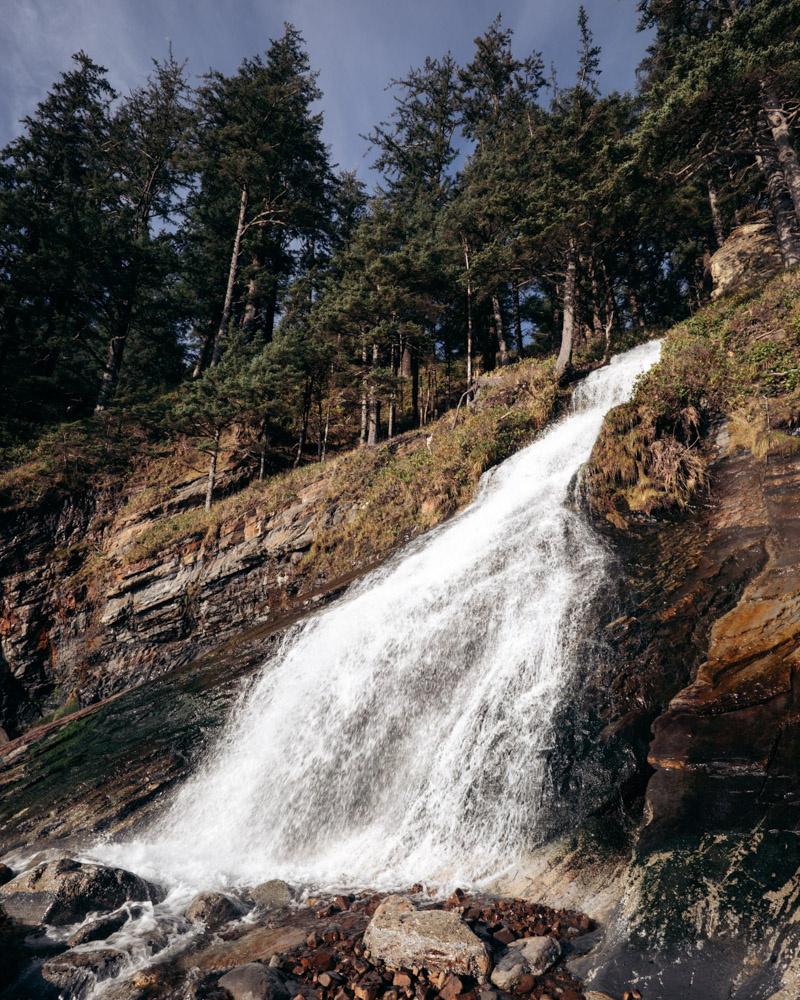
At low tide, the coastline opens up. You can walk around the point to explore sea caves, hidden coves, and a small waterfall that drops straight onto the sand. You’ll also see remnants of the old coastal highway carved directly into the rock, a reminder of how rugged this stretch really is.
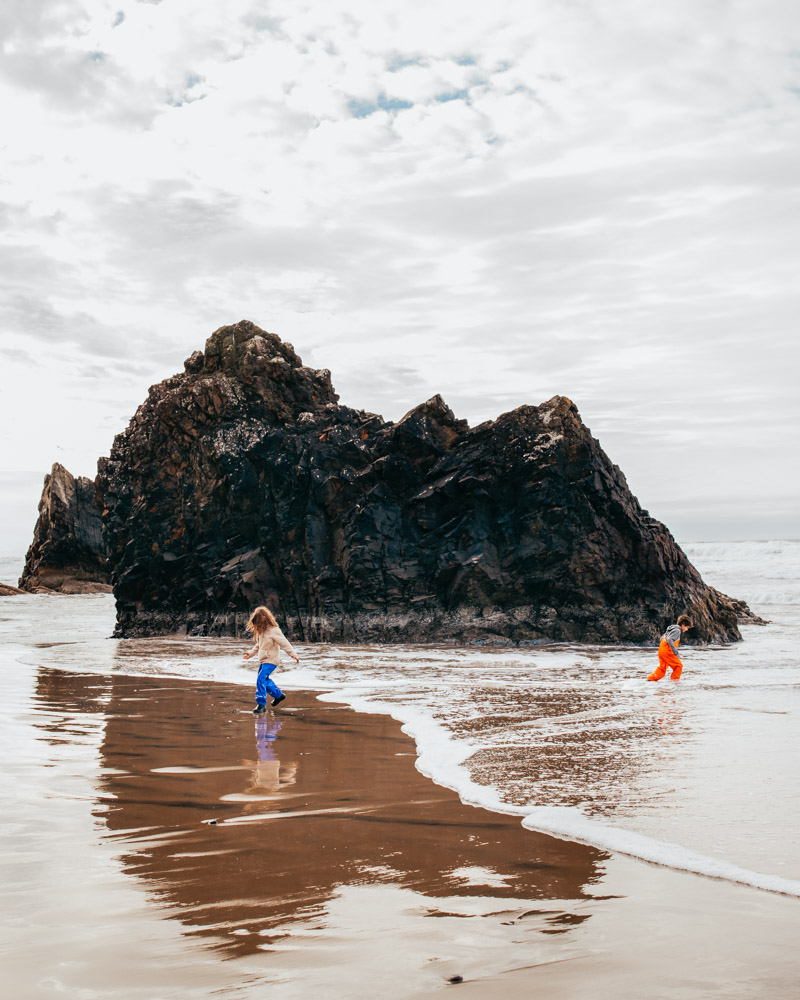
We missed the waterfall because the tide was wrong. It didn’t matter. The main beach alone kept my kids busy for hours—running from wave to wave, shrieking when the foam caught their ankles, repeating the same game again and again.
Why this stop works: exploration without risk, wide sand, easy with kids
Good to know: Check tide charts if you want the caves and waterfall. At high tide, the main beach is still a solid stop.
Cannon Beach
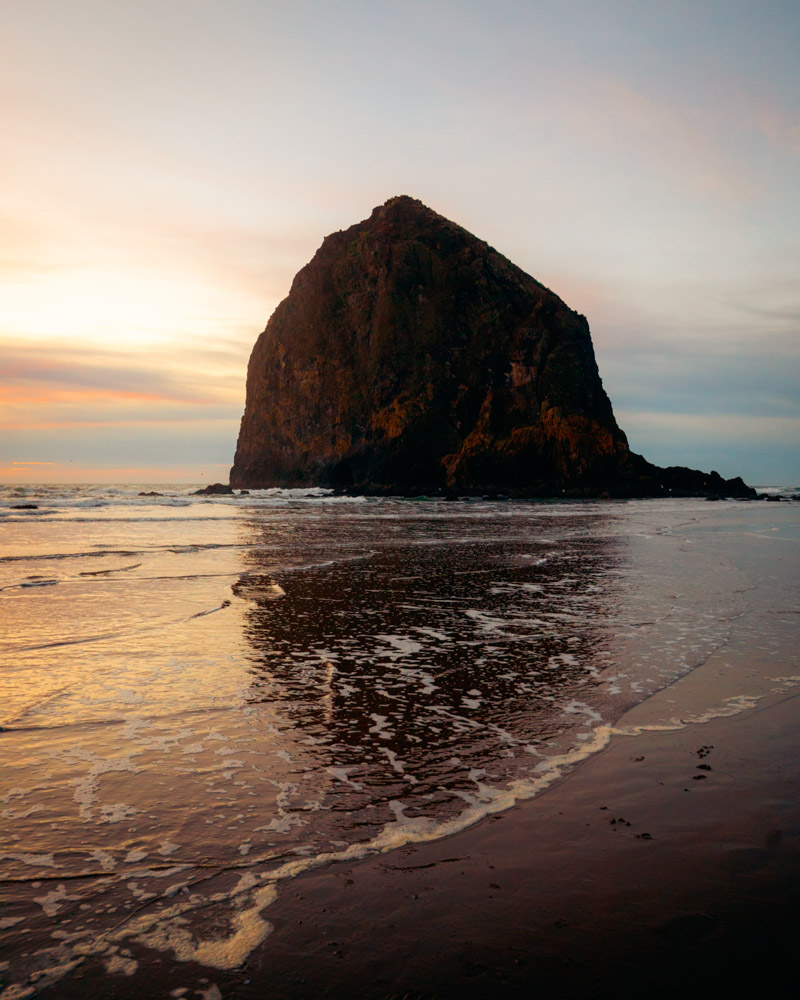
Cannon Beach is hyped. It’s busy. And on a good evening, it’s absolutely worth it.
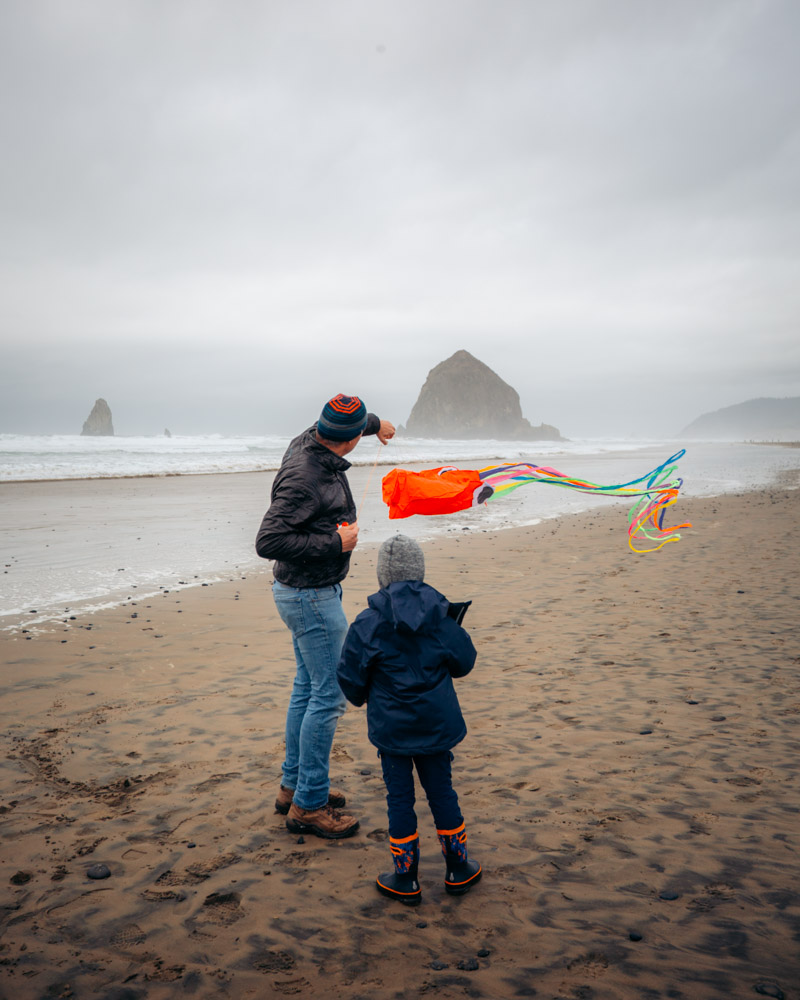
Haystack Rock dominates the shoreline, rising straight out of the sand and catching light in a way that feels almost theatrical at sunset. Tide pools around its base come alive, and the beach fills with people quietly watching the same moment unfold.
There’s something grounding about being here with others—strangers spread out along the sand, all facing west, all pausing at the same time. With kids, it’s an easy place to slow down: plenty of room to walk, run, and explore without a plan.
Why this stop works: iconic views, tide pools, shared wonder
Good to know: Parking in town is paid and competitive. Low tide is best for tide pools; sunset is best for everything else.
Elk Flats
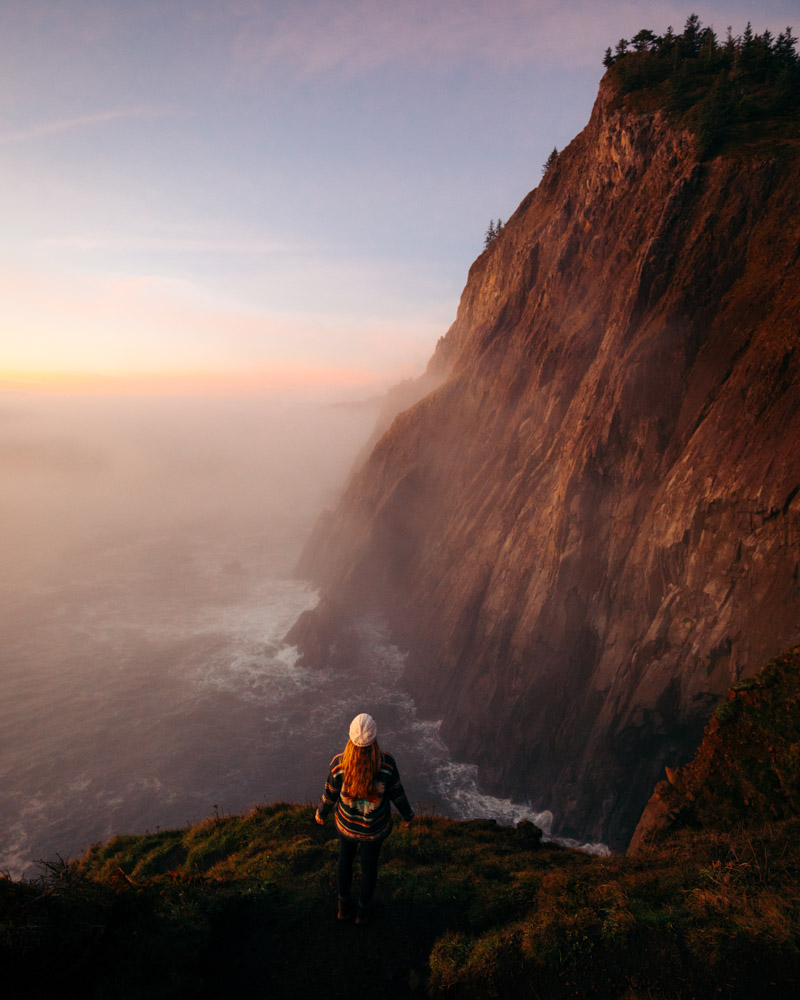
Elk Flats is one of those stops that sneaks up on you.
The trail is short and accessible, making it an easy addition to the day—especially when kids are running out of patience. On our visit, the path had turned into a shallow stream from recent rain, but that only added to the experience: wet boots, splashing steps, laughter.
At the viewpoint, the land drops away dramatically. Cliffs fall into the ocean on both sides, and the coastline stretches endlessly north and south. When the light is right, conversation just… stops.
Why this stop works: maximum payoff for minimal effort
Good to know: Exposed near the viewpoint—keep kids close, especially in wind. Sunset is spectacular.
Devil’s Cauldron
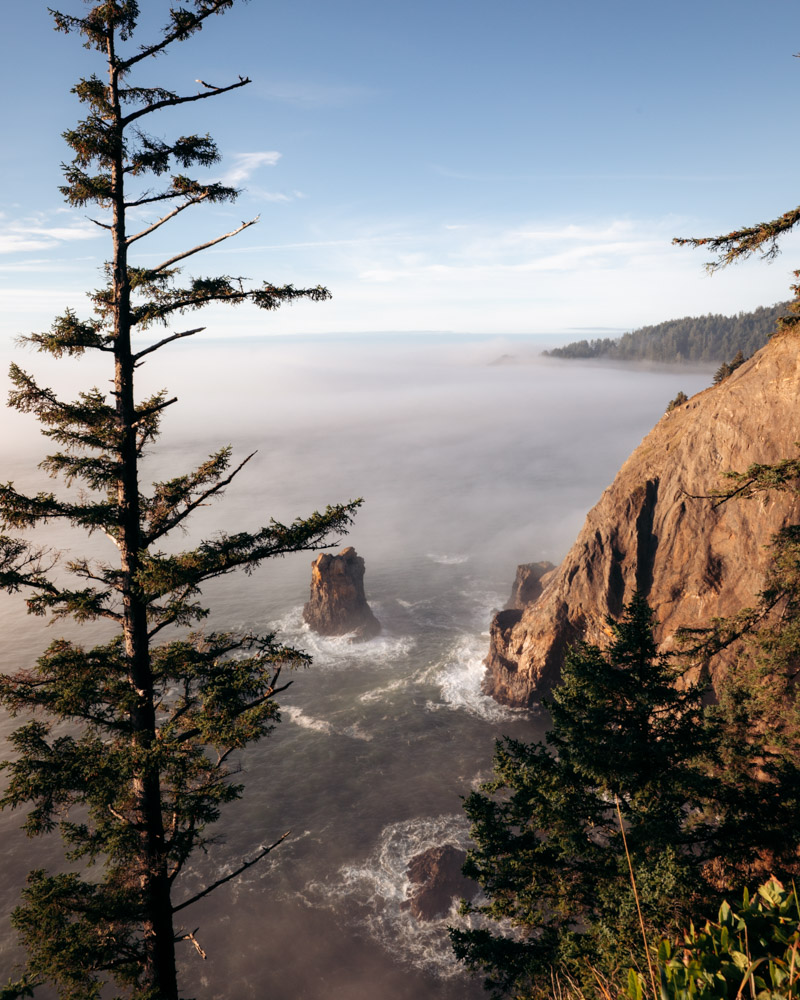
Devils Cauldron is less a destination and more a pause—a quick hit of drama between longer stops.
From the viewpoint, you look down onto churning water and jagged rock formations where waves slam hard enough to send spray into the air. It’s loud, chaotic, and mesmerizing in a way kids often love.
Why this stop works: big drama, tiny time commitment
Good to know: Roadside pullout with minimal walking. Five to ten minutes is plenty.
Central Coast (More Space, Bigger Landscapes)
Nehalem Bay State Park
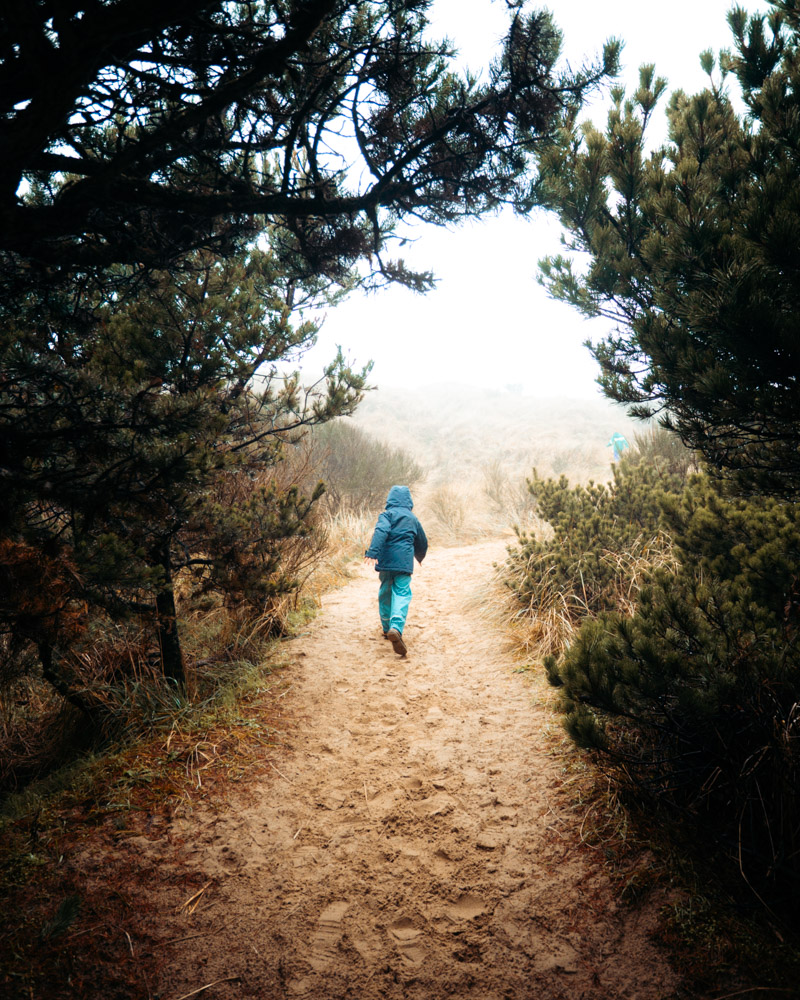
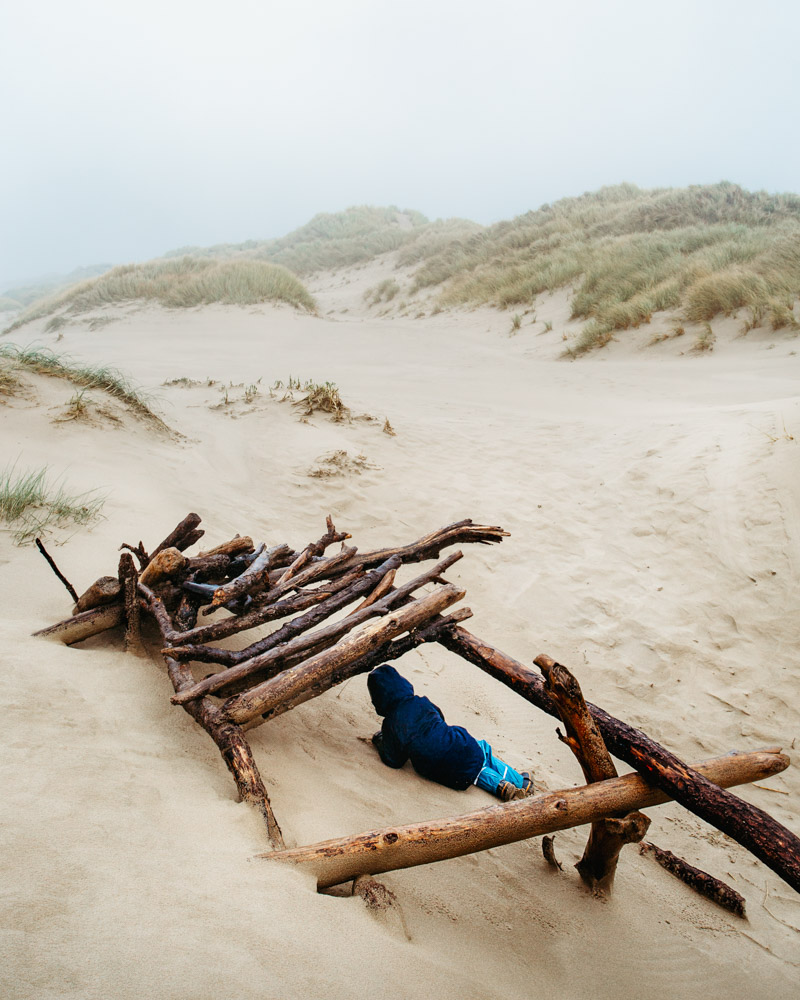
This is one of our favorite places to camp on the coast.
The park sits on a long spit with the bay on one side and the ocean on the other, which means easy beach access and room to breathe. It makes a great base for exploring the north‑central coast without moving camp every night.
Why this stop works: great home base, easy beach access
Good to know: Reservations recommended in summer; off‑season availability is often good.
If you like coastal camping, this pairs well with trips like Yurt Camping at Cape Disappointment.
Cape Perpetua
The central coast’s big viewpoint.
From the stone shelter at the top, you get sweeping views up and down the coastline. Below, tide pools and the spouting horn (when conditions are right) give kids something to explore while you take it all in.
Why this stop works: big views, short walks
Good to know: A good leg‑stretch stop on a long drive.
Cape Kiwanda
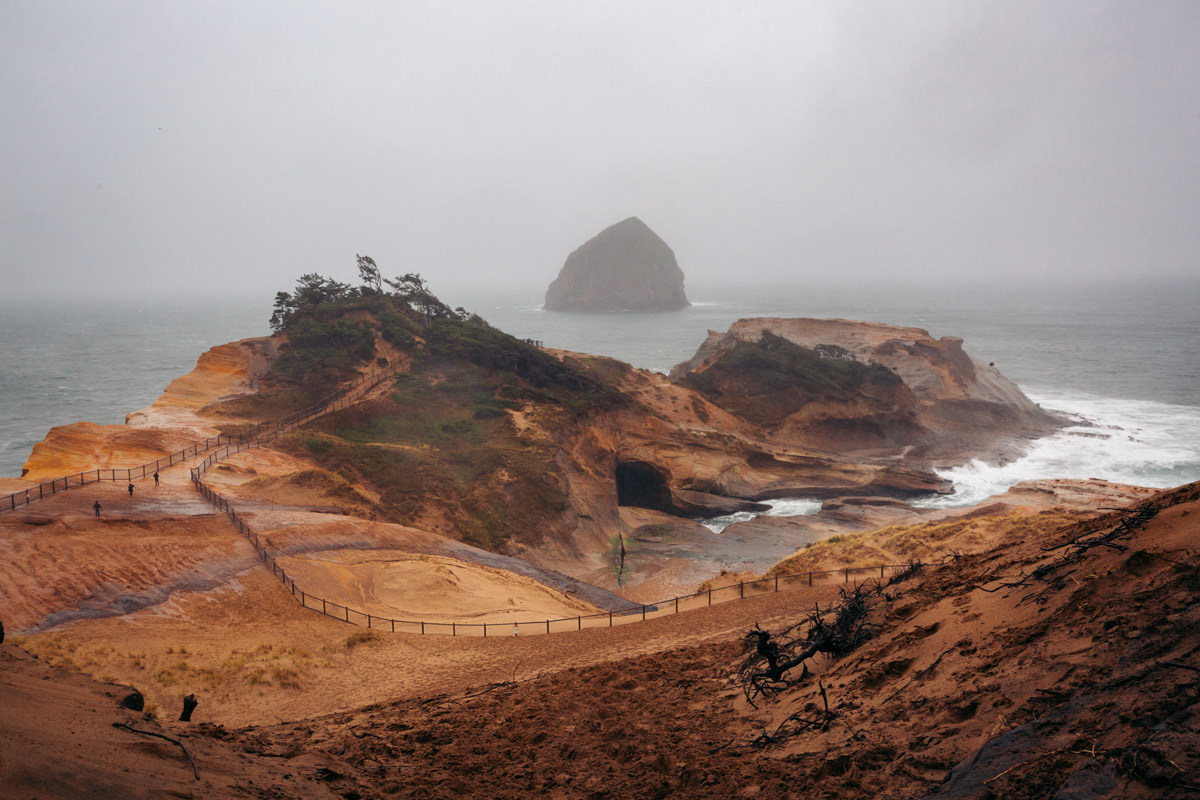
This is where the coast feels undeniably wild.
Massive sandstone cliffs, a climbable dune, crashing waves—and, if you’re lucky, dory boats launching straight through the surf. My kids climbed the dune in pouring rain and rolled down soaked and laughing, completely unfazed by the weather.
This is a place that demands respect. Sneaker waves here are real and dangerous, and cliff edges are not forgiving.
Why this stop works: unforgettable landscape, kids love the dune
Good to know: Keep kids well back from rocks. Large paid parking lot. Pacific City nearby for food.
Florence & the Oregon Dunes
The dunes feel like another planet.
Massive hills of sand stretch inland, completely unexpected on the Oregon coast. Kids can run, climb, and roll down ridges for hours. We skipped ATVs and just explored on foot—it was more than enough.
Why this stop works: endless energy burn, totally different scenery
Good to know: Can be hot in summer—bring water. Florence makes a good base town.
South Coast (Fewer People, Bigger Payoff)
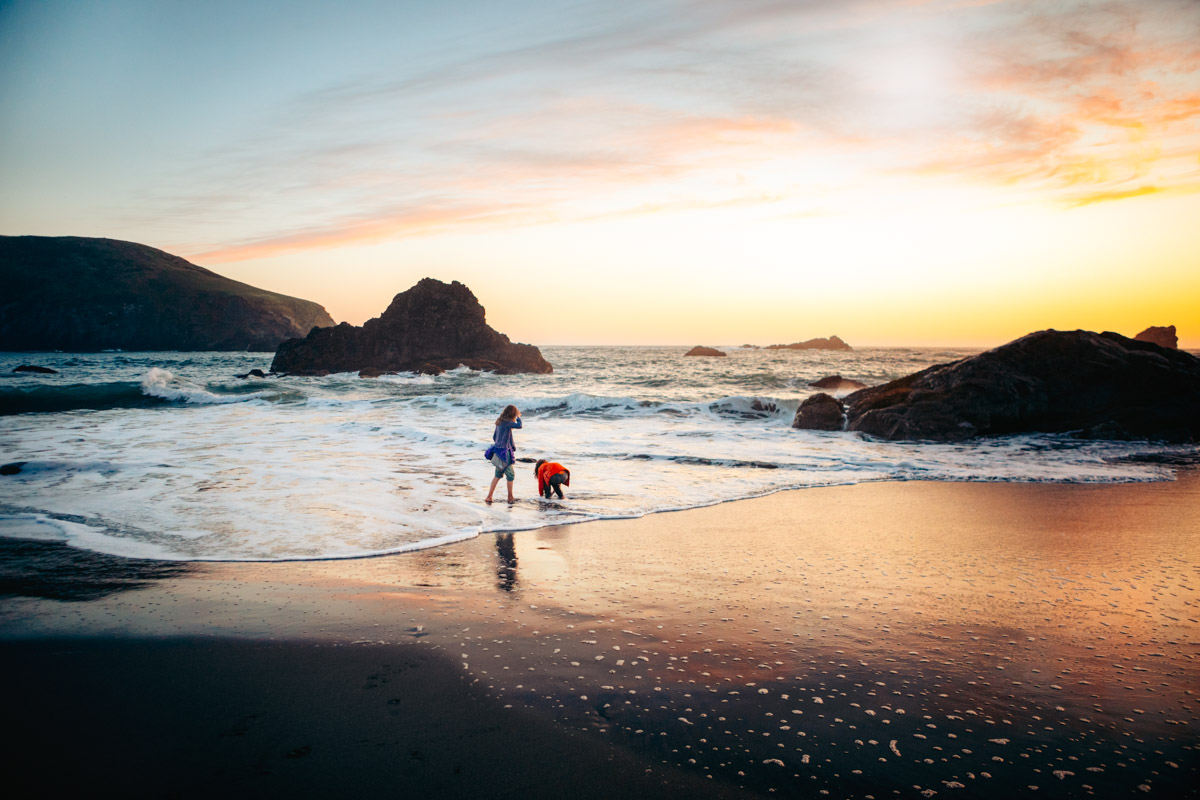
Wilder, warmer, unforgettable sunsets.
Sunset Bay State Park
This might be the most underrated stop on the entire coast.
The beach sits in a protected cove framed by sculpted rock formations, which softens the waves and creates a calmer feel than much of the surrounding coastline. We camped here and had the beach nearly to ourselves at sunset—one of those evenings no one is in a hurry to leave.
Why this stop works: calm water, stunning light, great camping
Good to know: Camping reservations recommended—this place books up.
Shore Acres + Cape Arago
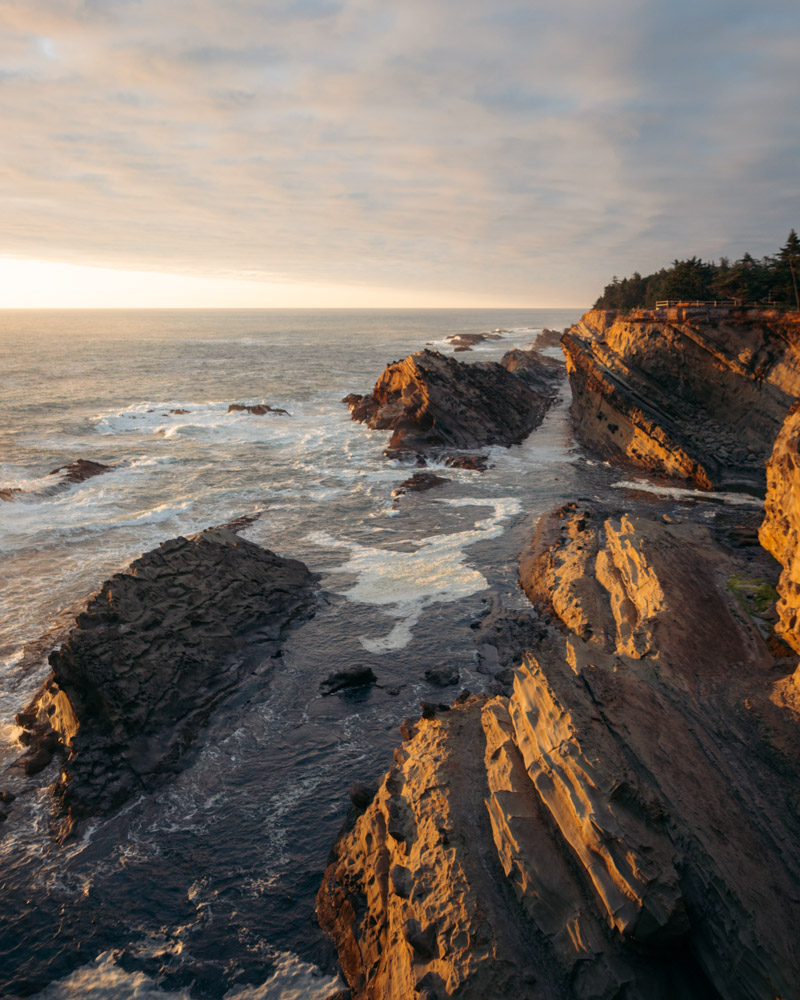
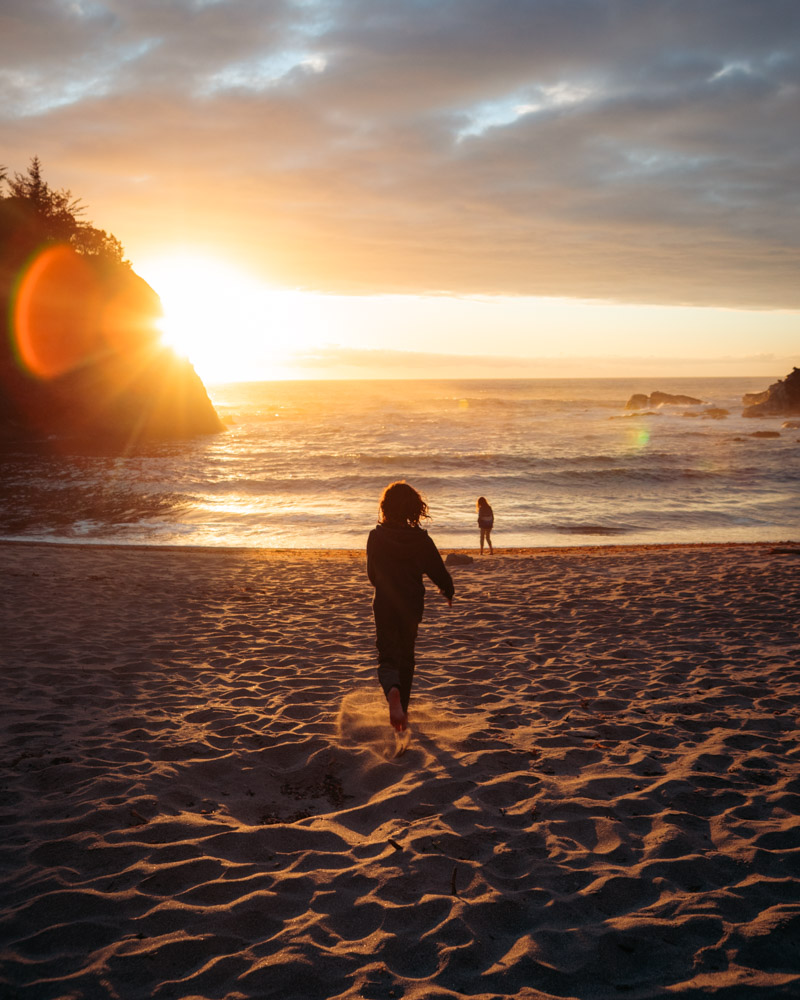
Just beyond Sunset Bay, this stretch delivers nonstop drama.
Manicured gardens sit above raging surf, and the viewpoints offer front‑row seats to crashing waves. In winter, this is prime storm‑watching territory. Or you could find it on a sunny day and experience an epic sunset.
Why this stop works: dramatic views with very little effort
Good to know: Easy day‑use stops connected by trail or short drive.
Sisters Rock
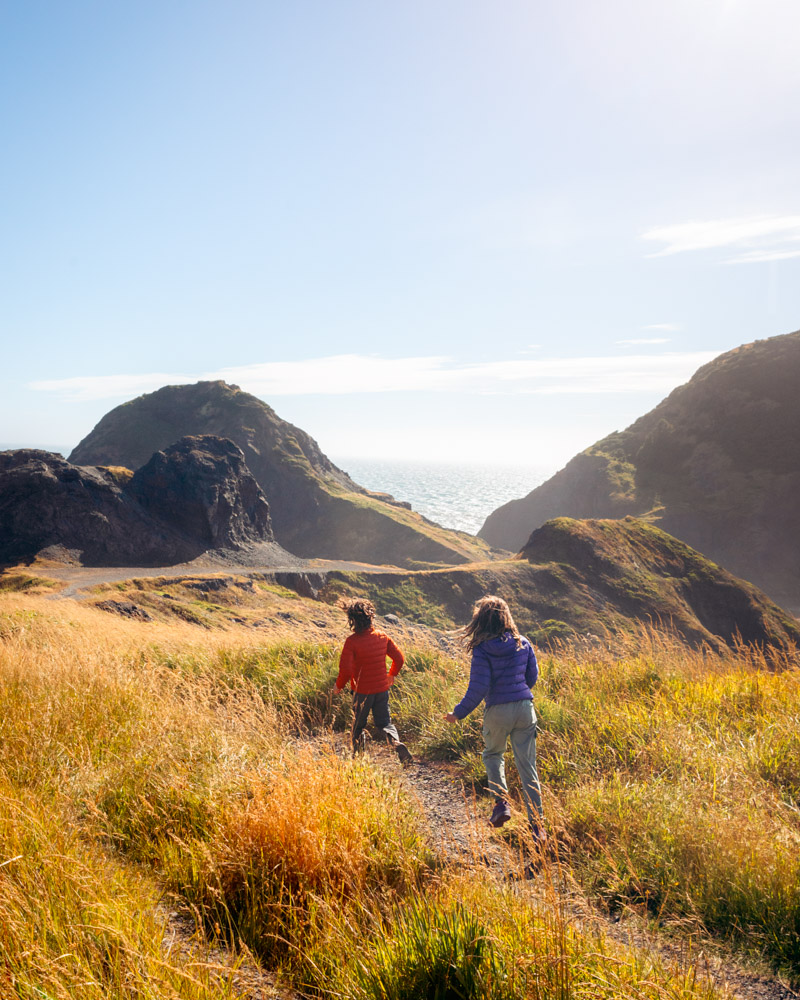
The wind here was unreal.
Strong enough to knock you sideways, strong enough to turn the moment into something silly and unforgettable. My kids leaned into it and danced, laughing hysterically.
Why this stop works: wild weather days, space to burn energy
Good to know: Easy beach access right off Highway 101.
Samuel H. Boardman Scenic Corridor
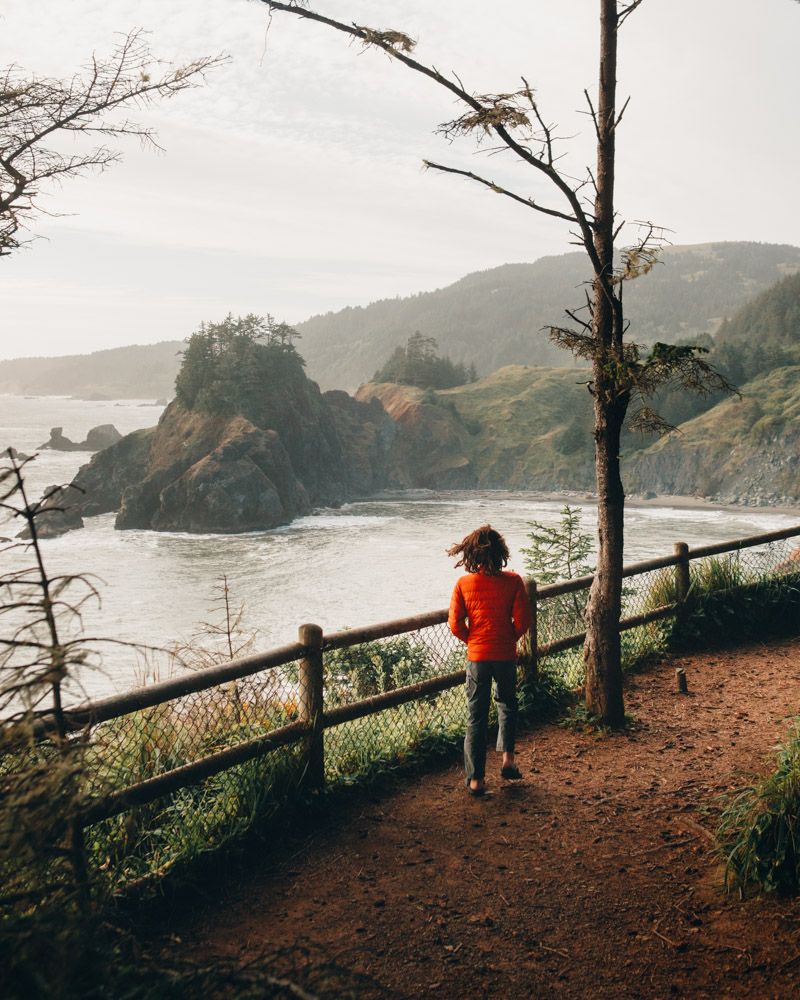
The most dramatic stretch of the entire coast
12 miles of insanity. Sea stacks, natural bridges, hidden coves, and a viewpoint every few minutes. You’ll pull over, think “that’s the best one,” drive two minutes, and pull over again.
This corridor is the reason to keep driving south.
Logistics
- Between Gold Beach and Brookings
- Dozens of pullouts along 101—just stop when something catches your eye
- Natural Bridges viewpoint is the most famous, but they’re all good
- Easy with kids—most viewpoints are short walks from the car
Secret Beach + Natural Bridges (Above and Below)

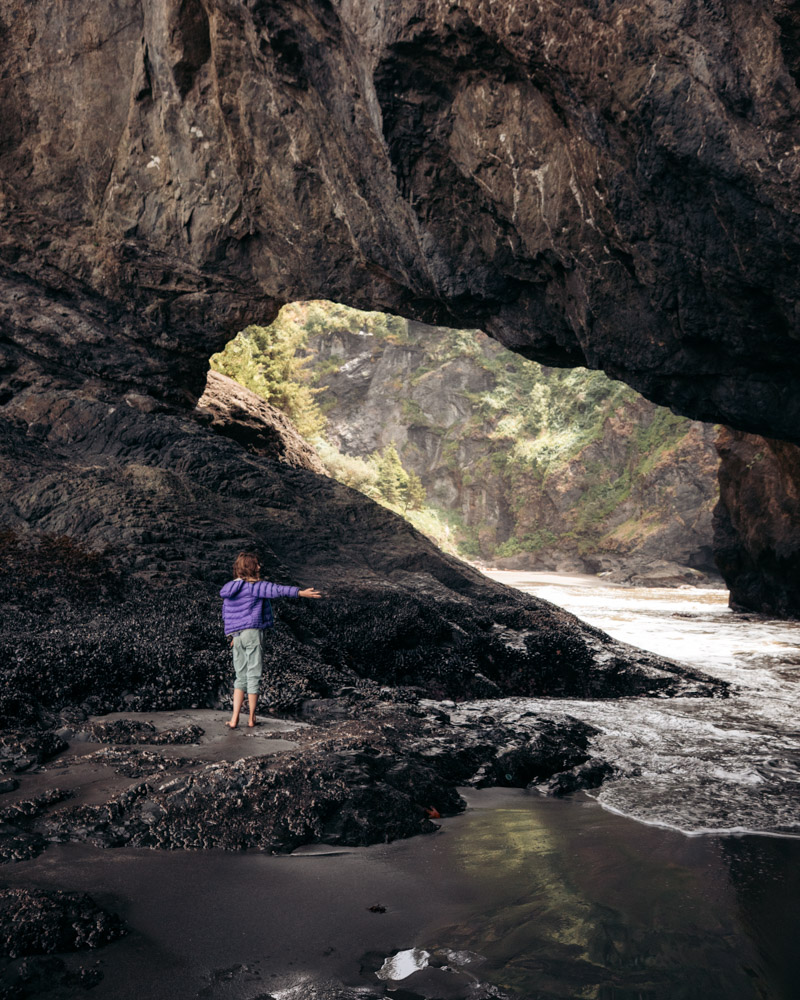
Secret Beach is the gateway to one of the most dramatic experiences on the entire Oregon coast.
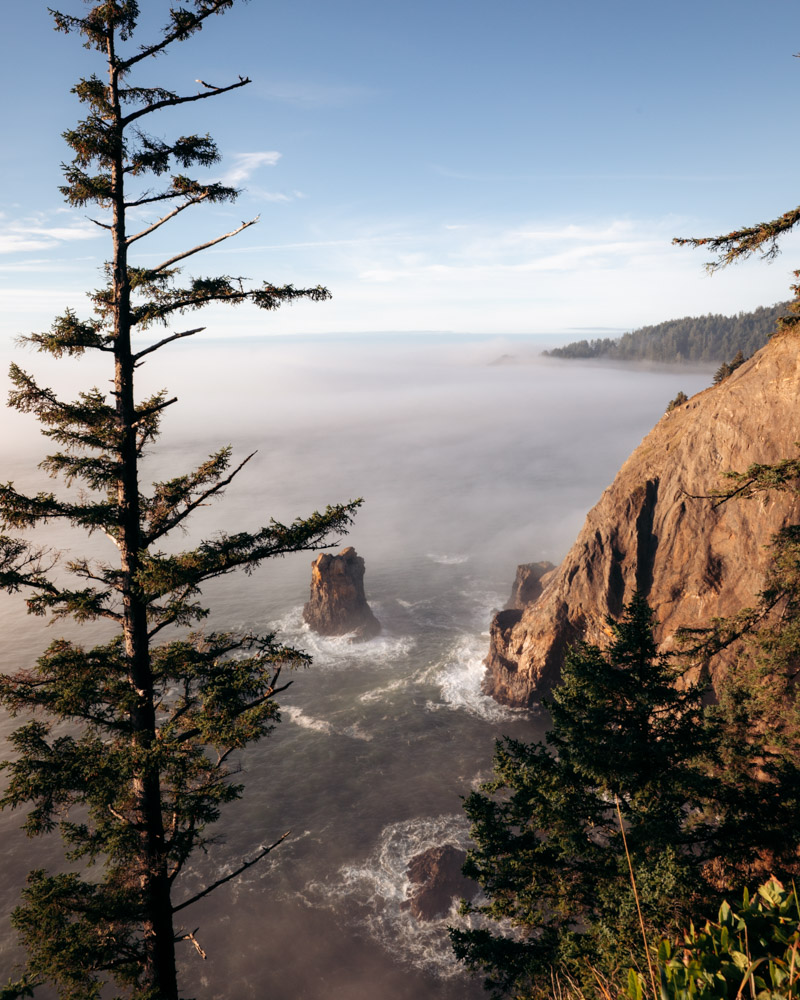
From above, the Natural Bridges viewpoint looks almost unreal—massive rock formations carved by the ocean into arches and spans, framed by forested cliffs and crashing waves far below. It’s stunning, expansive, and feels almost too wild to be easily accessible.
But the real magic happens when you go down.
The short trail to Secret Beach drops steeply to the sand, filtering out casual visitors and immediately changing the scale of everything. From below, those same bridges loom overhead, dark and sculptural, with waves surging through the openings beneath your feet. You can stand under the arches, watch the water rush through, and feel how alive this stretch of coast really is.
This is one of those places where kids naturally slow down—exploring tide pools, ducking under rock overhangs, watching the surf move in and out like it’s breathing.
Why this stop works: two completely different perspectives, huge payoff, feels like discovering something
Good to know:
- Accessed via Secret Beach trail (short but steep)
- Best at lower tide if you want to explore underneath the bridges
- Watch footing on wet rock and keep distance from incoming waves
If you only stop once along the Samuel H. Boardman Scenic Corridor, make it here—and give yourself time to experience it from both angles.
Simpson Beach (Samuel H. Boardman Scenic Corridor)
Simpson Beach is quieter, wilder, and often overlooked.
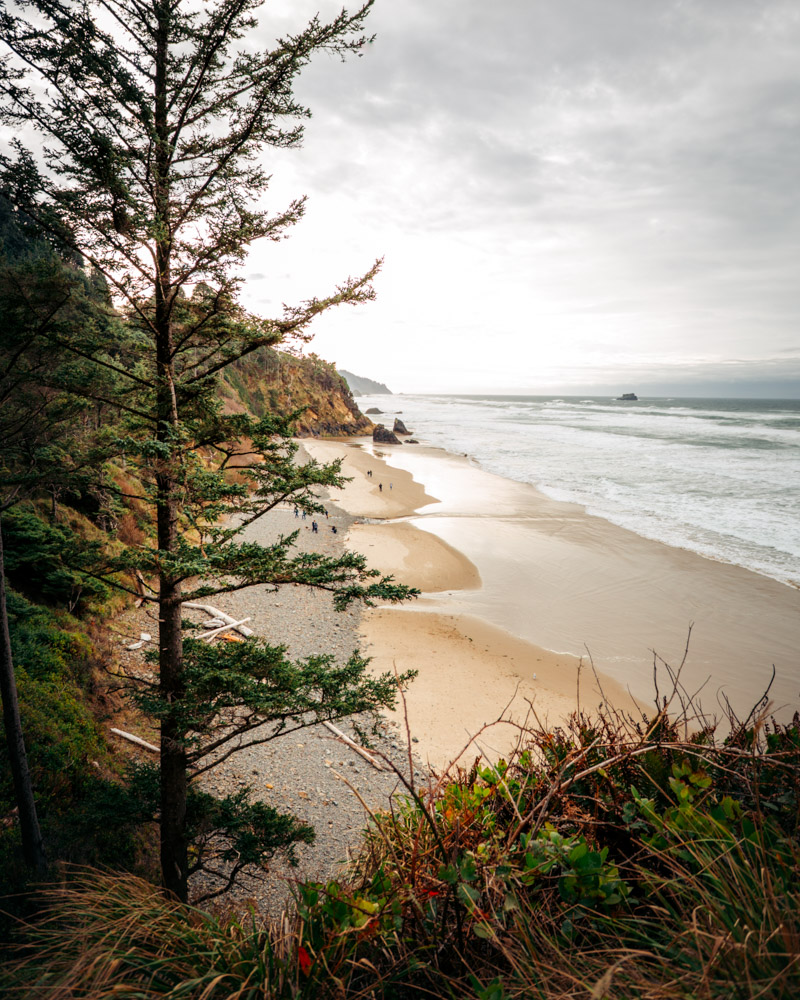
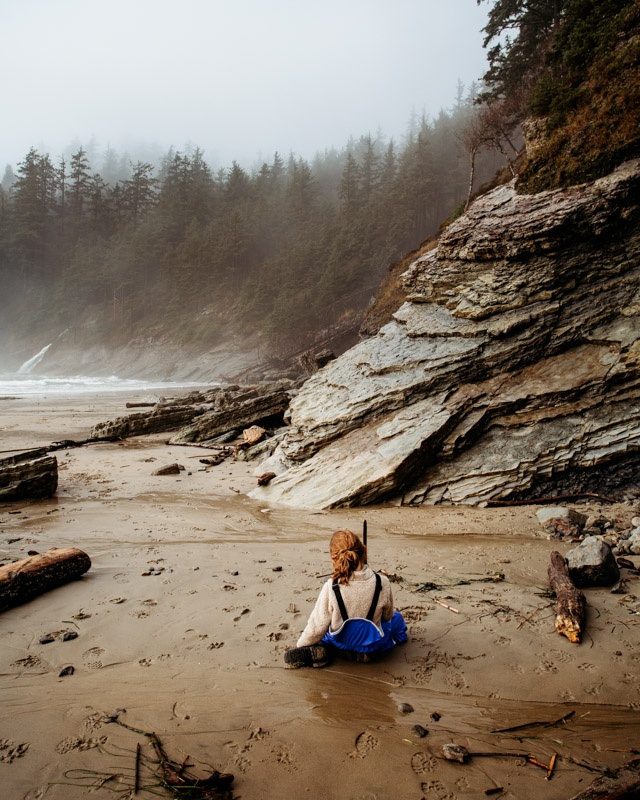
Accessed by a short trail from Highway 101, the beach opens into a broad stretch of sand backed by steep cliffs. On misty days, it feels moody and almost cinematic—the kind of place where you linger longer than planned.
Because it’s not as immediately visible from the road, Simpson Beach tends to be less crowded than nearby pullouts. Kids can roam, build driftwood forts, and chase waves without feeling boxed in, while adults get wide-open views and that rare sense of having the coast to yourselves.
Why this stop works: space to roam, fewer crowds, classic south coast vibes
Good to know: Trail access is straightforward but not stroller-friendly. Wind can be strong—layers matter.
Bandon Beach
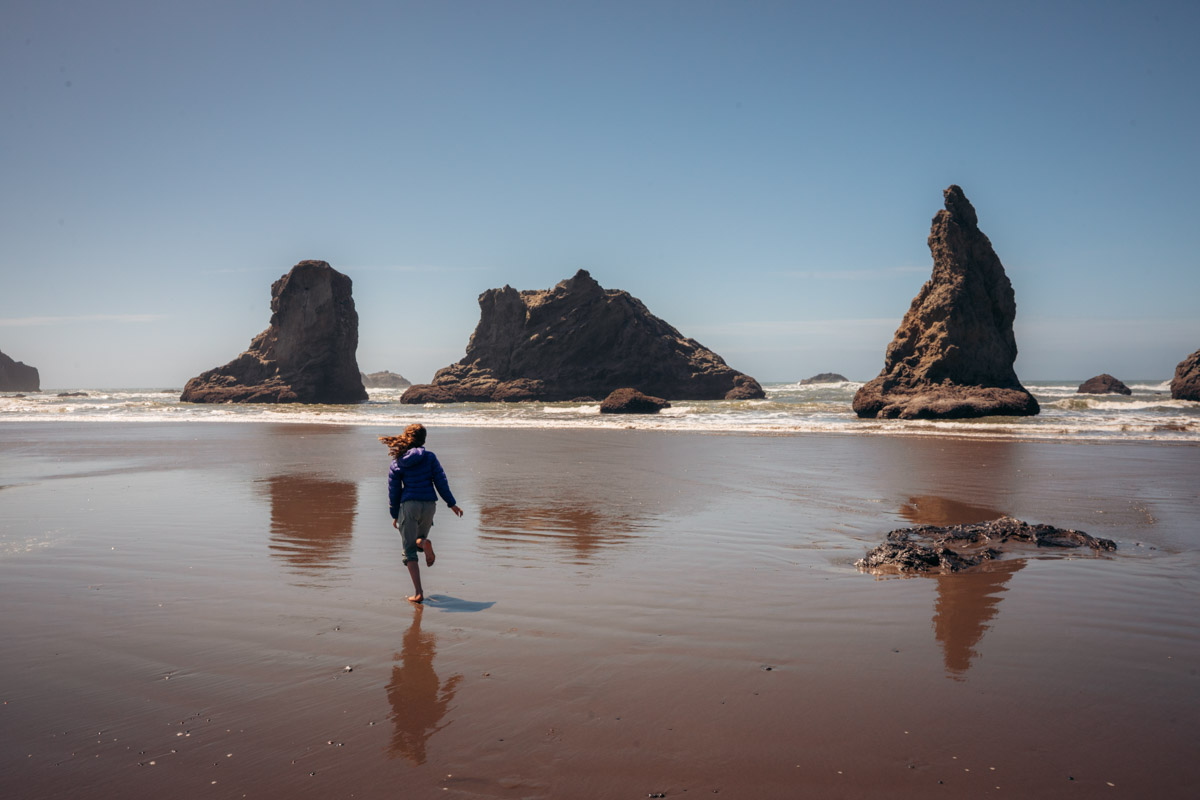
Bandon Beach is broad and expansive—the kind of scene people think of when they imagine the quintessential Oregon coastline.
Sea stacks scatter across a wide, sandy stretch, creating deep layers of shadow and light that shift constantly as the day changes. It’s dramatic, open, and breathtaking in its scale, and at sunset you can watch the sky explode into color over a long walk with rolling surf at your feet.
But it’s a different vibe than Harris. Where Harris feels intimate and quiet, Bandon feels cinematic and open. Both are beautiful — just in different ways.
Why this stop works: wide open space, classic sea stacks, long sandy walks
Good to know: Face Rock State Scenic Viewpoint is the main access point. Arrive early and stay late if you’re chasing sunset light.
Harris Beach
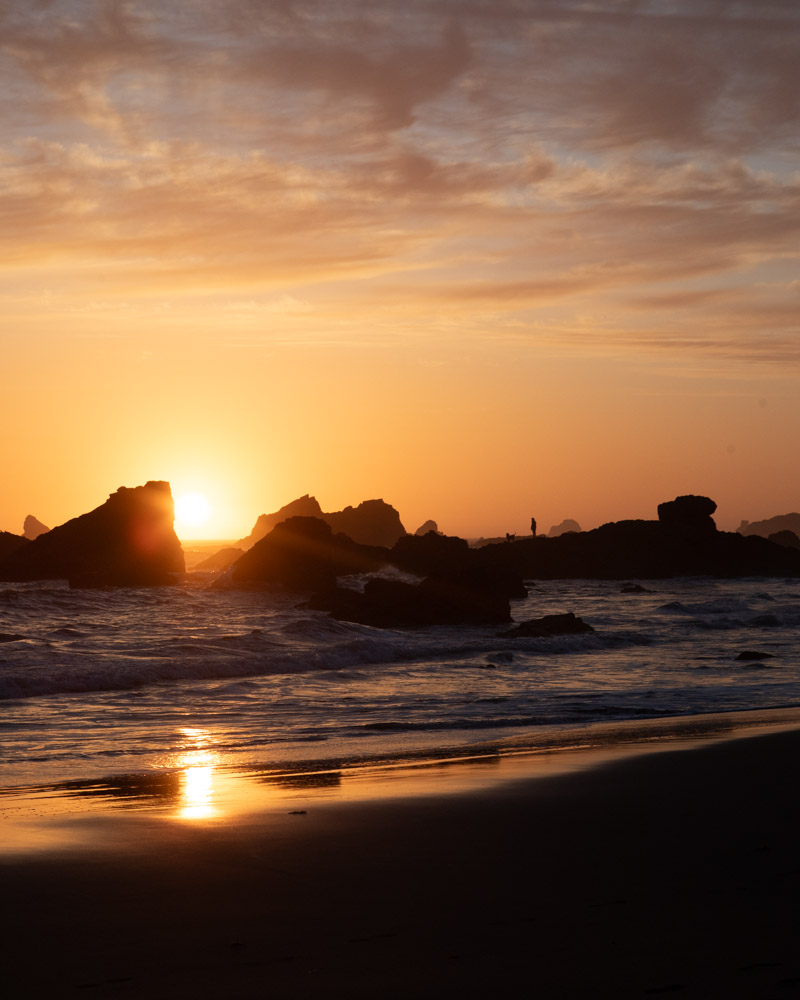
Harris Beach is the place where my Oregon Coast sunset story lands.
Here, the sea stacks sit close to shore instead of far out on a wide beach, and the light wraps around them in a way that feels intimate and intense rather than grand and distant. On the evening I’ll never forget, the sky turned a soft, mellow spectrum of gold and pink, the crashing waves softened to a rhythmic lull, and the stacks stood like quiet sentinels as the sun dipped below the horizon.
Kids can still run, explore tide pools, and scramble around driftwood, but there’s something more personal and quietly cinematic about this spot. It’s less about space and more about feeling wrapped inside the moment.
Why this stop works: close sea stacks, intimate sunset light, quieter south coast energy
Good to know: Harris Beach State Park is just north of Brookings. Wind can be strong at sunset—layers matter, and tide timing helps if you’re exploring near rocks.
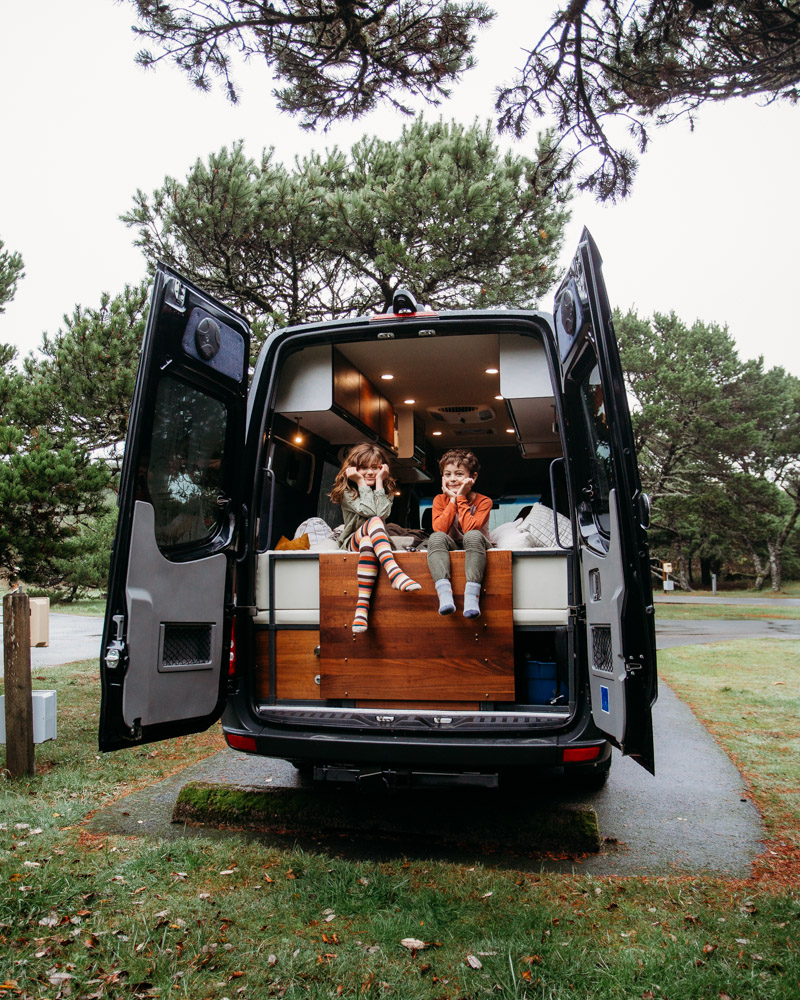
The Campervan Trip (What Made It Work)
November. Rain for days. We rented a campervan and stayed in campgrounds near the beaches.
The game changer was the rear outdoor shower. Every evening, sandy kids lined up, rinsed off, and climbed into dry beds. The sand stayed outside. The stress stayed low.
Would do again: campervan with a shower, shoulder season, flexible plans
Would change: bring more towels. Always more towels.
What Actually Works with Kids
- Rain suits are non-negotiable (pants + jacket, fully waterproof)
- Let them get sandy — fighting it is pointless
- Chase waves — this is the memory
- Lower expectations — you won’t hit every stop
- Pack snacks like you’re going to war
If you want more kid-friendly outdoor ideas, these pair well with a coast trip:
Why the Rain Doesn’t Matter
The rain didn’t ruin anything.
The rain was the trip.
My kids don’t remember the forecast.
They remember chasing waves.
And remember sleeping in the van.
They remember empty beaches and wild wind.
The Oregon coast is always beautiful.
You just have to let go of what you thought beautiful was supposed to look like.
Pack rain suits. Let them get sandy. Chase the waves.
📌 Save this for later — the coast is always a good idea.