
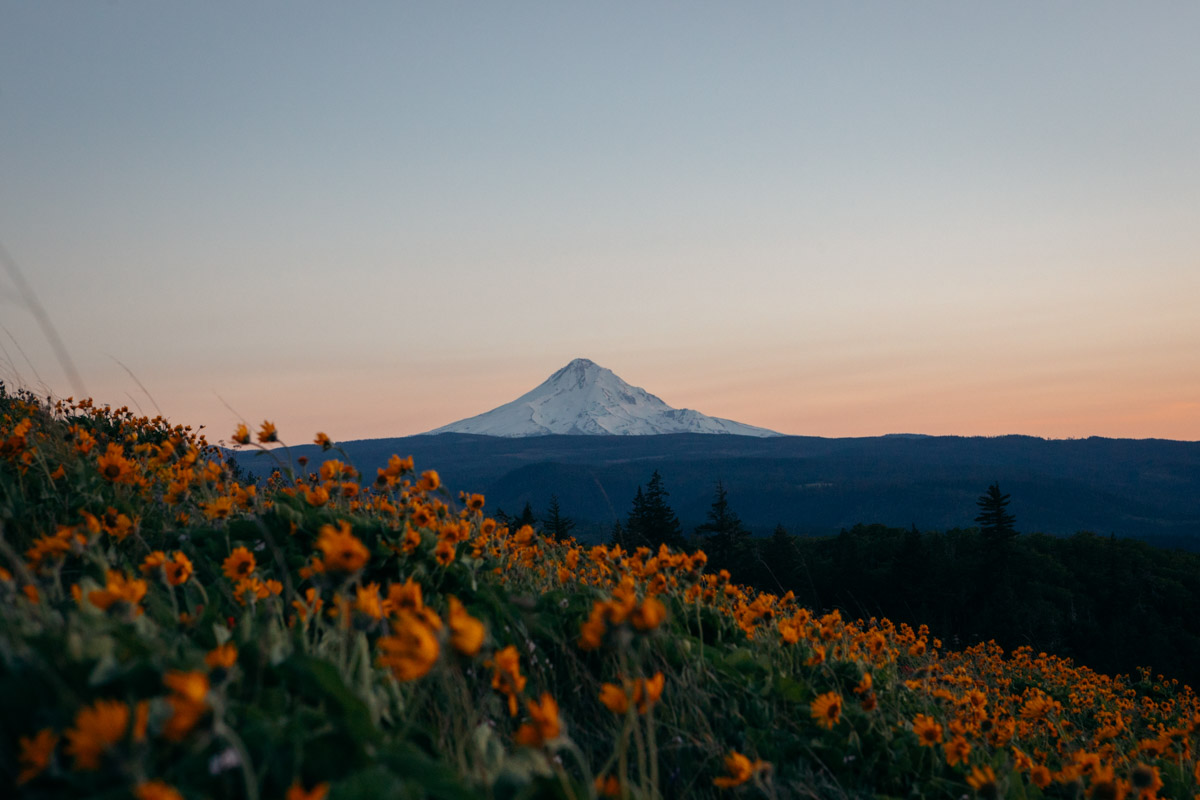
How to Spend a Spring Weekend in the Columbia River Gorge (Stays, Food + Best Hikes)
Spring is when the Columbia River Gorge comes alive—waterfalls roar, wildflowers blanket the hillsides, and cool evenings make hot springs and cozy basecamps especially appealing. It’s also the most misunderstood season—conditions change quickly, bloom timing varies by elevation, and popular hikes require planning.
I’ve visited the Gorge many times across seasons and have hiked nearly all of the major trails. Spring is hands-down my favorite if you do it right. This guide pulls everything together—when to go, where to hike, where to stay, and how to plan a spring trip that actually works.
Quick Plan (Save This)
- Best time to go: April–early May for a mix of waterfalls + wildflowers
- Peak waterfalls: March–April
- Peak wildflowers: late April–May (varies by elevation)
- Best family hike: Beacon Rock
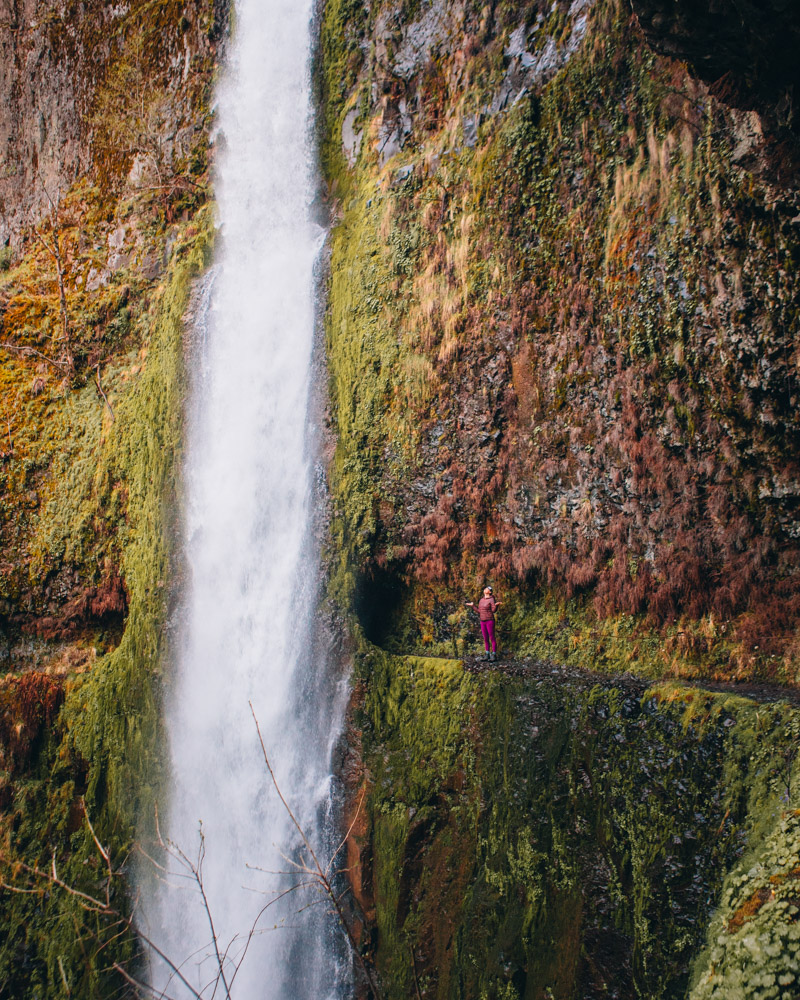
- Iconic waterfall hike: Tunnel Falls (Eagle Creek)
- Best east Gorge wildflower day: Rowena Crest → Tom McCall Point → Memaloose Hills
- Best basecamp for flexibility: Carson / Stevenson area
- Drive times can double on sunny spring weekends—plan trailheads early and save a ‘Plan B’ hike nearby.
Why Spring Is Special in the Columbia River Gorge
Spring offers the best contrast the Gorge has:
- Peak waterfall flow from snowmelt
- Early wildflowers at lower elevations, later blooms to the east
- Cooler hiking temperatures
- Fewer crowds than summer (with exceptions like Dog Mountain)
Unlike summer, when everyone funnels into the same handful of stops, spring rewards flexibility. You can hike waterfalls in the morning, chase sun in the eastern Gorge in the afternoon, and be back at your basecamp by dinner.
When to Visit the Columbia River Gorge in Spring
Early Spring (March)
- Waterfalls at full force
- Early blooms on low-elevation trails
- Muddy trails and unpredictable weather
- Fewer overall visitors
Best if waterfalls are your priority.
Mid-Spring (April)
- Ideal balance of waterfalls + wildflowers
- Dog Mountain permit season begins
- More consistent trail access
This is the sweet spot for most travelers.
Late Spring (May)
- Peak wildflowers at higher elevations
- Warmer days and longer hikes
- Increased weekend crowds
Great for wildflower chasers willing to plan around timing.
Best Spring Waterfall Hikes in the Columbia River Gorge
Spring is waterfall season, and many of the Gorge’s best falls are accessible without committing to long hikes.
Easy Waterfalls (Great With Kids)
- Multnomah Falls
- Horsetail Falls
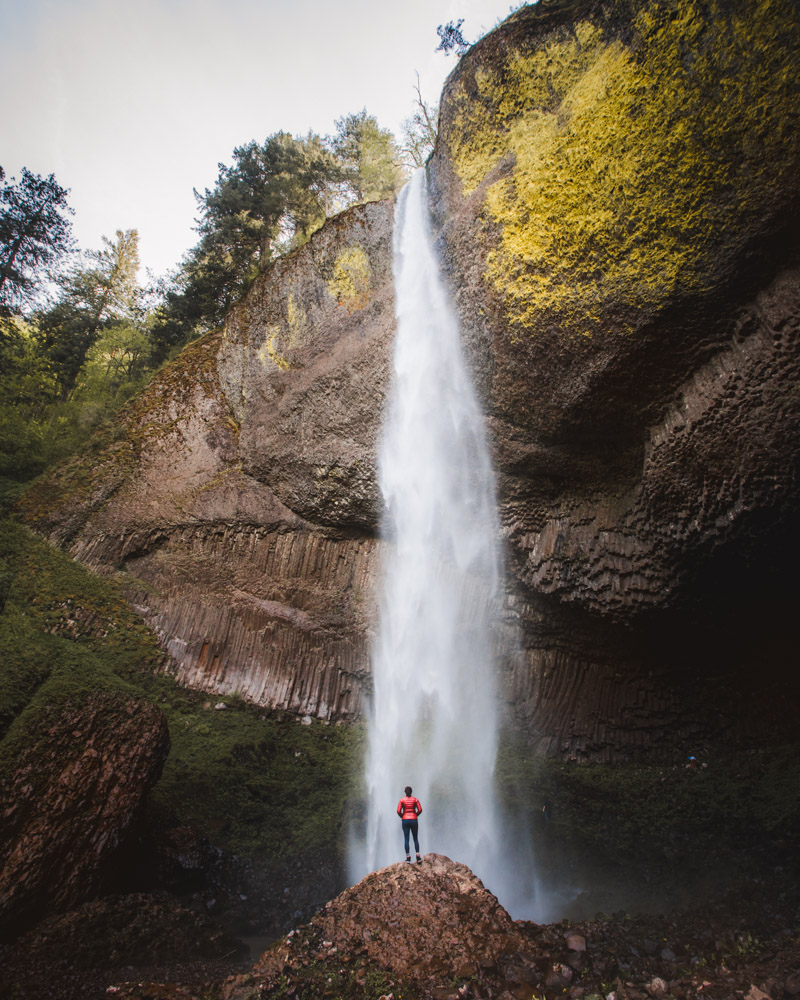
- Latourell Falls
Moderate Waterfall Hikes
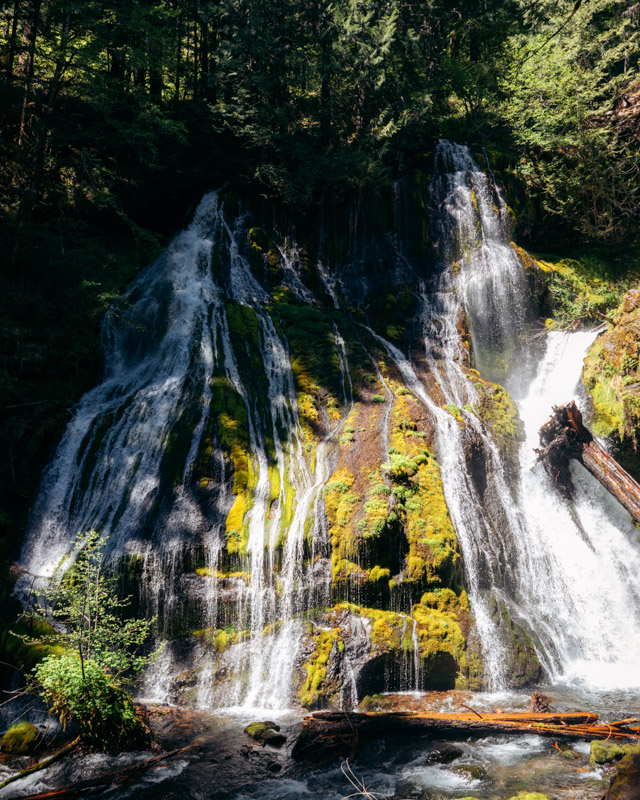
Panther Creek Falls (Washington Side)
Panther Creek Falls is a powerful, mossy waterfall tucked into the Gifford Pinchot National Forest and is especially impressive in spring when snowmelt swells the creek.
The hike is short, but the elevation change—especially if you take the lower trail—makes it feel harder than the mileage suggests. Expect a steep descent to the viewpoint and a lung-busting climb back out.
- Distance: 0.4 miles round trip
- Elevation Gain: 200 feet
- Difficulty: Easy (but steep descent)
- Time: 15–30 minutes
Best for: hikers who want a big payoff without a long hike
Not ideal for: strollers or anyone expecting an “easy” walk
Drive note: approximately 20–25 minutes from Carson
This hike pairs perfectly with wildflower hikes later in the day.
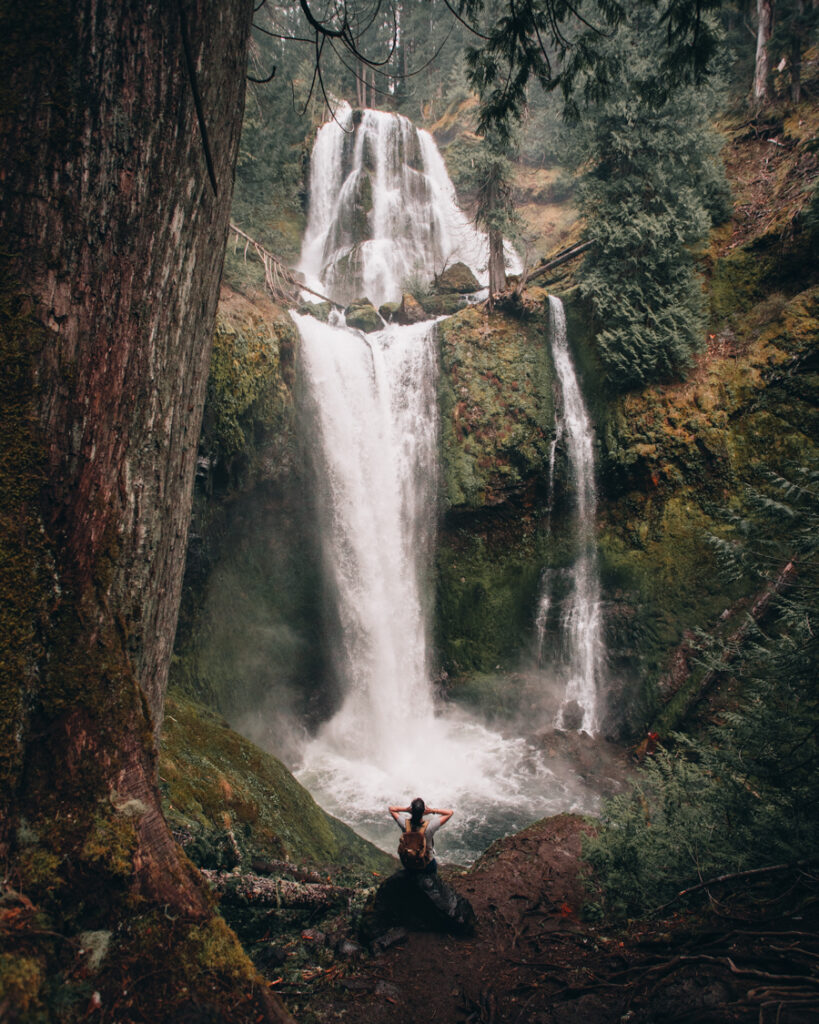
Falls Creek Falls (Washington Side)
A wide and powerful waterfall, Falls Creek Falls is reached via a longer but more gradual trail, making it feel less intense than some shorter Gorge hikes.
The steady grade makes this a good choice if you prefer endurance over steep climbs. In spring, the forest is lush, the creek is flowing strong, and crowds are generally lighter than on the Oregon side.
- Distance: 3.4 miles round trip (out-and-back) or 6.2 miles (loop)
- Elevation Gain: 750 feet (out-and-back) or 1,280 feet (loop)
- Difficulty: Moderate
- Time: 1.5–2 hours (out-and-back) or 3–3.5 hours (loop)
Best for: hikers who want a longer walk without steep elevation
Good option if: you want something quieter and less rushed
Tip: pairs well with Panther Creek Falls on the same day
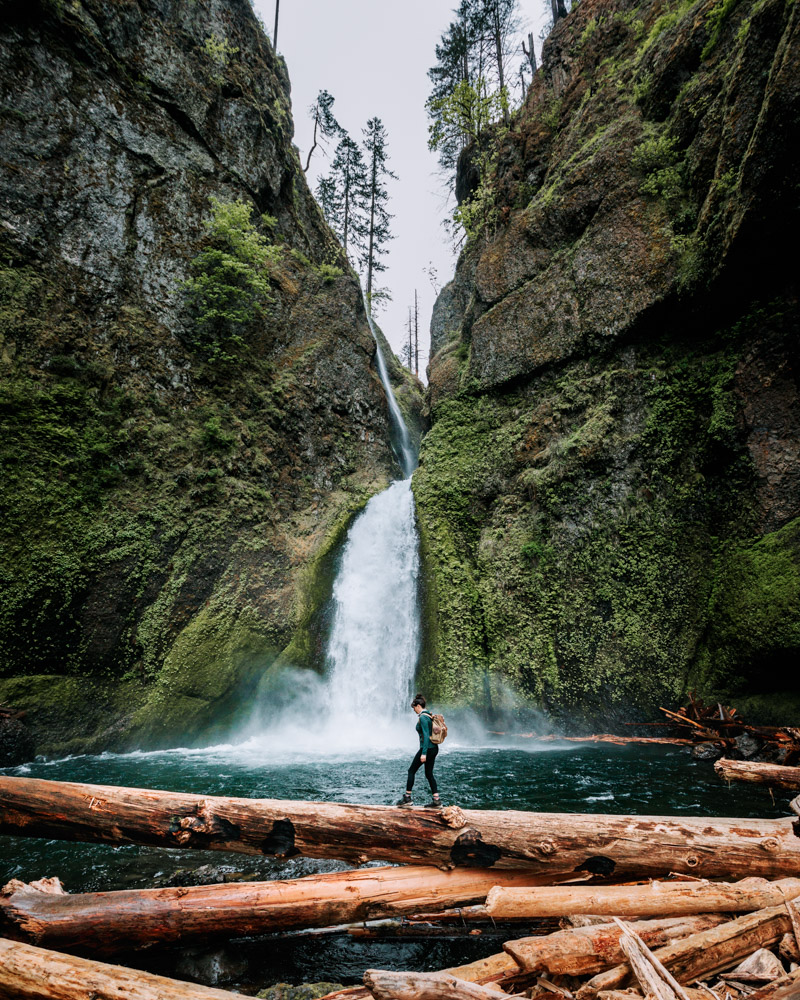
Wahclella Falls (Oregon Side)
The hike to Wahclella Falls is a short but scenic hike through a narrow canyon, ending at a dramatic waterfall surrounded by steep rock walls.
The trail includes rocky sections and can be wet or slippery in spring, but it’s manageable for most hikers comfortable with uneven footing. Despite the short distance, it feels immersive and tucked away.
- Distance: 2 miles round trip
- Elevation Gain: 350 feet
- Difficulty: Moderate
- Time: 1–1.5 hours
Best for: a half-day outing with a big visual payoff
Not ideal for: strollers or anyone avoiding rocky terrain
Tip: go early or midweek to avoid crowds
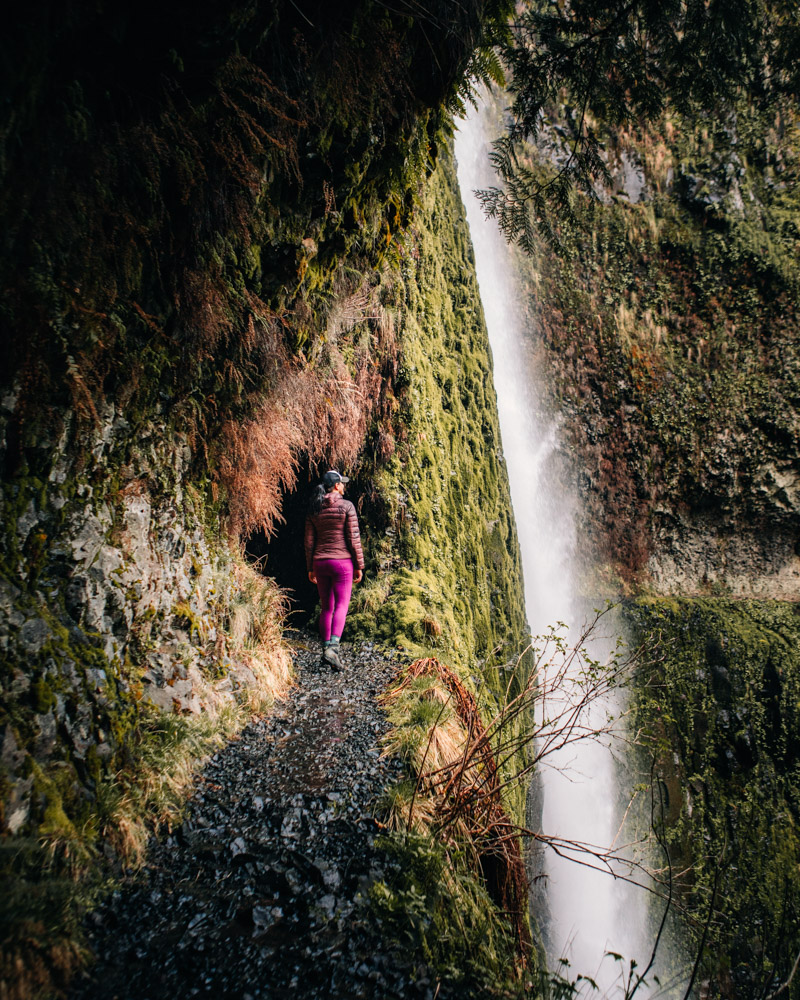
Tunnel Falls (via Eagle Creek Trail)
This hike to Tunnel Falls is one of the most iconic waterfall hikes in the Columbia River Gorge, following the Eagle Creek Trail past multiple cascades before reaching a narrow tunnel carved directly behind the waterfall.
In spring, water flow is dramatic, but trail conditions vary year to year due to winter damage and fire recovery. Narrow sections with exposure require attention, especially when wet. This hike is best for confident hikers comfortable with drop-offs.
- Distance: 12 miles round trip
- Elevation Gain: 1,200 feet
- Difficulty: Moderate to Strenuous (exposure)
- Time: 5–7 hours
Best for: experienced hikers looking for a classic Gorge experience
Not ideal for: young kids or anyone uncomfortable with exposure
Important: always check current trail conditions before going
Choosing the Right Waterfall Hike
- Easy walk-ups: Multnomah, Horsetail, Latourell
- Short but steep: Panther Creek Falls
- Longer and gradual: Falls Creek Falls
- Iconic with exposure: Tunnel Falls
- Short canyon hike: Wahclella Falls
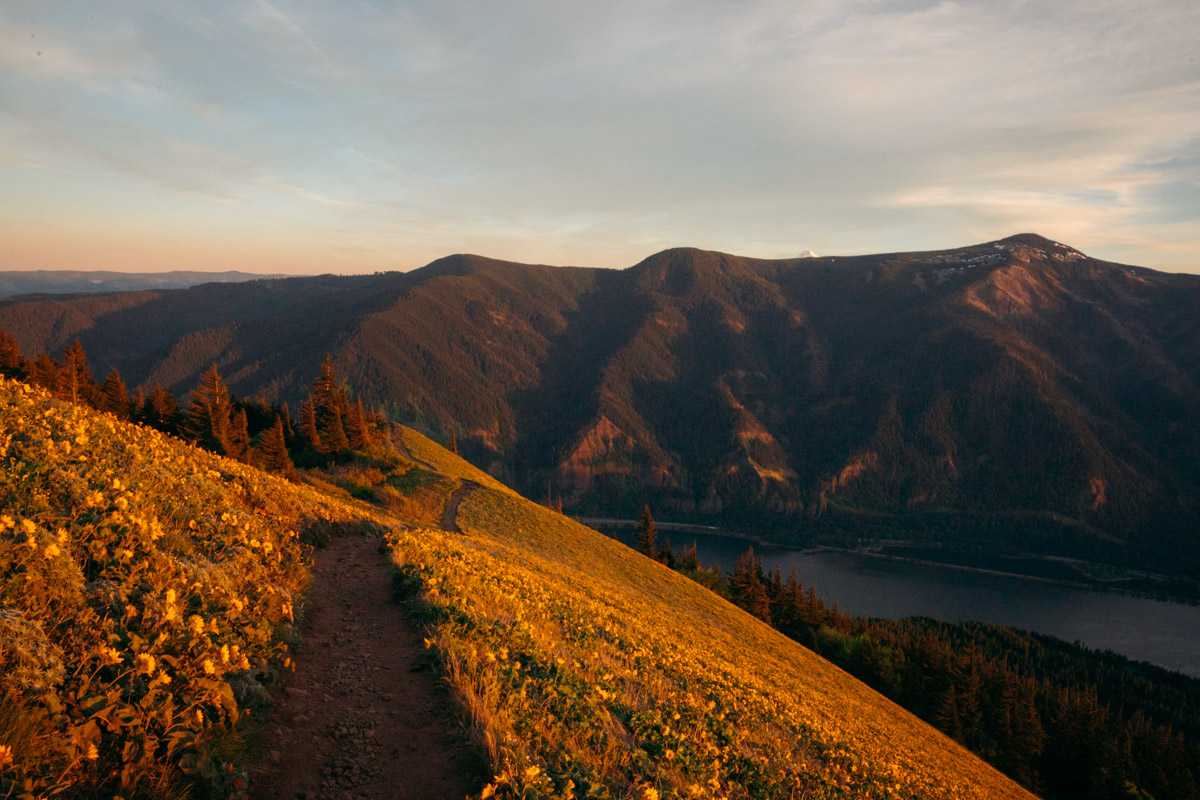
Wildflower Hikes in the Columbia River Gorge (Spring Favorites)
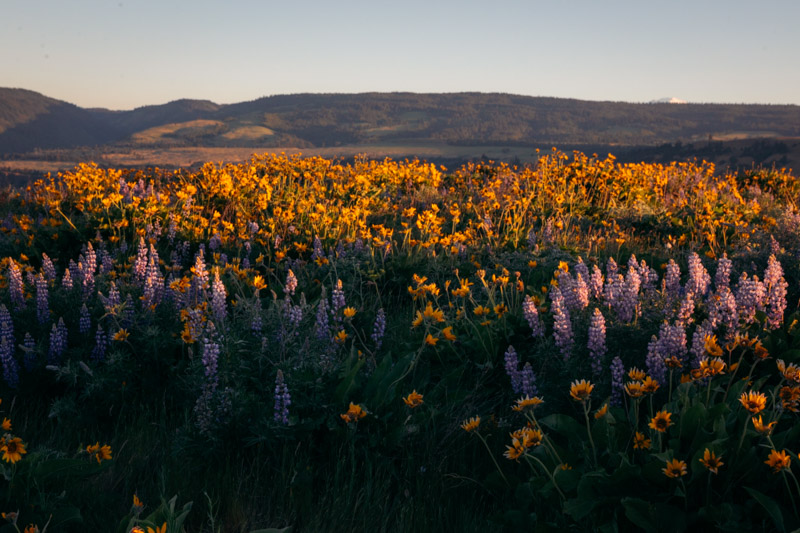
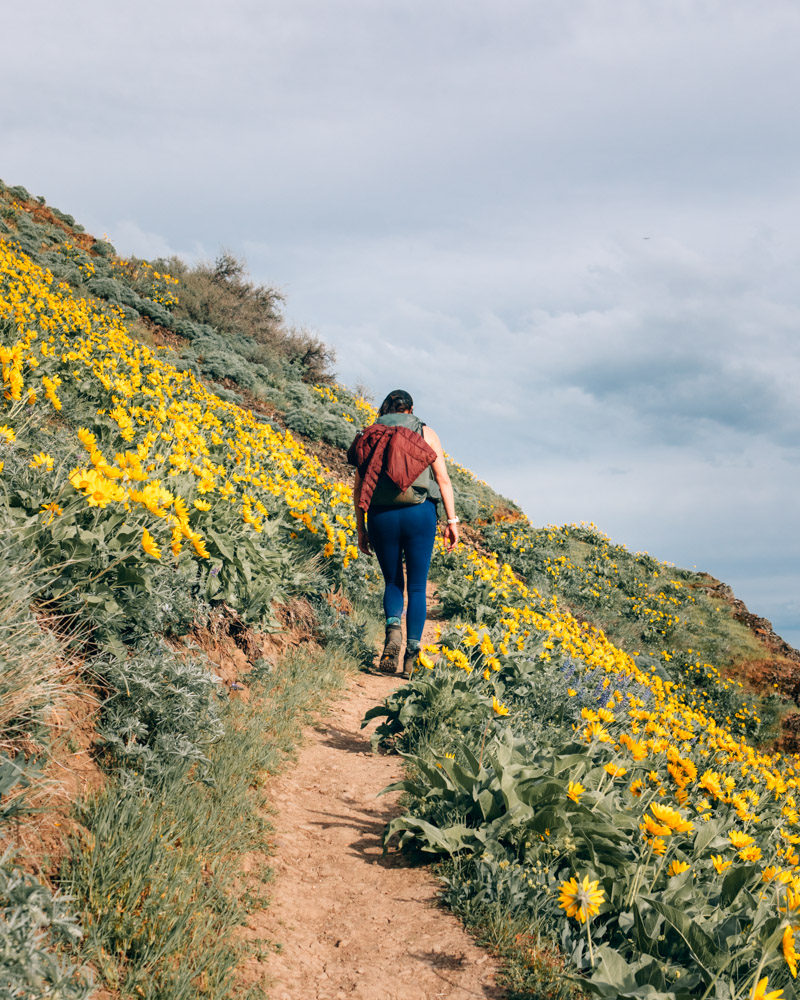
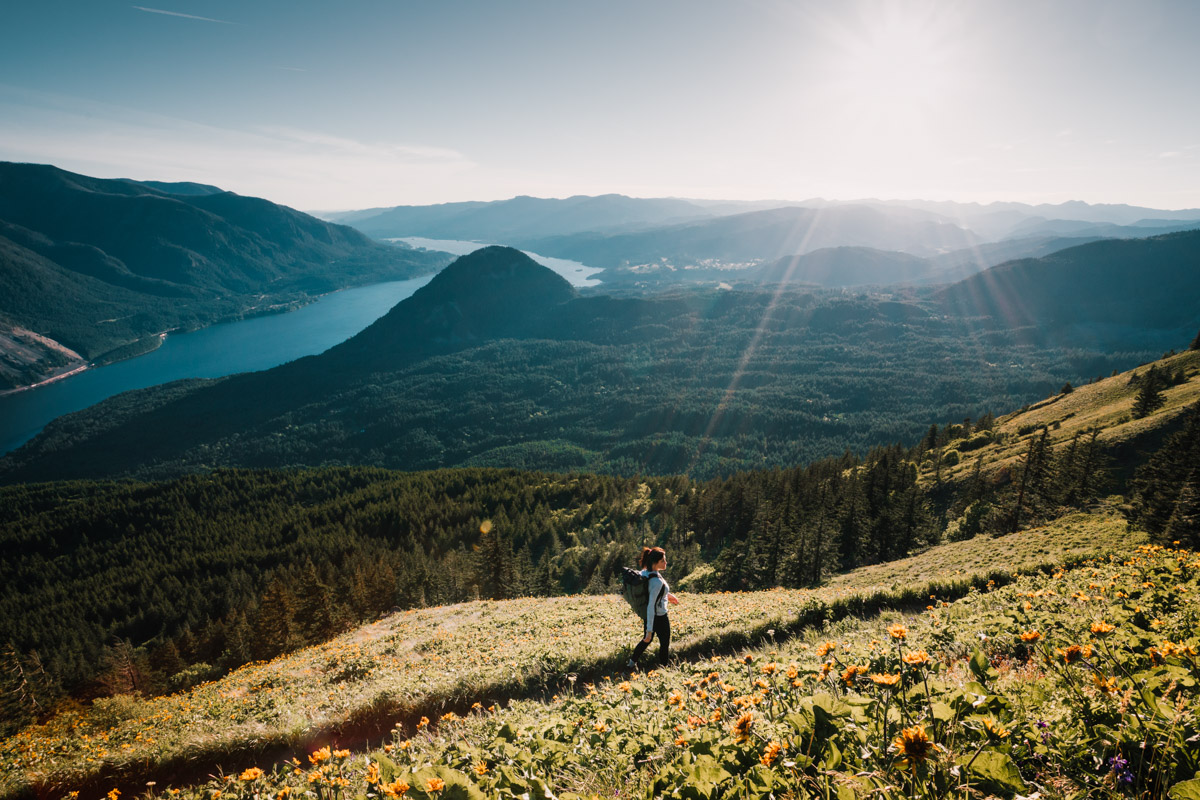
Spring wildflowers are one of the biggest reasons people visit the Gorge. Timing, elevation, and exposure matter more here than almost anywhere else in the PNW, and these hikes range from short strolls to strenuous climbs.
Easy to Moderate Wildflower Walks
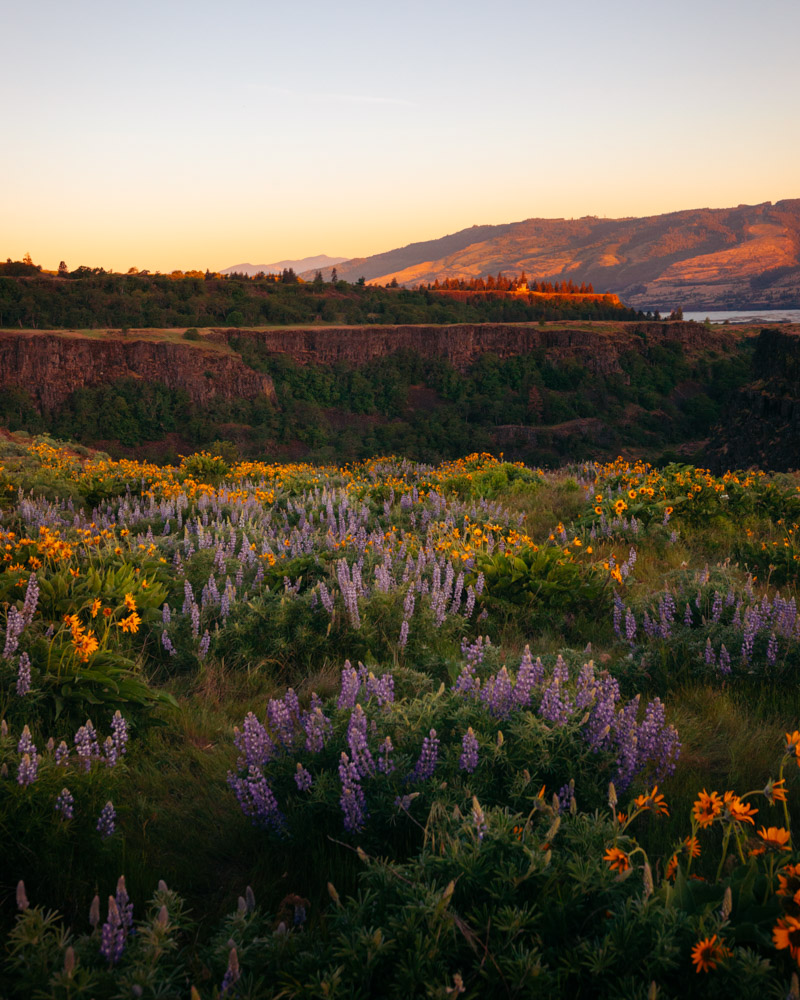
Rowena Crest (Viewpoints + Short Walks)
The viewpoint at Rowena Crest is often treated as a quick viewpoint stop, but spring brings wildflowers to the surrounding slopes and short walkable sections worth lingering on.
This is less about a single defined hike and more about exploring the area slowly, soaking in views of the river, and catching blooms without committing to a long trail.
Best for: scenic stops, photographers, combining with other hikes
Good to know: blooms here tend to peak later than western Gorge trails
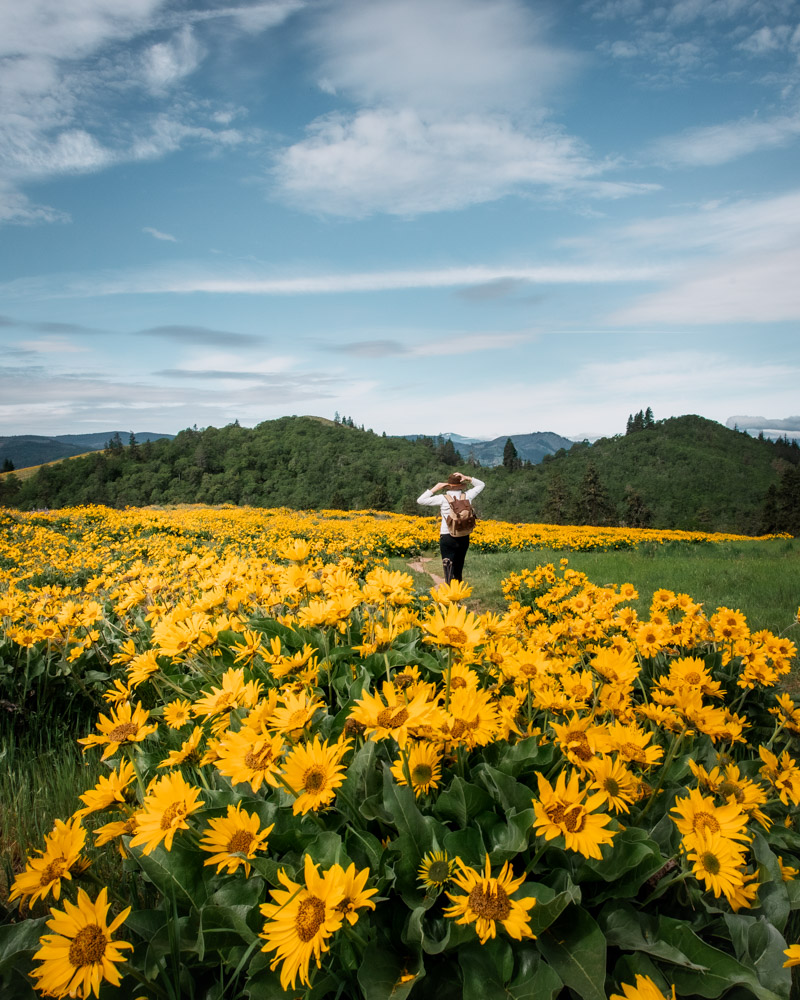
Memaloose Hills (Rowena Plateau Area)
The hike at Memaloose Hills is one of the best early-season wildflower areas in the eastern Gorge, with open hillsides, big views, and a longer bloom window than many western Gorge hikes.
The terrain is mostly rolling rather than steep, making it a great option for families, photographers, and anyone who wants flowers without committing to a hard climb.
- Distance: 2.8 miles round trip
- Elevation Gain: 900 feet
- Difficulty: Easy to Moderate
- Time: 1.5–2 hours
Best for: early spring blooms, wide-open views, a relaxed pace
Good to know: exposure can mean wind—layers matter
Pairs well with: Rowena Crest viewpoints
Moderate to Strenuous Wildflower Hikes
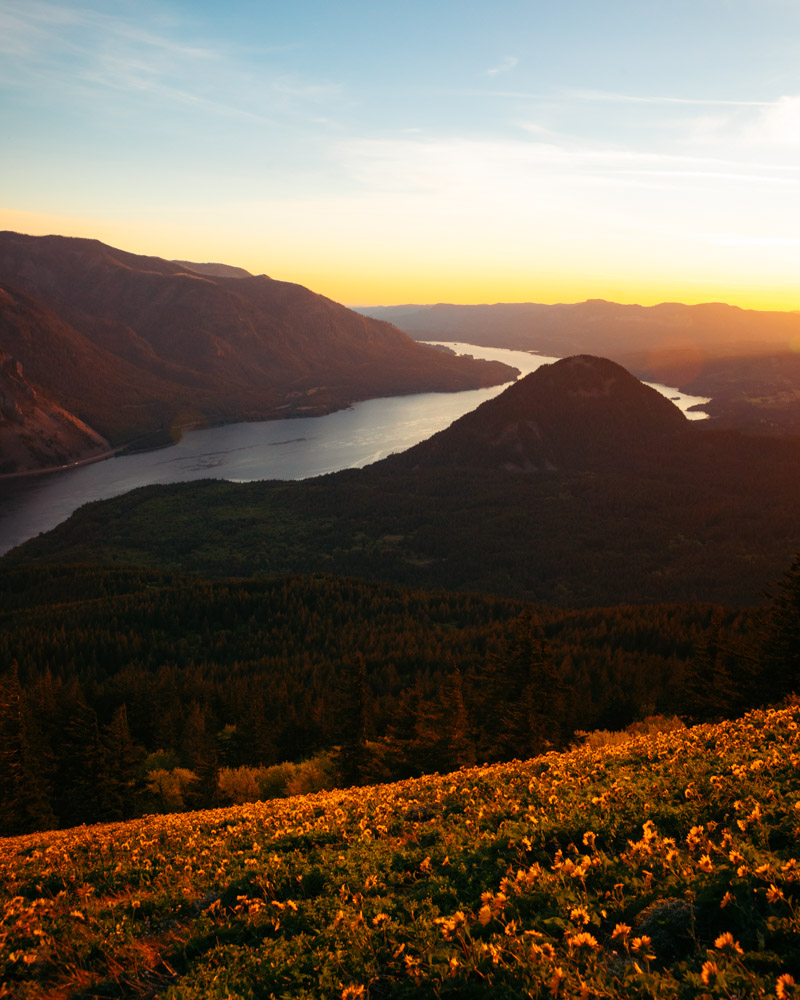
Dog Mountain
The hike up Dog Mountain is the most famous wildflower hike in the Gorge—and also the most demanding. When conditions align, the hillsides explode with balsamroot and lupine, making it unforgettable.
This is a steep, sustained climb with exposure and little shade. Spring permits are required on weekends, and timing varies year to year depending on snowpack.
- Distance: 6.9 miles (loop)
- Elevation Gain: 2,800 feet
- Difficulty: Strenuous
- Time: 4–6 hours
👉 Reserve Dog Mountain permits on Recreation.gov
Permits required on spring weekends during peak wildflower season (dates vary each year). Permits typically go live in mid-March, and a smaller batch is released a few days before each date.
Best for: experienced hikers chasing peak bloom
Not ideal for: young kids or anyone unprepared for a hard climb
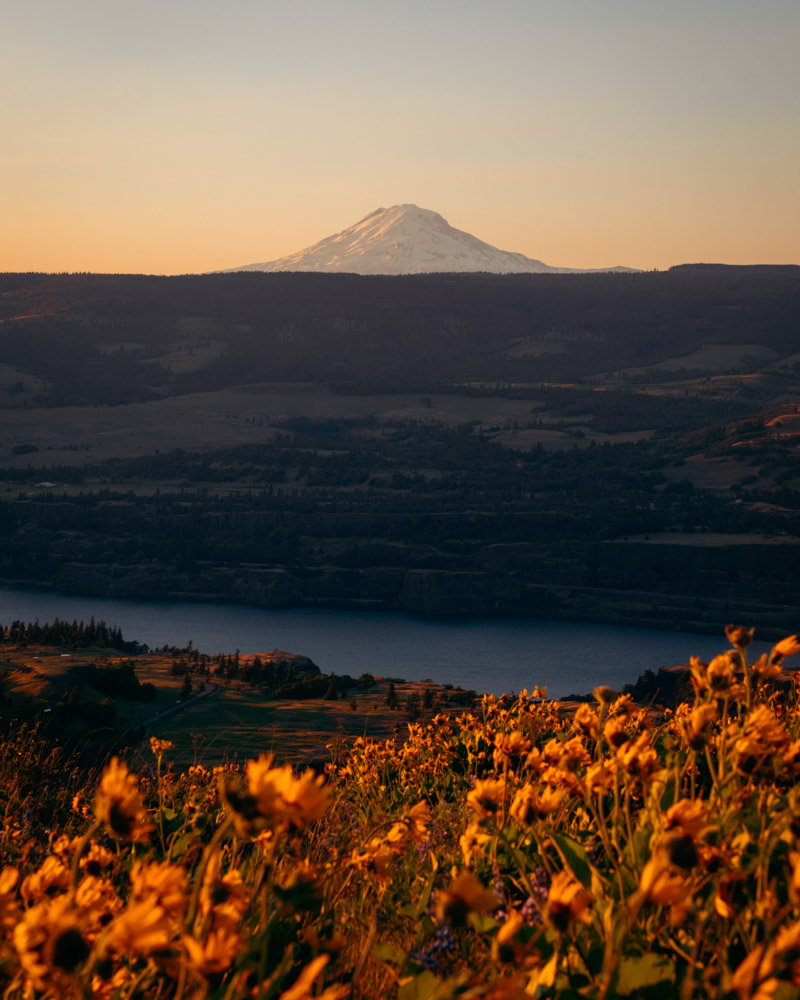
Tom McCall Point (via Rowena Plateau)
Hiking up to Tom McCall Point adds elevation and payoff to the Rowena area, with expansive views and excellent wildflower displays in spring.
The climb is steady but manageable, making it a great option if you want more of a hike without Dog Mountain-level effort.
- Distance: 3.4 miles round trip
- Elevation Gain: 1,000–1,200 feet
- Difficulty: Moderate
- Time: 2–3 hours
Best for: hikers wanting views + flowers without extreme crowds
Good to know: blooms here often last longer due to elevation and exposure

Dalles Mountain Ranch (Eastern Gorge)
Dalles Mountain Ranch is one of the most underrated wildflower hikes in the Gorge when conditions are right. The trail climbs through open grasslands with sweeping views and dense wildflower displays.
Because this area is more exposed and farther east, bloom timing can be slightly later—and conditions can change quickly with wind.
- Distance: 4–6 miles (varies by route)
- Elevation Gain: 1,000 feet
- Difficulty: Moderate
- Time: 2–3 hours
Best for: wildflower chasers willing to time it right
Good to know: no shade and limited protection from wind
Bonus: easy access if staying at Columbia Hills State Park
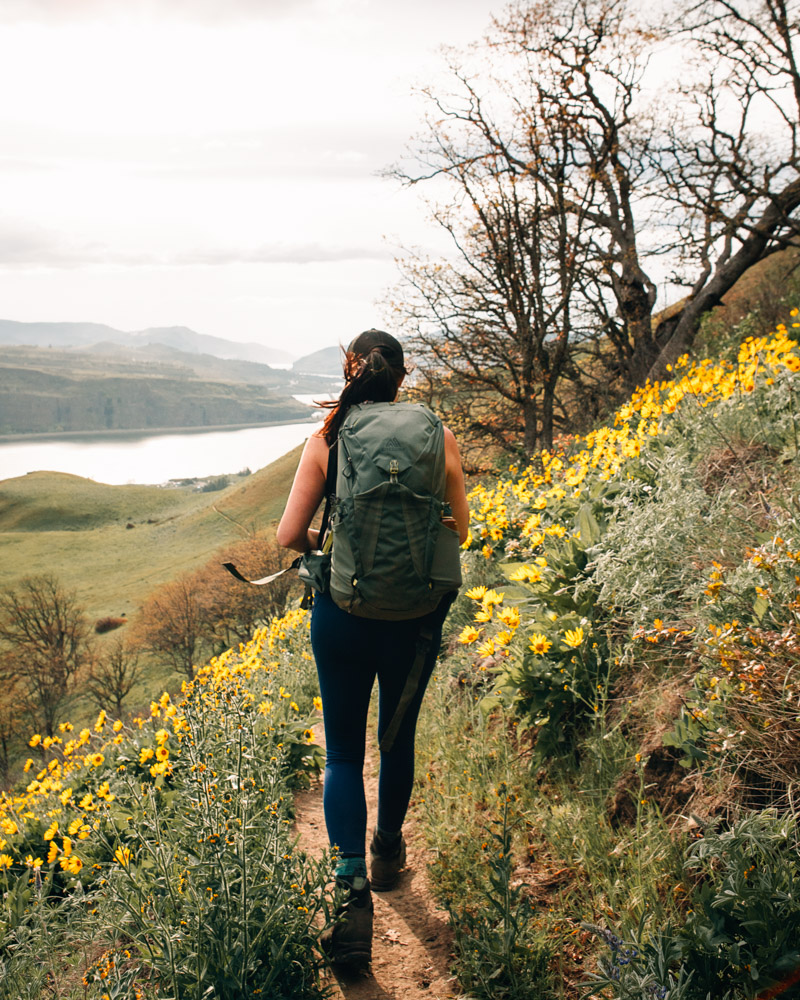
Lyle Cherry Orchard (Washington Side)
The Hike to Lyle Cherry Orchard is one of the best early-season wildflower hikes on the Washington side of the Columbia River Gorge. The open hillside trail offers sweeping river views and reliable spring color without a long or technical climb.
Because it sits at a lower elevation, this hike often blooms earlier than higher routes like Dog Mountain or Tom McCall Point, making it a great option if you’re visiting earlier in the spring.
- Distance: 4 miles round trip
- Elevation Gain: 1,200 feet
- Difficulty: Easy to Moderate
- Time: 2–2.5 hours
Best for: early spring wildflowers and shorter outings
Good to know: the trail is fully exposed, so sun and wind can be intense
Tip: combine this hike with Rowena Crest viewpoints for a full wildflower day
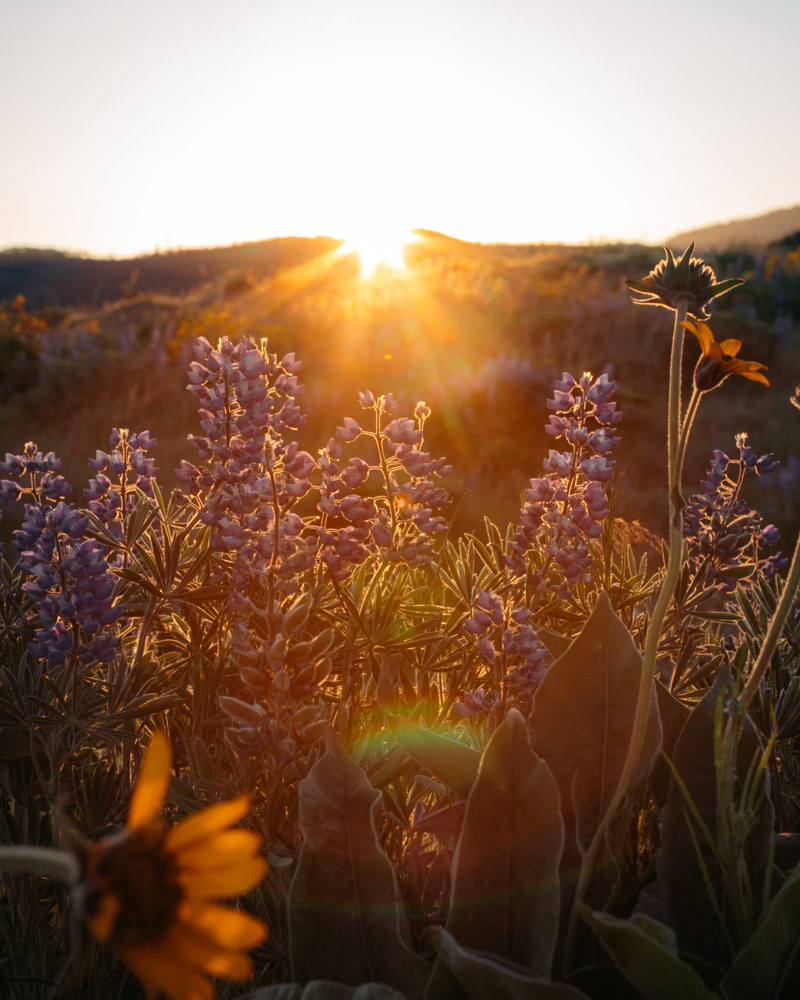
Coyote Wall (Washington Side)
Coyote Wall is one of the most scenic wildflower hikes in the Gorge — a dramatic geological feature visible from miles away, with open slopes, basalt formations, and sweeping views of the Columbia River and Mount Hood.
The trail system here offers flexibility: shorter loops stay lower on the wall, while longer routes climb to the ridge for expansive views and denser wildflower displays.
- Distance: 6–7 miles (loop, varies by route)
- Elevation Gain: 1,600 feet
- Difficulty: Moderate
- Time: 3–4 hours
Best for: wildflower chasers, photographers, hikers who want views without Dog Mountain crowds
Good to know: fully exposed — sun, wind, and rattlesnakes are all possibilities
Tip: pair with Lyle Cherry Orchard or Rowena Crest for a full wildflower day
Choosing the Right Wildflower Hike
Easy + scenic: Memaloose Hills, Rowena Crest, Lyle Cherry Orchard
Classic + strenuous: Dog Mountain
Moderate + big views: Tom McCall Point
Underrated + open terrain: Dalles Mountain Ranch
Kid-Friendly Spring Hikes
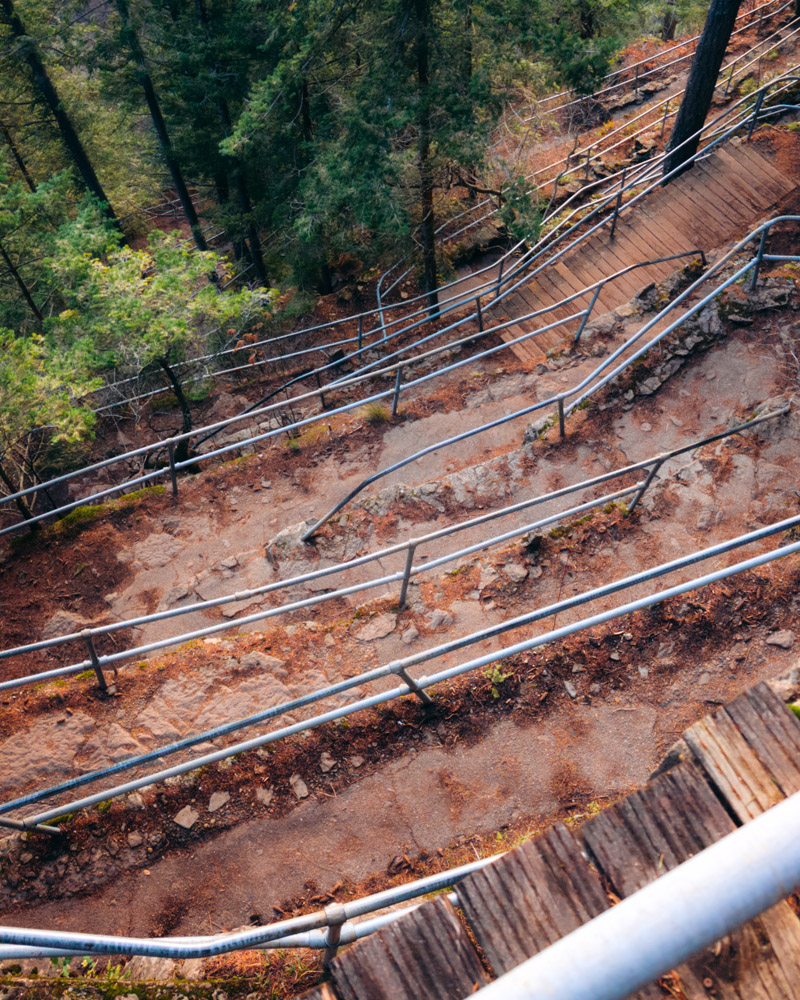
Beacon Rock (A Gorge Classic for Families)
Beacon Rock State Park is one of the best family hikes in the Gorge.
- Short but adventurous
- 52 Switchbacks and railings keep kids engaged
- Huge payoff at the top
- Distance: 1.8 miles round trip
- Elevation Gain: 600 feet
- Difficulty: Moderate (railings, switchbacks)
- Time: 1–1.5 hours
This is a hike kids remember—and one I recommend often.
Where to Stay in the Columbia River Gorge in Spring
Where you stay shapes the entire trip. I’ve spent nights at properties across the Gorge, from forest retreats to full-service lodges and state park campgrounds. These are places I’ve personally stayed and would return to.
Luxury / Basecamp Stays
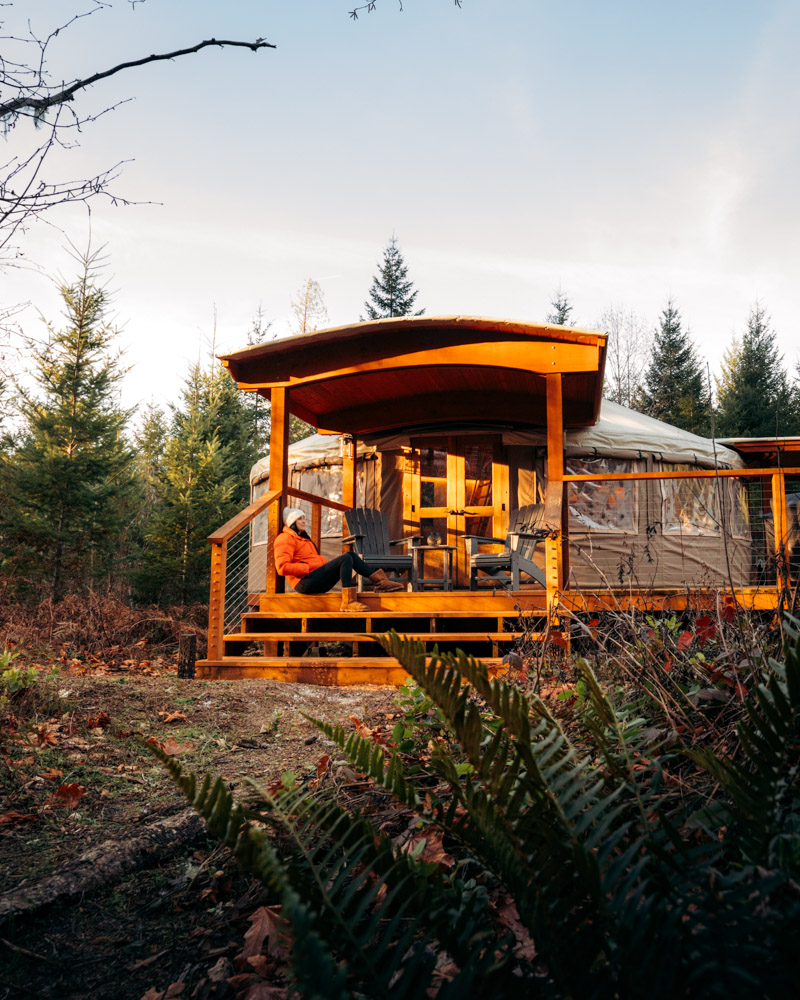
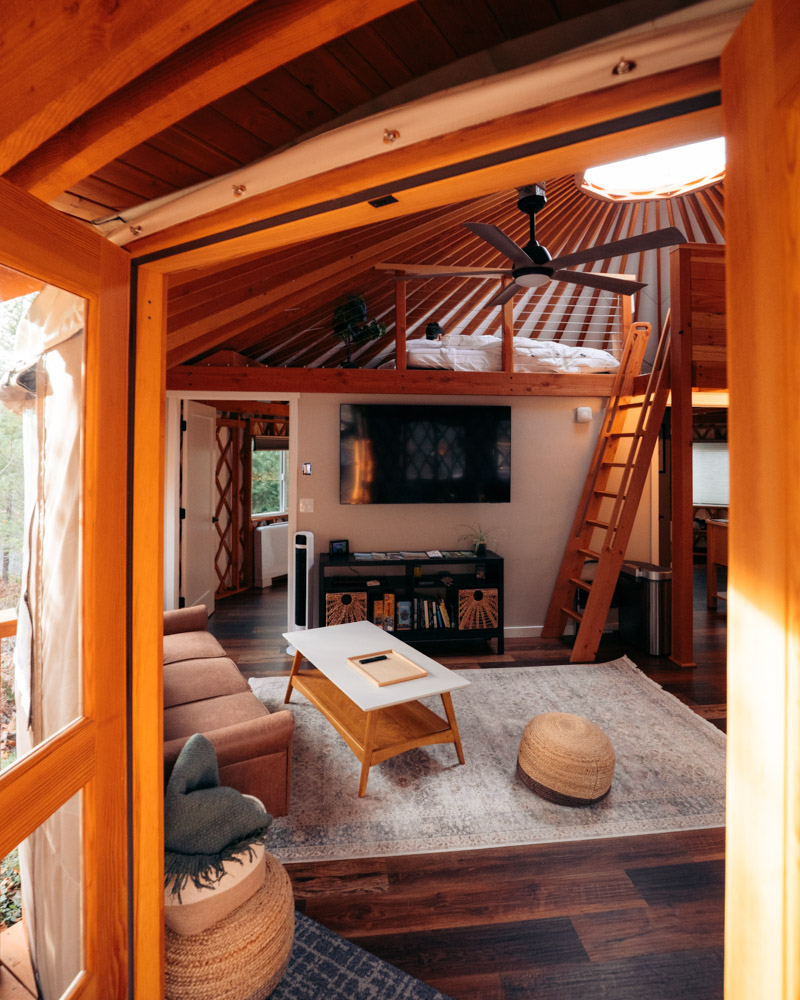
Columbia Gorge Getaways — Carson, WA
Best for: Adventurous families, photographers, travelers who want a true home base
These are not your average yurts. Each one is over 700 square feet with heated floors, a full kitchen, a sleeping loft with a skylight for stargazing, and a wraparound deck with a private firepit. It’s glamping that actually feels like a home.
Why this works especially well in spring:
- ~20–25 minutes from Panther Creek Falls and Falls Creek Falls
- Easy access to both WA and OR sides of the Gorge without relocating
- Full kitchen for early coffee before sunrise hikes
- Firepit evenings after cold, muddy trail days
- Quiet, forested setting—no crowds, no road noise
The property is family-run, and it shows. Even the wood used in the yurts was milled on-site. There’s intention in every detail.
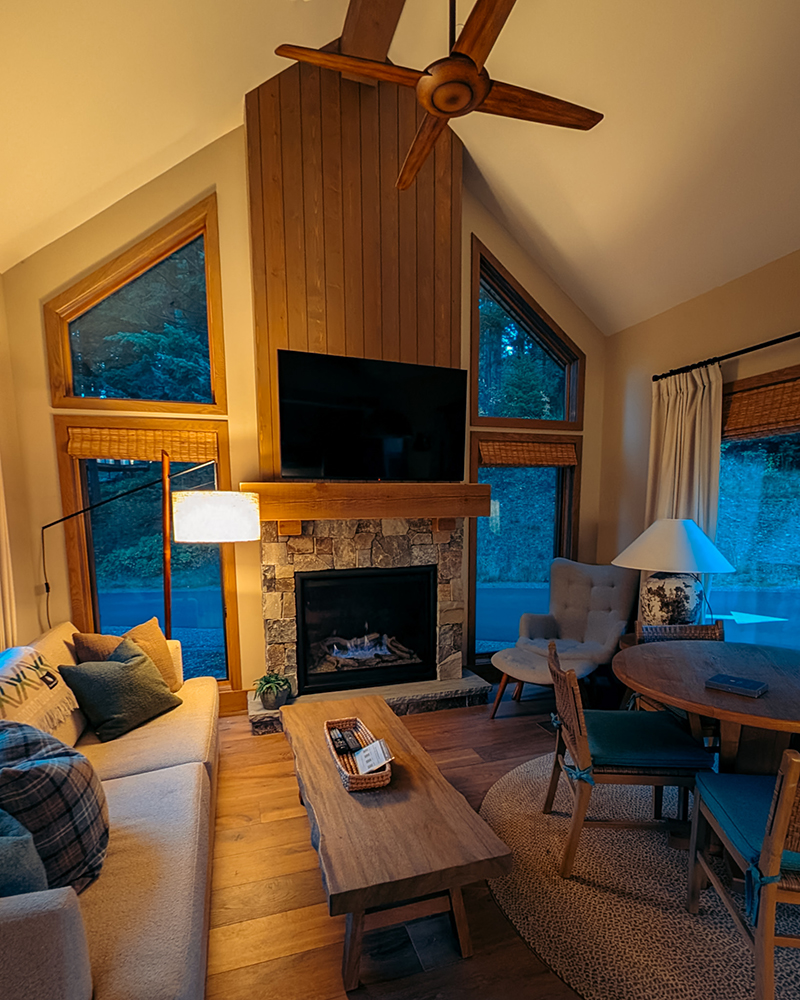
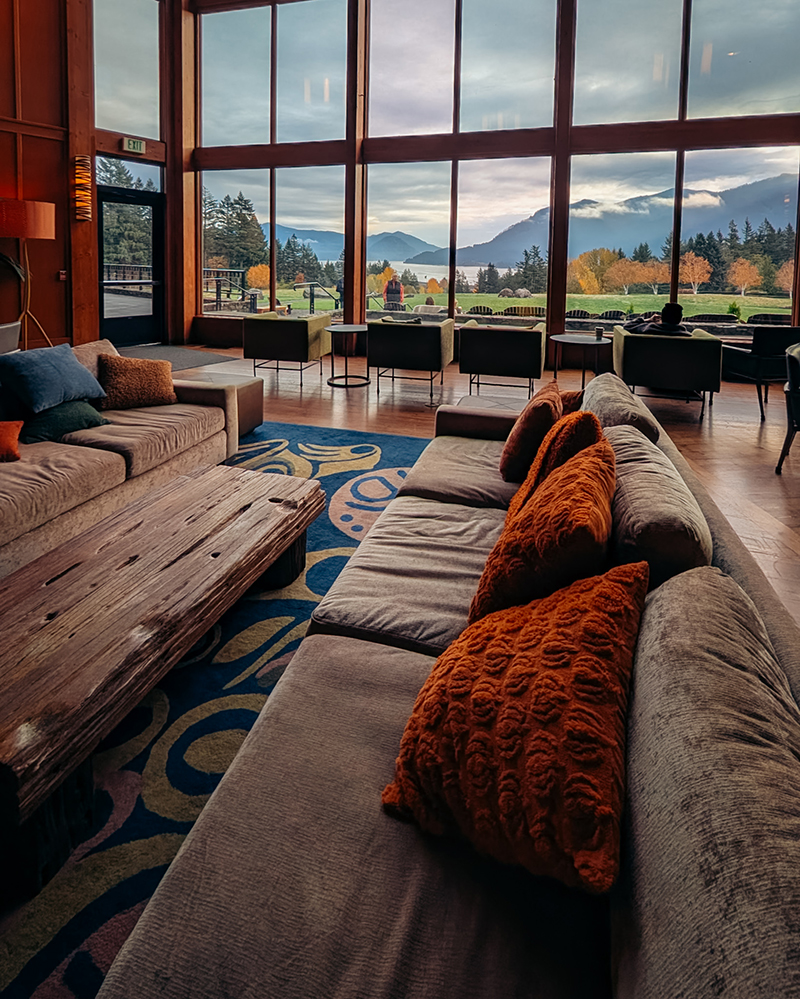
Skamania Lodge — Stevenson, WA
Best for: Couples, celebration trips, travelers who want amenities on-site
Skamania Lodge offers a completely different experience—full-service dining, spa, pool, and sweeping Gorge views.
Why it works well in spring:
- On-site dining for nights you don’t want to drive
- Spa and pool for recovery or weather-forced rest days
- Central location for WA and OR waterfalls
- Fireplaces in rooms—ideal for rainy spring evenings
Budget-Friendly Stays
Columbia Hills State Park — Near The Dalles, WA
Best for: Eastern Gorge access, wildflower chasers
- Walk-to access for Dalles Mountain Ranch
- Close to Coyote Wall and Rowena Crest
- Quieter than western Gorge campgrounds
- Affordable state park rates
Columbia Hills State Park: 👉 Reserve a campsite at Columbia Hills State Park ← WA State Parks reservation link
Beacon Rock State Park — Skamania, WA
Best for: Central location, families, trail-first trips
- Beacon Rock trailhead steps from camp
- Easy access to both sides of the Gorge
- Affordable and family-friendly
Beacon Rock State Park: 👉 Reserve a campsite at Beacon Rock State Park ← WA State Parks reservation link
Quick Comparison
| Stay | Vibe | Best For | Kitchen | Privacy | Spring Bonus |
|---|---|---|---|---|---|
| Columbia Gorge Getaways | Forest retreat | Families, photographers | Full kitchen | High | Firepit after muddy hikes |
| Skamania Lodge | Lodge experience | Couples, celebrations | On-site dining | Moderate | Spa recovery days |
| Columbia Hills SP | Quiet campground | Wildflower access | Camp stove | Moderate | Dalles Ranch trailhead |
| Beacon Rock SP | Central campground | Families, hikers | Camp stove | Moderate | Beacon Rock sunrise hikes |
2-Day Spring Weekend (Pick Your Adventure)
Day 1: Waterfalls Day (West Gorge)
- AM: Multnomah + Horsetail or Latourell
- Midday: Wahclella Falls
- PM: Optional scenic stops and sunset viewpoints
Day 2: Wildflowers Day (East Gorge)
- AM: Rowena Crest viewpoints
- Hike: Tom McCall Point (or Memaloose Hills for easier)
- PM: Dalles Mountain Ranch if bloom timing is right
Weather backup day: Skamania amenities / slow morning / shorter waterfall walks
Hot Springs in the Columbia River Gorge (Perfect for Spring)
Spring in the Gorge often means muddy boots, tired legs, and cool evenings—making hot springs a perfect addition to a hiking-focused trip.
Carson Hot Springs (Carson, WA)
Carson Hot Springs is an old-school mineral soak just minutes from many western Gorge hikes. It’s simple, no-frills, and ideal if you want a quiet soak after a long day on the trail.
Best for: hikers who want a classic mineral soak without the spa scene
Good to know: reservations are recommended, especially on weekends
Pairs well with: Panther Creek Falls, Falls Creek Falls, Beacon Rock
Bonneville Hot Springs (Bonneville, WA)
Bonneville Hot Springs offers a more modern spa experience, with multiple pools, amenities, and a relaxed resort feel. It’s a good option if you want recovery built into your trip rather than an add-on.
Best for: recovery days, rainy afternoons, or slower-paced trips
Good to know: this feels more like a spa than a rustic soak
Pairs well with: waterfall-heavy days on the Oregon side of the Gorge
If you’re planning a multi-day spring trip, building in a hot springs visit can turn a packed hiking itinerary into something that feels restorative instead of rushed.
Spring Gorge Essentials (What I Actually Use)
Spring in the Columbia River Gorge is unpredictable — waterfall spray, muddy trails, wind on exposed ridges, and the occasional icy morning. These are the pieces I rely on every time.
- Lightweight rain shell
For waterfall mist, passing showers, and windy ridgelines. This is the one layer I never skip in spring. I love the Black Diamond Fineline Stretch Shell Jacket for spring in the Gorge because it handles wet conditions without overheating or limiting movement. - Waterproof hiking shoes or boots
Mud is unavoidable in March and April, especially on waterfall trails and shaded forest sections. Dry feet matter more than you think. I have owned more pairs of La Sportiva Nucleo High II GTX Hiking Boots than I can count. - Trekking Poles
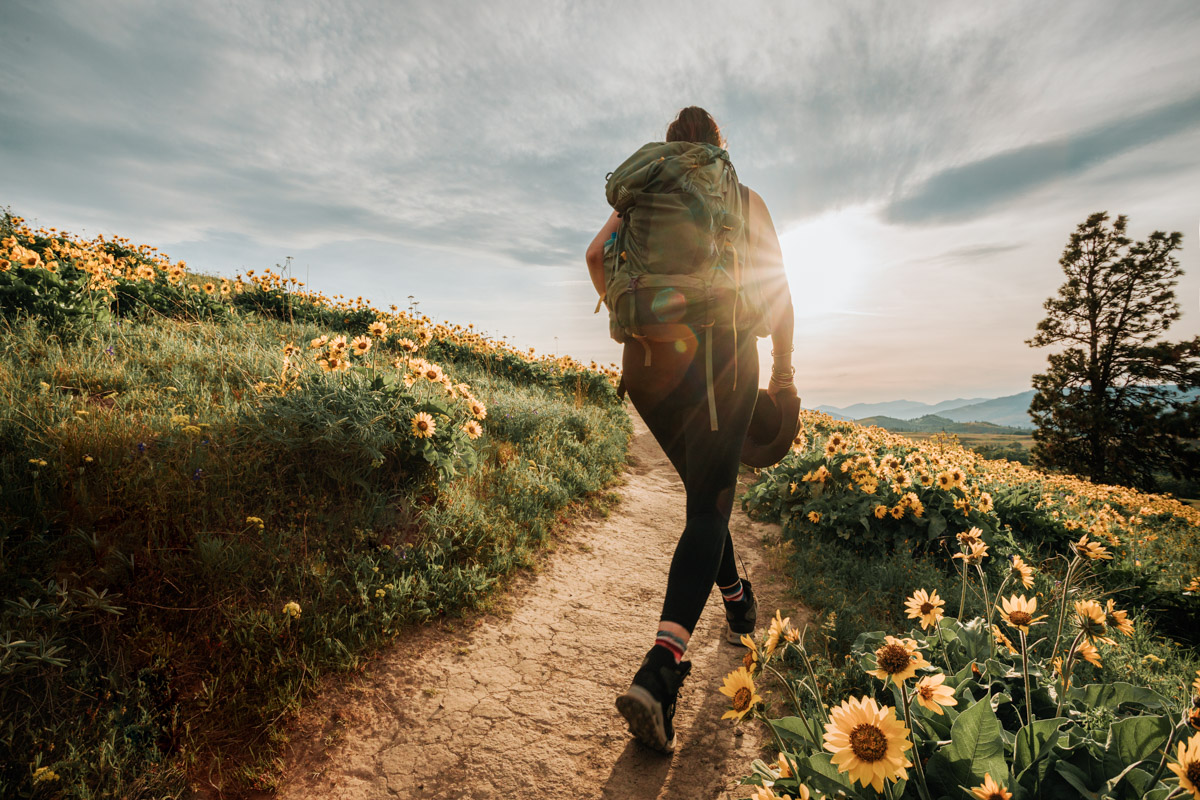
On steep spring hikes like Dog Mountain, trekking poles made a real difference—especially on the descent. I relied on my Black Diamond Alpine Carbon Cork Trekking Poles to take pressure off my knees and stay steady on loose, crowded trail sections. - Daypack with room for layers
Spring means adding and shedding layers all day. My Osprey Tempest 20 Pack that carries my extra gear comfortably makes a big difference.
What to Pack for a Spring Gorge Weekend
If you’re planning a 2–3 day trip in the Gorge, this is my standard setup:
- Waterproof hiking shoes
- Lightweight rain shell
- Warm midlayer for cool mornings and evenings
- Daypack + reusable water bottle
- Trekking poles for steep or slippery trails
What to Know Before You Go (Spring Edition)
Permits + Parking + Trail Updates
- Dog Mountain requires permits during peak spring weekends (plan ahead).
- Popular trailheads fill early on weekends—aim for early starts.
- Trail status can change after winter storms (especially Eagle Creek/Tunnel Falls).
- Always check the latest conditions before you drive out.
If you’re planning a spring trip, save this guide and check back—this post gets updated as wildflower season ramps up. For more Washington and Oregon itineraries, follow along at @the.trekking.mama.


