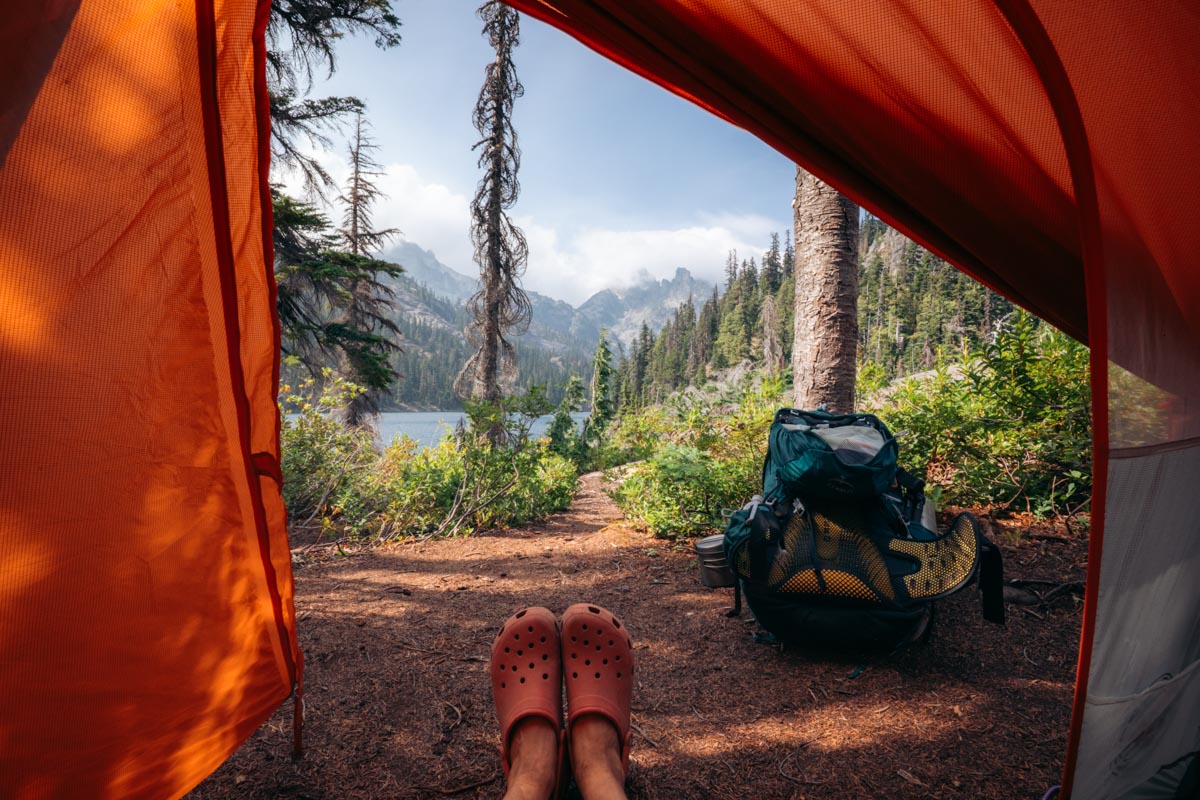
Visiting the North Cascades: The Complete Guide to Washington’s Wildest National Park
Last Updated: January 2026 | Reading Time: 25 minutes
I’ll be honest: the North Cascades confused me for a long time.
I’d driven Highway 20, hiked Maple Pass, snapped the Diablo Lake overlook photo — and thought I understood the place. I didn’t. That drive was my gateway, but it took time for the bigger picture to come into focus.
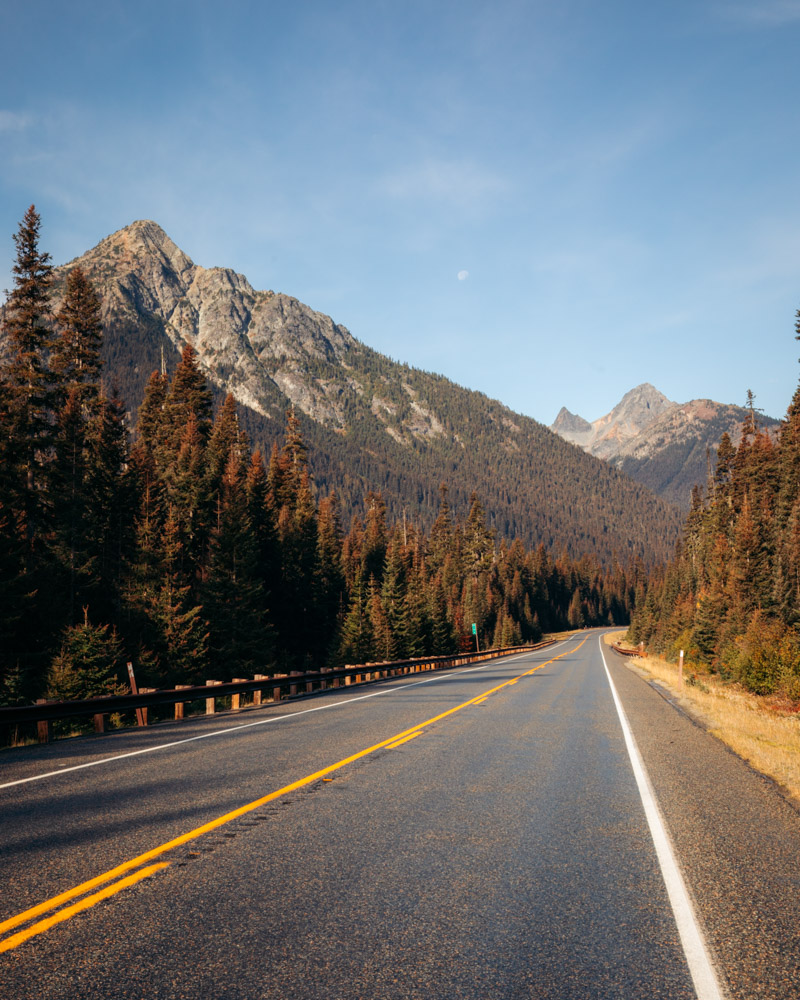
What finally clicked: the national park itself is almost entirely wilderness – and most of it is roadless. What we think of as “the North Cascades” is really the highway corridor and surrounding national forest. And the best stuff requires effort to reach.
That’s what I love about it. The North Cascades doesn’t hand you anything. You have to put in the miles, get up before sunrise, dig deeper than the main strip. And when you do, it rewards you in ways the other parks can’t. It’s quietly become my favorite place in Washington. Don’t tell Rainier.
This guide breaks it all down — how the area works, the best hikes, where to stay, and how to go deeper than the overlooks.
What’s in This Guide
- Understanding the North Cascades (Park vs. Mountains)
- How Much Time Do You Need?
- Best Hikes by Difficulty
- The Highway 20 Scenic Drive
- The Methow Valley & Mazama
- Harts Pass & Slate Peak
- Stehekin: The Hidden Valley
- When to Visit
- Where to Stay
- Planning Essentials
- What to Pack
- Sample Itineraries
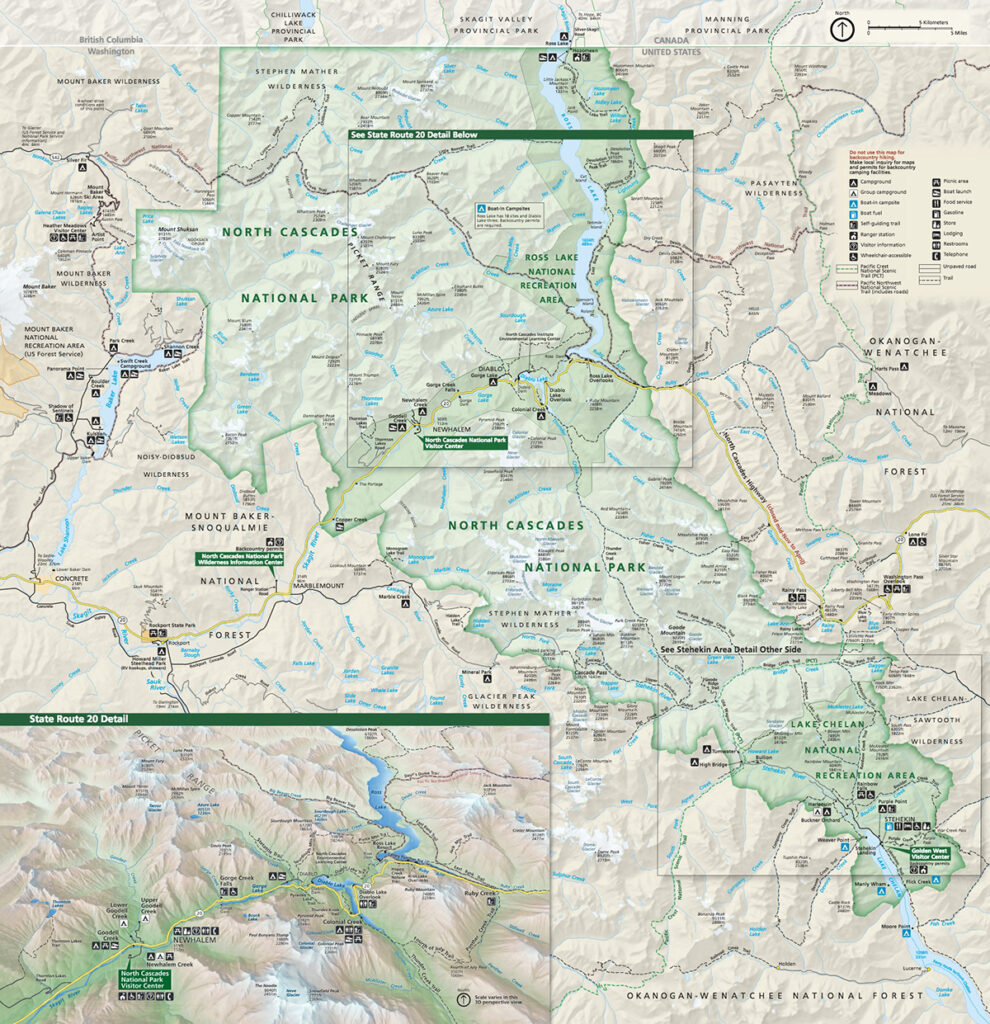
Understanding the North Cascades (Park vs. Mountains)
Is the North Cascades good for first-time visitors? Yes — the North Cascades are great for first-time visitors, especially if you focus on Highway 20 hikes, scenic overlooks, and accessible trails like Rainy Lake and Blue Lake.
Here’s something most guides won’t tell you: when people say “North Cascades,” they usually mean the entire region — not just what’s technically inside the national park boundaries. And honestly? Some of the best experiences are outside the official park.
Here’s how to think about it:
North Cascades National Park (The Official Park)
The core wilderness — rugged, remote, and mostly roadless. This is where you’ll find:
- Cascade Pass and Sahale Arm
- Thornton Lakes
- Copper Ridge backcountry
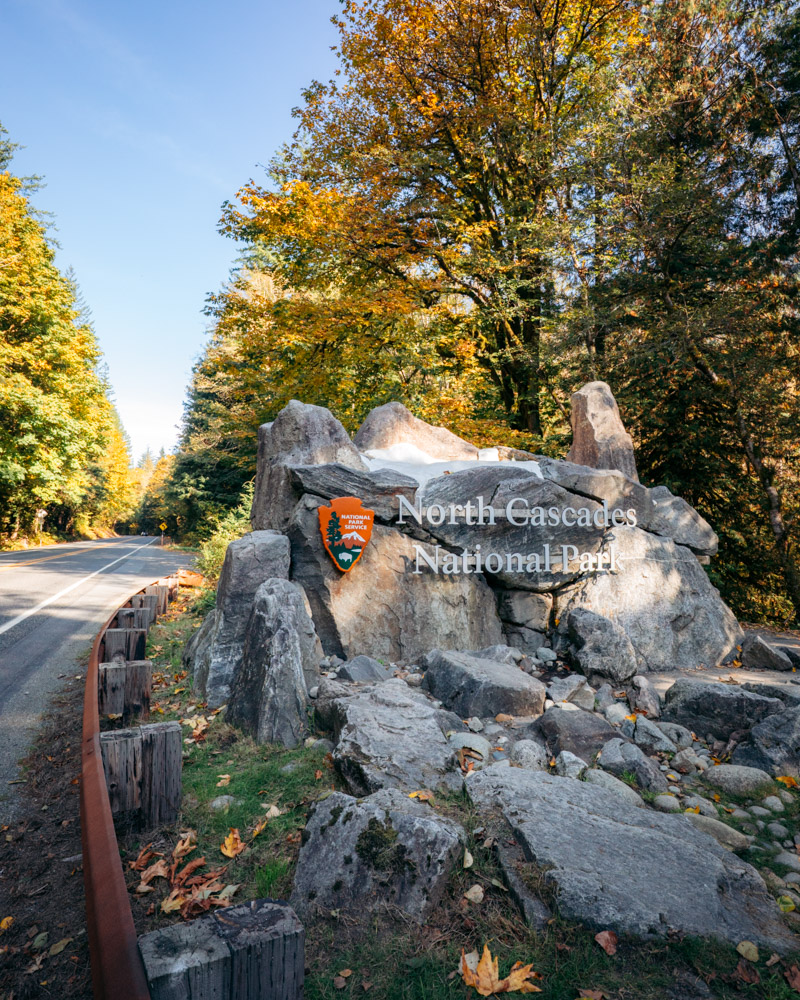
Good to know: There’s no entrance fee. One of the few national parks in the country where you can show up without paying.
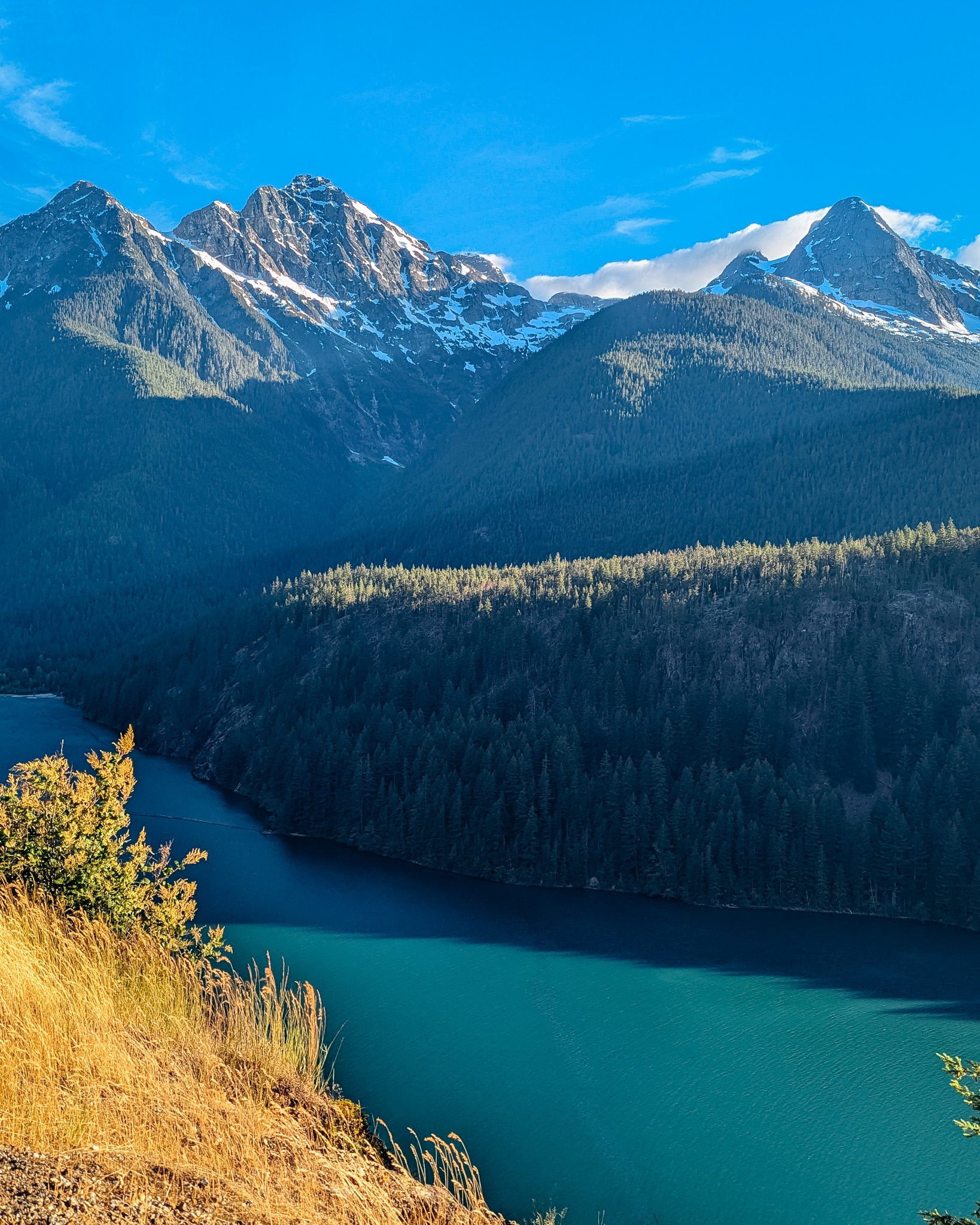
Ross Lake National Recreation Area
This surrounds the park along Highway 20 and is what most visitors actually experience:
- Diablo Lake (that famous turquoise water)
- Ross Lake
- Newhalem area and the visitor center
- Colonial Creek and Newhalem campgrounds
- Thunder Knob, Pyramid Lake, and other accessible hikes
More developed, more accessible — but still stunning.
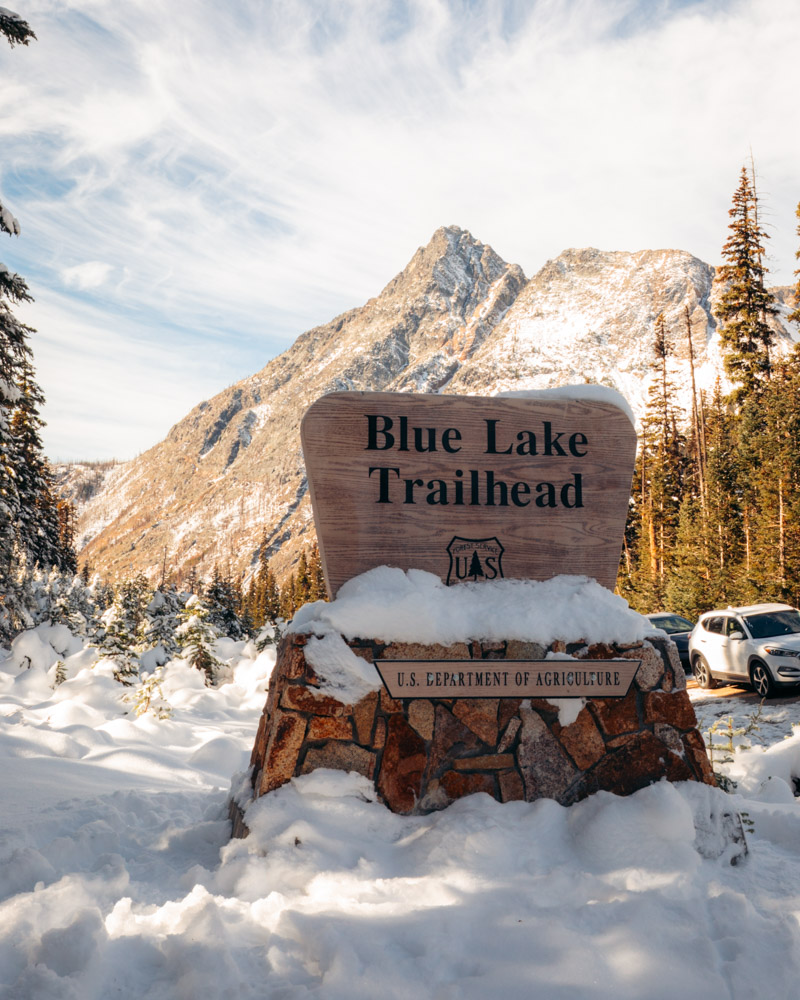
The National Forest Lands (Where Most People Actually Hike)
Here’s the thing: many of the most popular “North Cascades” hikes are technically in the Okanogan-Wenatchee National Forest, not the park.
- Maple Pass Loop
- Blue Lake
- Cutthroat Pass
- Hidden Lake Lookout (Mt. Baker-Snoqualmie NF)
Nobody cares about the boundary lines when they’re standing on a ridgeline surrounded by golden larches. These trails ARE the North Cascades experience for most visitors.
The Methow Valley & Mazama
The eastern gateway to the North Cascades — and a destination worth exploring in its own right.
Most people blow through Mazama on their way to Highway 20 trailheads. It’s kinda a mistake.
This is one of my favorite places to just be in Washington. The valley has a different energy than the mountain towns on the west side — sunnier, quieter, with views of the North Cascades that you don’t get from the highway. It’s a real community, not a tourist trap.
If I’m staying on the east side, I always make time for the Mazama Public House — it’s become a ritual. Great food, good beer, and a laid-back vibe that fits the valley perfectly. And the bakery (Mazama Bakery, technically in the Mazama Store building) is to die for. Anytime I can, I stop for a latte and whatever baked good looks best that morning.
The lodging can be pricey — the cabins especially are a splurge — but there are some more affordable options if you dig around. Camping at Lone Fir or Klipchuck keeps costs down, and Winthrop (30 minutes away) has more budget-friendly rooms.
But beyond the food and lodging, Mazama has its own hikes that most visitors never explore. Goat Peak Lookout, Slate Peak, Harts Pass and trails along the Methow River are often overlooked.
Slow down. Spend a day in the valley. You’ll see the North Cascades from a completely different angle.
Harts Pass & Slate Peak
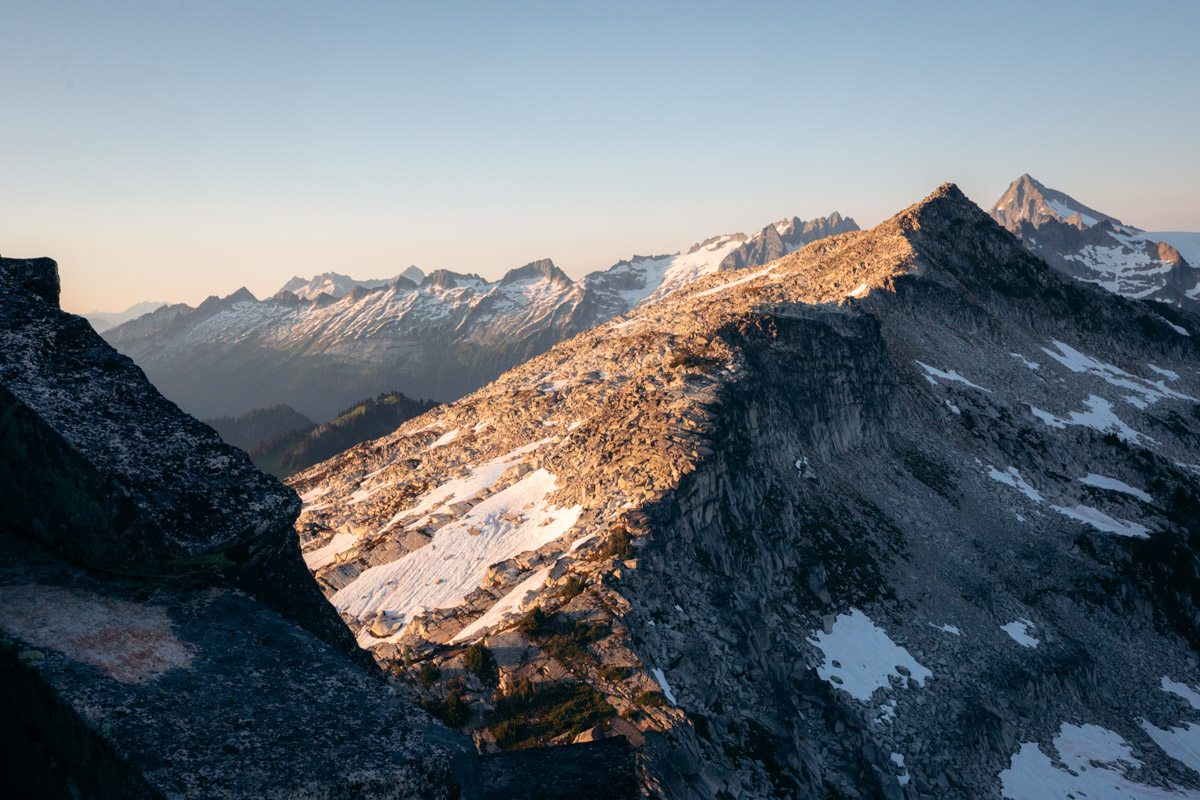
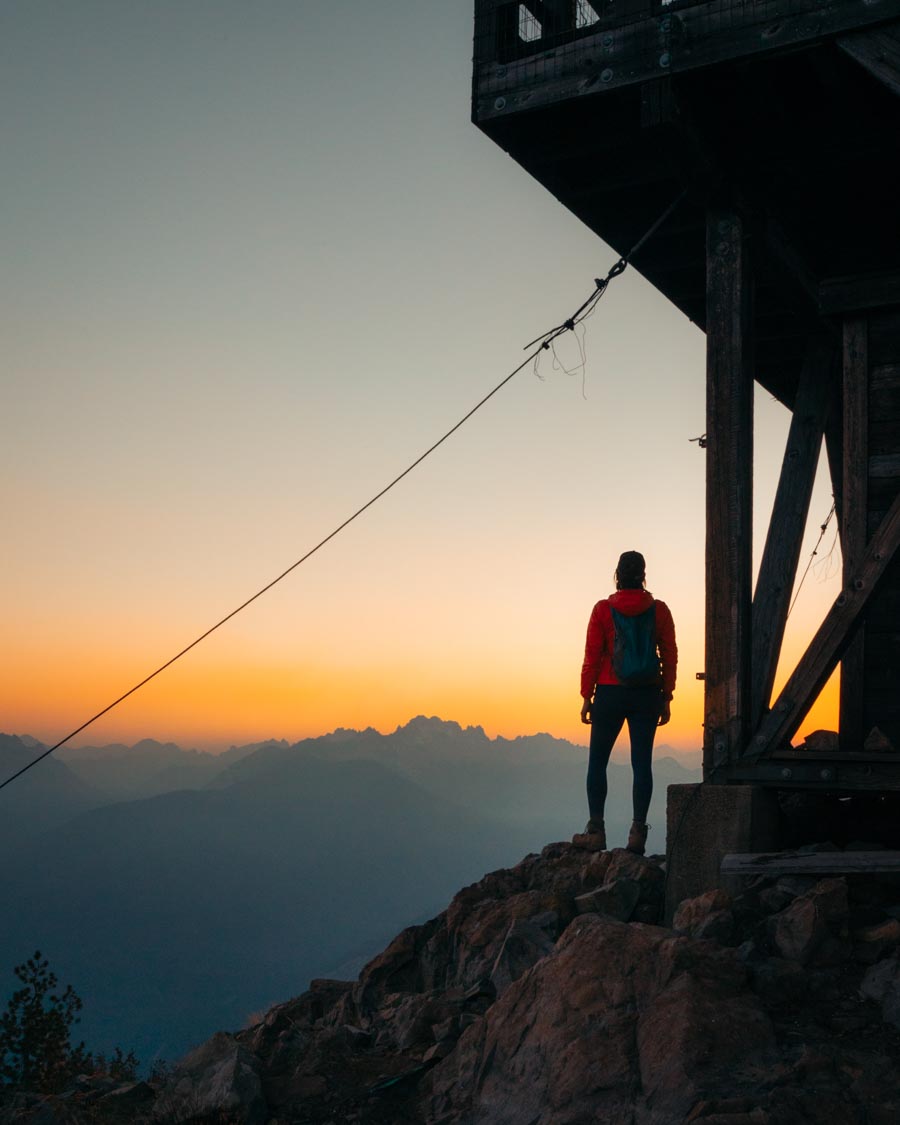
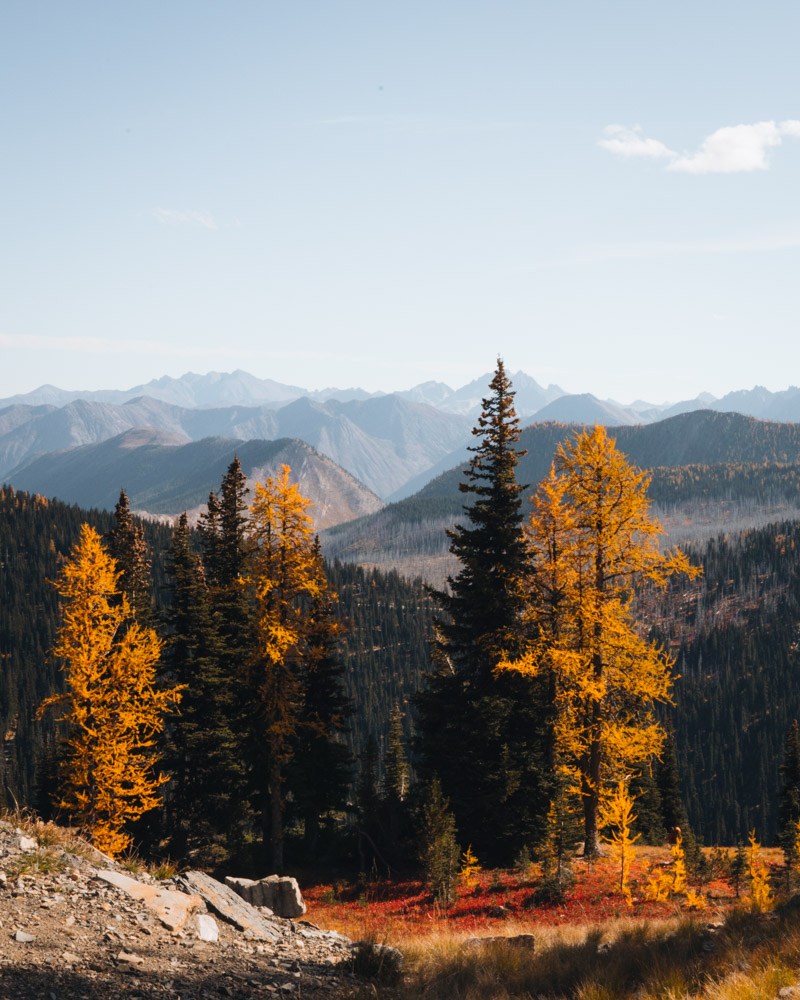
Harts Pass is the highest road in Washington State, climbing to over 6,000 feet. From there, a short spur road takes you to Slate Peak — 7,440 feet, with 360-degree views of the entire North Cascades range.
Sunset at Slate Peak is the insider move.
Most people don’t know this place exists. Even fewer make the drive.
The road from Mazama is 90 minutes of rough gravel, narrow switchbacks, and sections with big drop-offs. It’s not dangerous if you’re comfortable with mountain roads, but it’s not for everyone. High clearance helps but isn’t strictly required in good conditions.
But if you make the drive and time it for sunset? You’ll be standing above most of the peaks, watching alpenglow light up the entire range, with almost nobody else around. It’s one of the most spectacular viewpoints I’ve ever seen — and I’ve never had to fight for a parking spot.
The road typically closes with the first significant snow, usually mid-October. If you’re visiting during larch season and the road is still open, make time for Slate Peak. You won’t regret it.
Hikes from Harts Pass:
- Slate Peak (0.5 mi) — walk to the decommissioned lookout
- Grasshopper Pass via PCT (6-10 mi) — huge larch meadows, ridgeline walking
- Windy Pass (8 mi) — wildflowers, Pacific Crest Trail
Stehekin: The Hidden Valley
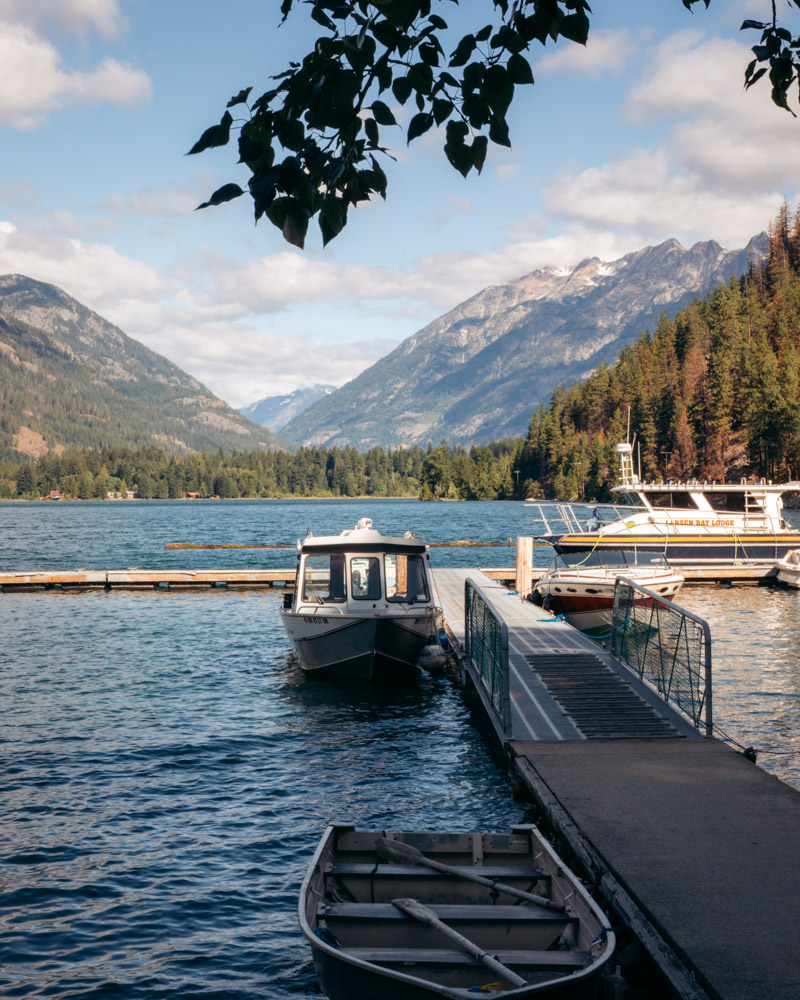
Stehekin sits at the head of Lake Chelan, accessible only by:
- Ferry from Chelan (4 hours each way)
- Floatplane (scenic and expensive)
- Hiking in via Cascade Pass or the Lakeshore Trail (very long day or overnight)
This is a completely different North Cascades experience — remote, quiet, off-grid. No cars (well, a few that were barged in decades ago). No cell service. Just a small community, a legendary bakery, waterfalls, and wilderness.
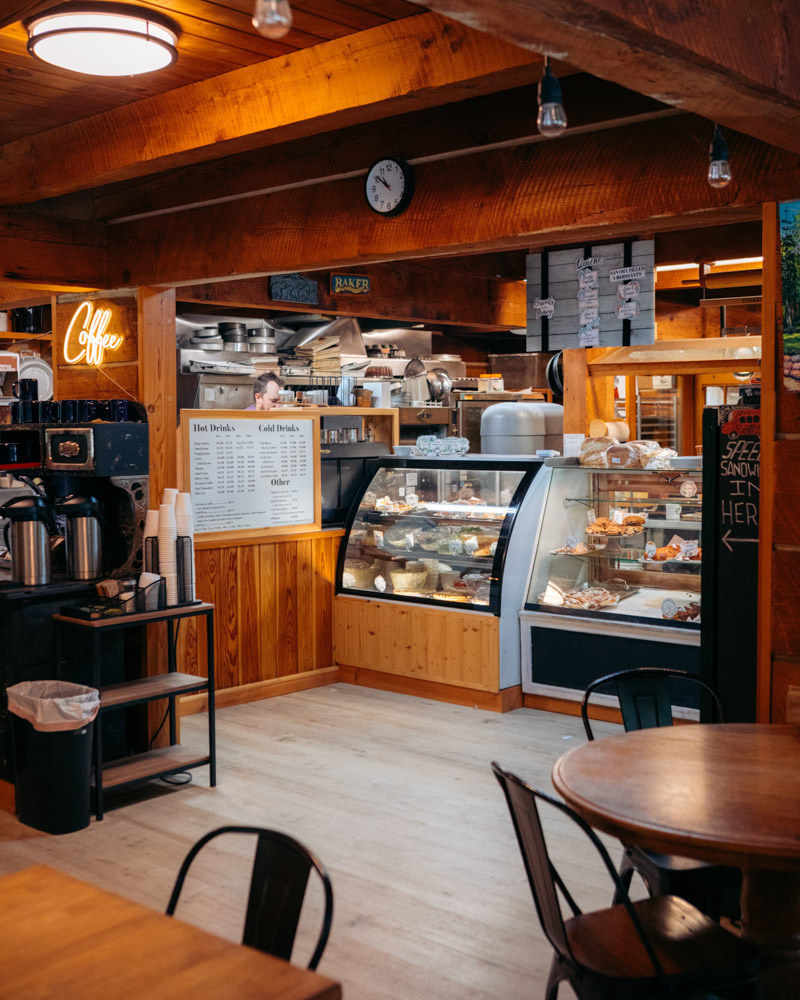
And yes — the bakery really is that good. The Stehekin Pastry Company is part of daily life here: cinnamon rolls the size of your head, fresh bread, and a steady stream of hikers, locals, and ferry passengers all passing through the same counter. It’s not a gimmick — it’s real.
How Much Time Do You Need?
Most visitors need 2–3 days to experience the highlights of the North Cascades, but even a half-day scenic drive along Highway 20 is worth doing if you’re short on time.
| Time Available | Best Experience | More Info |
|---|---|---|
| Half day | Highway 20 scenic drive with viewpoint stops | See “Scenic Drive” section below |
| Full day | Blue Lake or Rainy Lake + scenic stops | → Blue Lake Trail Guide |
| 2-3 days (summer) | The full North Cascades experience — multiple hikes, scenic drives, sunsets | → 3 Days in North Cascades |
| 2-3 days (fall) | Larch season itinerary | → North Cascades Larch Itinerary |
| Weekend camping | Car camping at Colonial Creek + day hikes | → Colonial Creek Campground Guide |
| 3+ days (adventure) | Stehekin or backcountry trip | → Stehekin Guide (coming soon) |
The honest answer: Most people do 2-3 days and feel satisfied. But you could spend a lifetime exploring here and never see it all.
Best Hikes in the North Cascades Region
Easy (Under 5 miles, minimal elevation)
Thunder Knob
- 3.6 miles round trip, 500 ft gain
- Views over Diablo Lake
- Forested trail with big payoff
- Good for kids
Rainy Lake
- 2 miles round trip, minimal elevation gain
- Paved trail, wheelchair accessible
- Alpine lake surrounded by peaks

Sterling Munro Boardwalk
- 330 feet (yes, feet)
- Right at the visitor center in Newhalem
- Mountain views, interpretive signs
- Perfect leg-stretcher if you’re just passing through
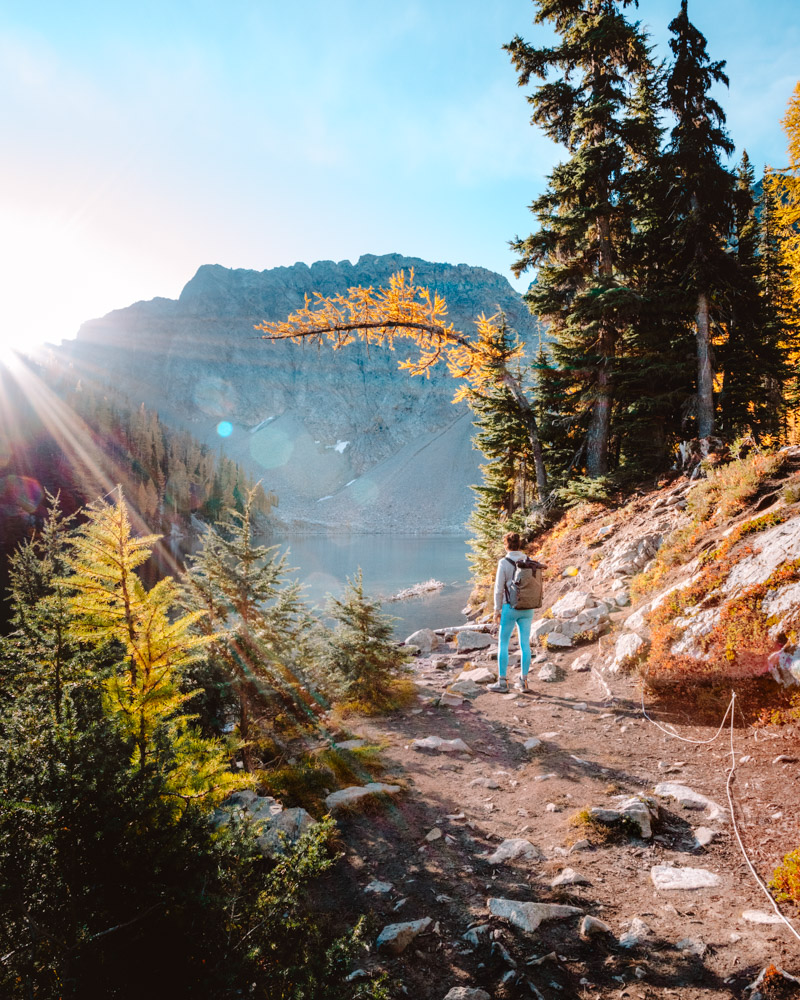
Blue Lake
- 4.6 miles round trip, 1,000 ft gain
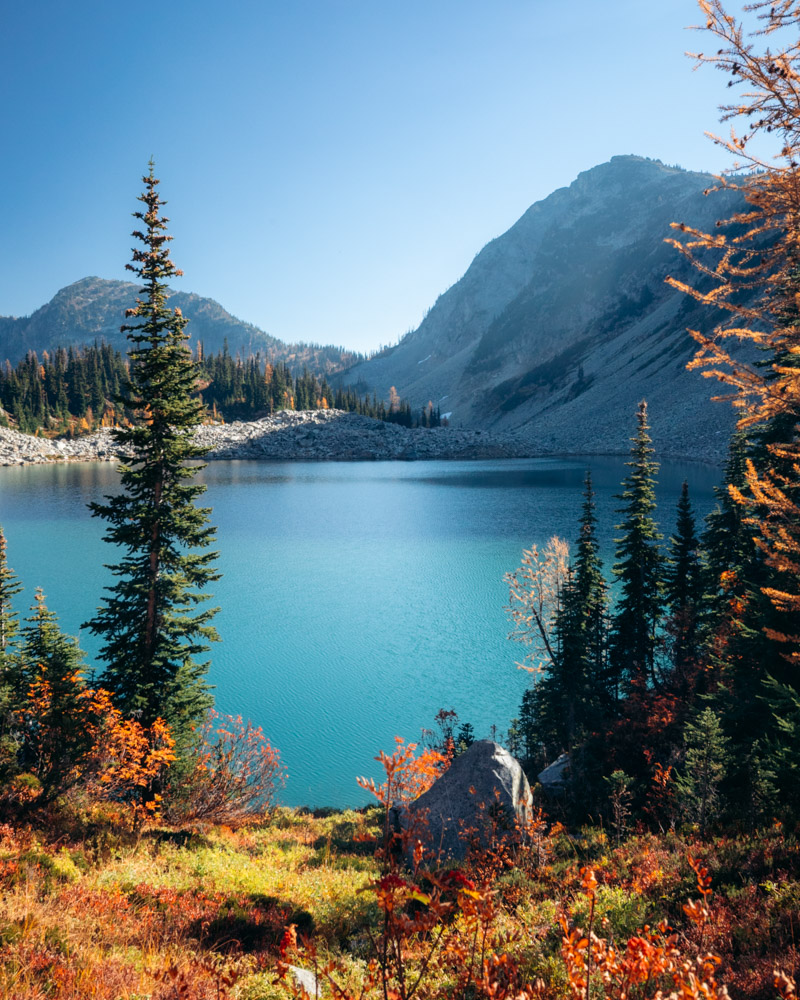
- Turquoise alpine lake with Liberty Bell and Early Winters Spires
- Stunning in any season — wildflowers in summer, larches in fall
- → Blue Lake Trail Guide
Cutthroat Lake
- 4 miles round trip, 400 ft gain
- Easy alternative to Cutthroat Pass
- Surrounded by larches in fall
- Family-friendly
Moderate (5-8 miles)
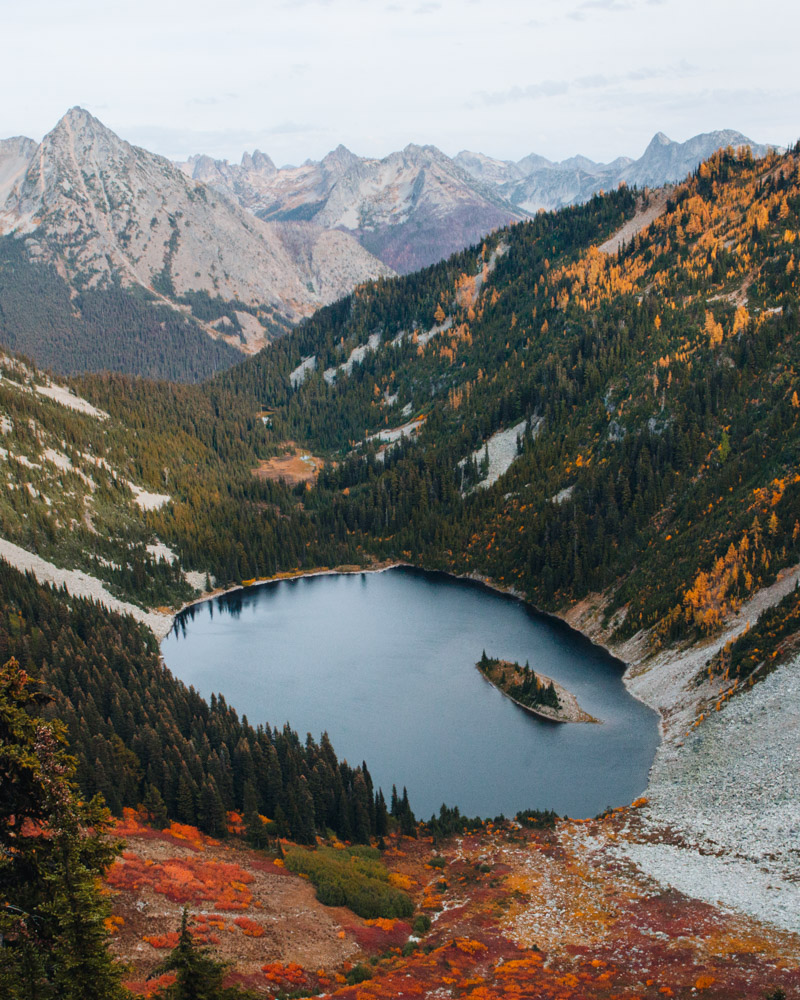
Maple Pass Loop
- 7.5 miles loop, 2,150 ft gain
- THE iconic North Cascades hike
- 360° ridgeline views, Lake Ann, larches in fall
- Crowded during peak season but worth it
- Maple Pass Loop Guide (Coming Soon)
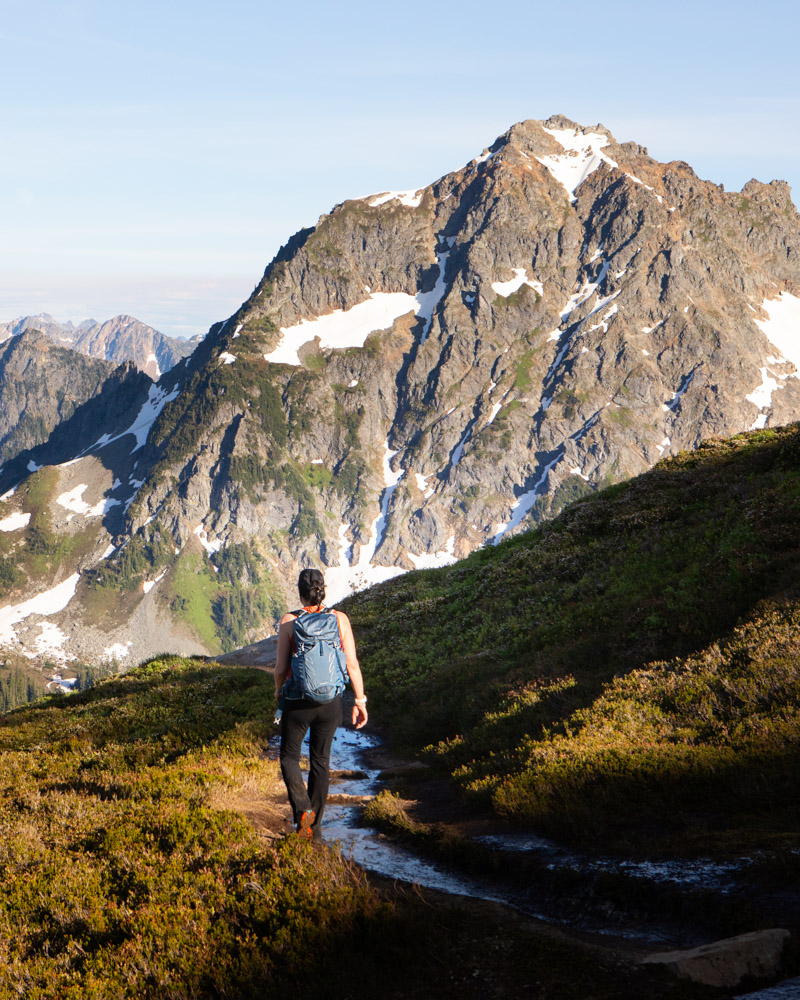
Cascade Pass
- 7.4 miles round trip, 1,800 ft gain
- Bucket list hike — one of the most scenic in the state
- Historic route used by Native Americans and early explorers
- Glacier views, wildflower meadows
- Trailhead often crowded; arrive early
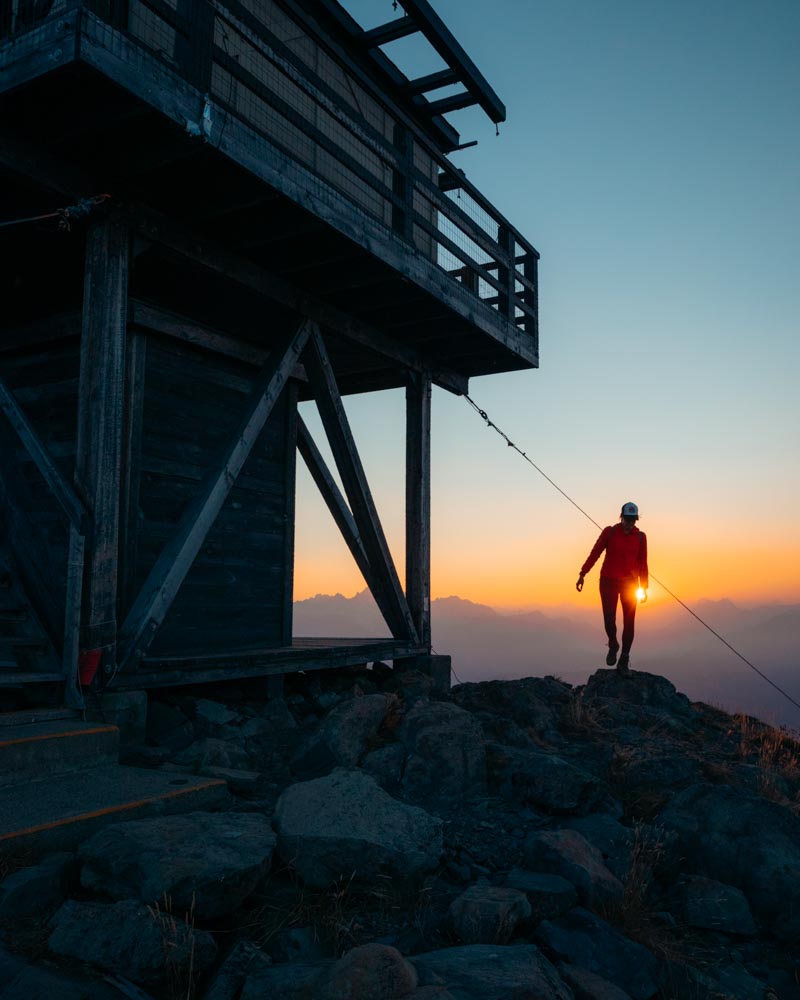
Goat Peak Lookout
- 5 miles round trip, 1,400 ft gain
- Staffed fire lookout with panoramic North Cascades views
- Larches surround the summit in fall
- Kids can do this one
- Mazama area
I hiked Goat Peak solo one fall evening, planning to catch sunset from the lookout. The views delivered — layers of ridges fading into the distance, the North Cascades peaks catching the last light. I couldn’t make myself leave.
I ended up hiking down in the dark with my headlamp. But that was worth it for what I’d seen from the top.
Challenging (High elevation gain or 8+ miles)
Easy Pass
- 7 miles round trip, 2,800 ft gain
- Steep but stunning alpine basin
- Fewer crowds than Maple Pass
- The name is a lie — it’s not easy
Cascade Pass + Sahale Arm
- 12 miles round trip, 4,000 ft gain
- THE ultimate North Cascades day hike
- Glacier views, wildflowers, scramble to Sahale Glacier Camp
- Challenging but life-changing
This is the hike. If someone asks me for one North Cascades recommendation and they’re fit enough to handle it, this is the answer.
Cascade Pass alone is stunning — wildflower meadows, glacier views, that feeling of standing at a historic crossroads used by Native Americans for thousands of years. But the real magic is continuing up Sahale Arm.
The trail gets steeper, rockier, more exposed. You scramble up toward the glacier, the views getting more dramatic with every step. And then you’re standing at Sahale Glacier Camp — a tiny perch on the edge of a glacier with 360-degree views of the most rugged peaks in the park.
Even better: Spend the night. Sahale Glacier Camp is one of the most spectacular backcountry campsites in Washington. You’ll need a permit (apply through Recreation.gov — competitive but worth trying), and you’ll need to be comfortable with exposed terrain and variable conditions. But waking up above the clouds with the Sahale Glacier at your feet? That’s a memory that doesn’t fade.
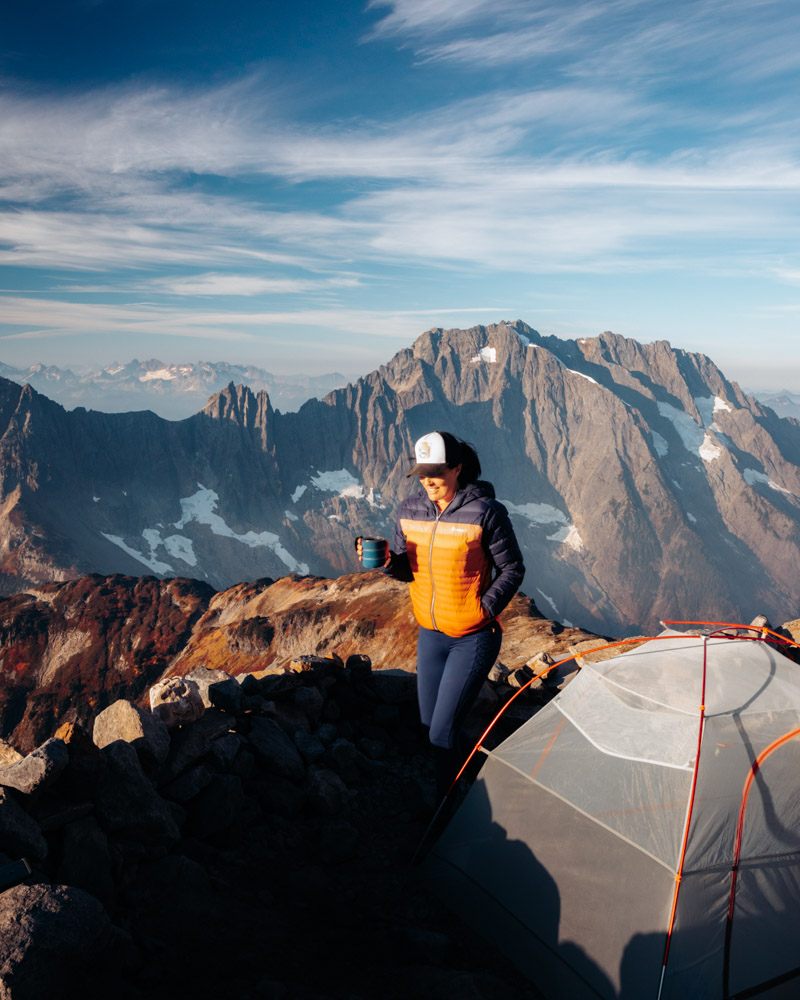
Cutthroat Pass
- 10 miles round trip, 2,000 ft gain
- Larch-dense forest opening to alpine meadows
- Views of Cutthroat Peak, Liberty Bell, Early Winters Spires
- PCT access
- Covered in → North Cascades Larch Itinerary
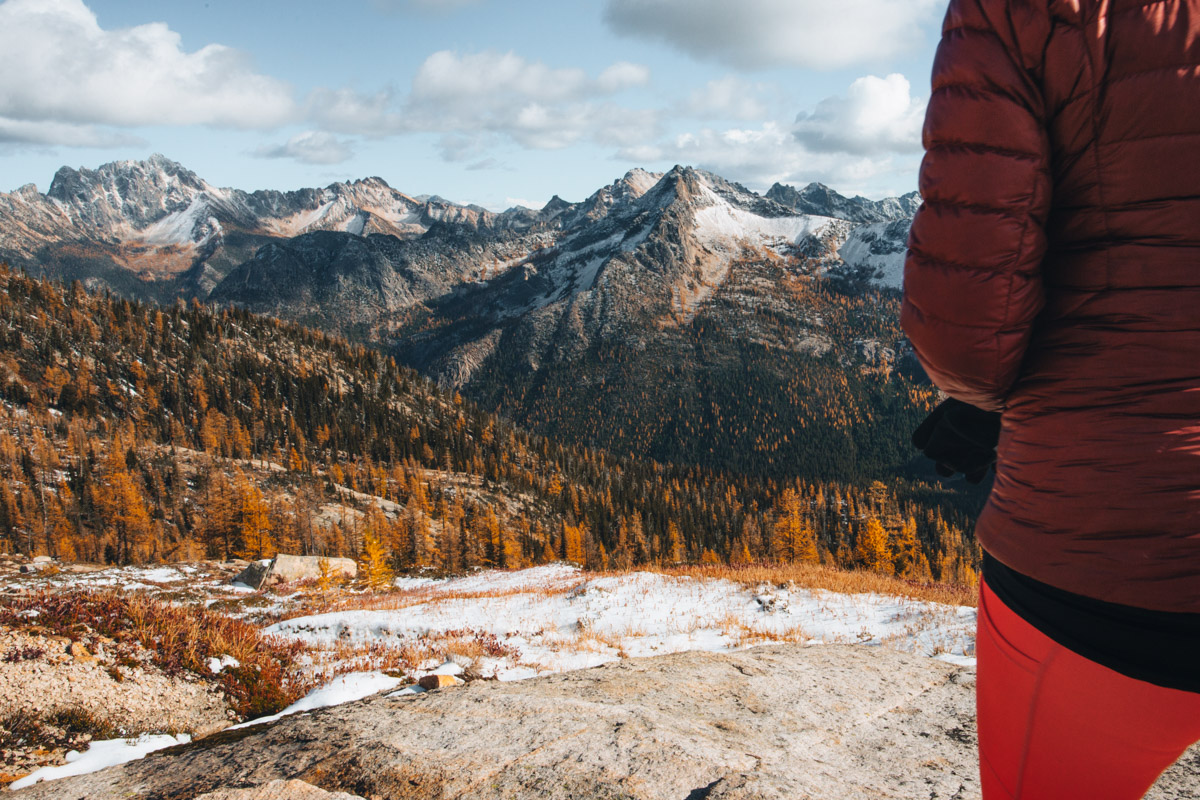
Hidden Lake Lookout
- 9 miles round trip, 3,400 ft gain
- Fire lookout perched on a cliff above Hidden Lake
- Views of the Eldorado massif and North Cascades glaciers
- Final stretch is a Class 2-3 scramble — exposed, can be icy
- Not for those uncomfortable with heights or scrambling
I finally got up to Hidden Lake Lookout with a friend, and it exceeded every expectation.
The lookout itself is perched on the edge of a cliff, with Hidden Lake and the Eldorado glacier sprawling below. It’s one of those places that photos can’t capture — you have to be there to feel the scale of it.
We spent the night, sharing the lookout with three strangers. By the end of the evening we were playing games together, sharing food, watching the stars come out over the peaks. The next morning we all woke up for sunrise — one of those quiet, cold, perfect alpine mornings where nobody talks much because words would ruin it.
One of those strangers became a real friend. We still keep in touch.
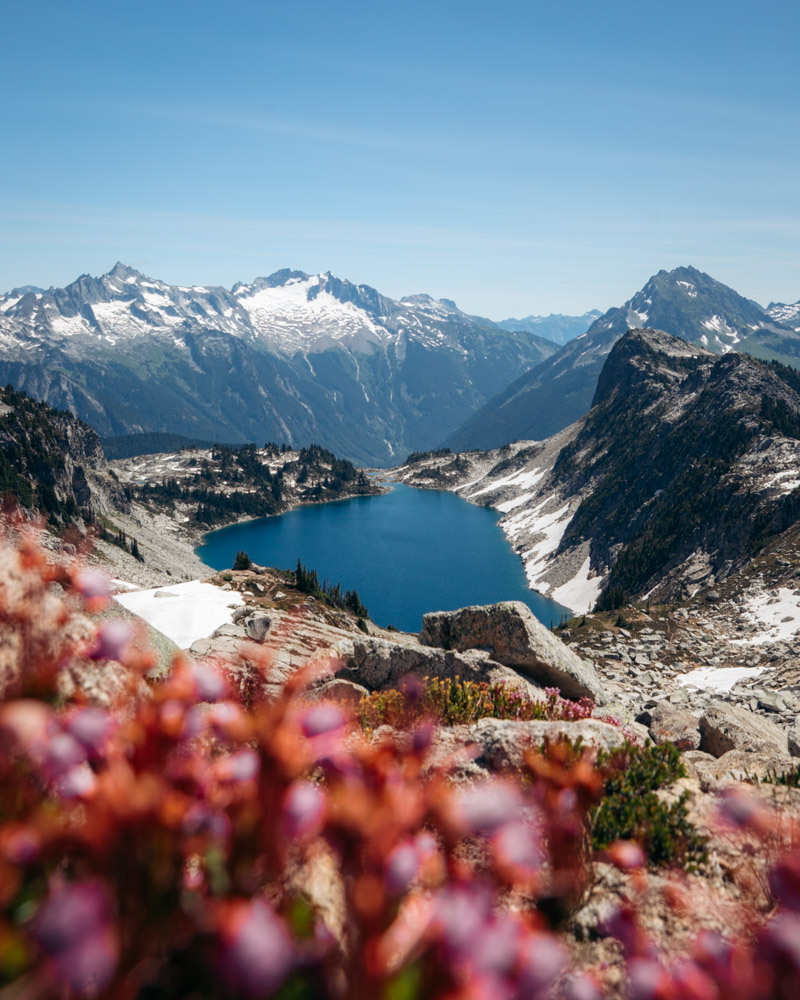
Copper Glance Lake
- 10 miles round trip, 3,200 ft gain
- Remote larch basin near Winthrop
- Almost nobody goes here
- True insider hike
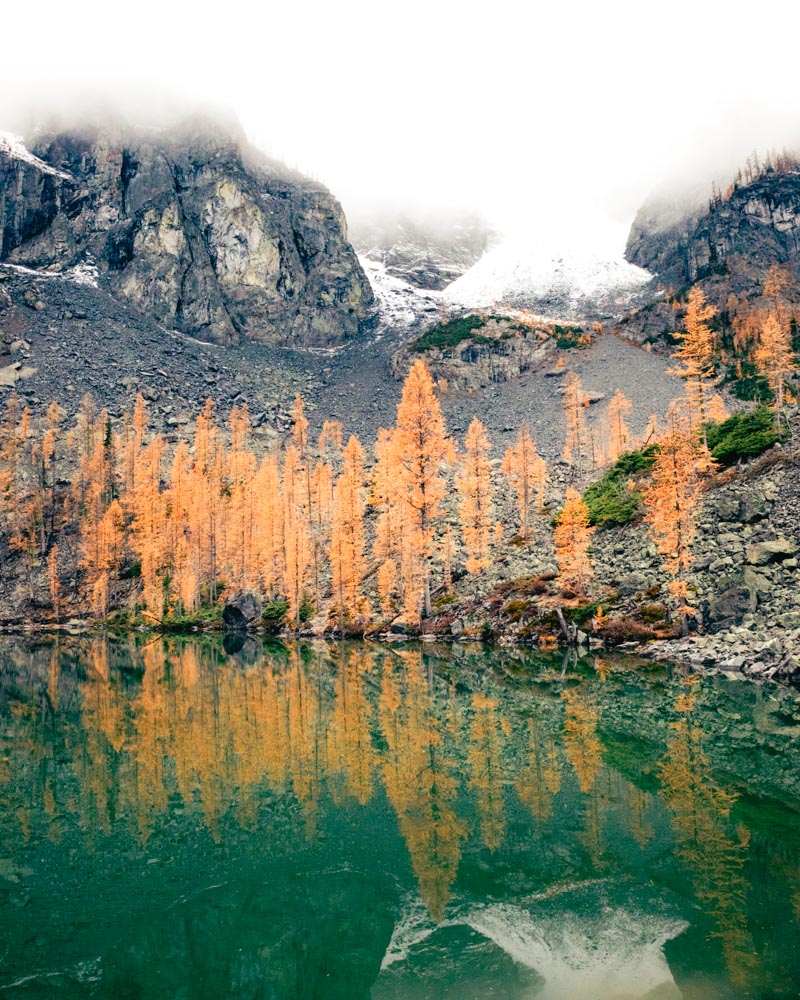
Wing Lake & Lewis Lake
- 12 miles round trip to Wing Lake / 7 miles to Lewis Lake
- 3,200 ft gain to Wing
- Starts from the Maple Pass trailhead — peel off at Heather Pass toward Black Peak
- Trail fades into boulder fields and route-finding
- No permit needed
These are the lakes most people never see — even though they’re right off the Maple Pass trail.
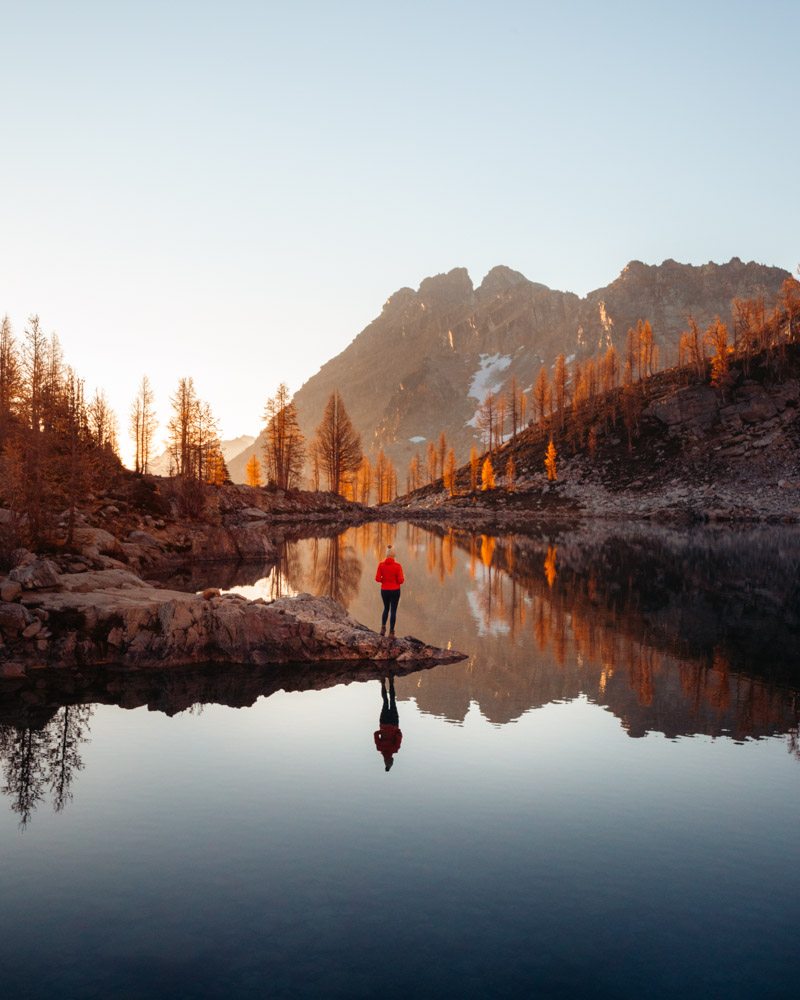
Wing Lake sits beneath Black Peak’s north face, ringed by larches and fed by a waterfall that spills over a granite lip — an infinity edge lined with golden trees in fall. Lewis Lake is closer and makes a good turnaround if you’re not up for the full push.
No crowds. One of the best sunrise spots in Washington.
Harts Pass Area (High Starting Elevation)
These hikes start at 6,000+ feet, so you’re already in the alpine.
Slate Peak
- 0.5 miles from the road
- Highest point you can drive to in Washington State (7,440 ft)
- Walk to decommissioned fire lookout
- 360° views of the entire range
- Sunset here is the insider move
Grasshopper Pass via PCT
- 6-10 miles (out and back, choose your distance)
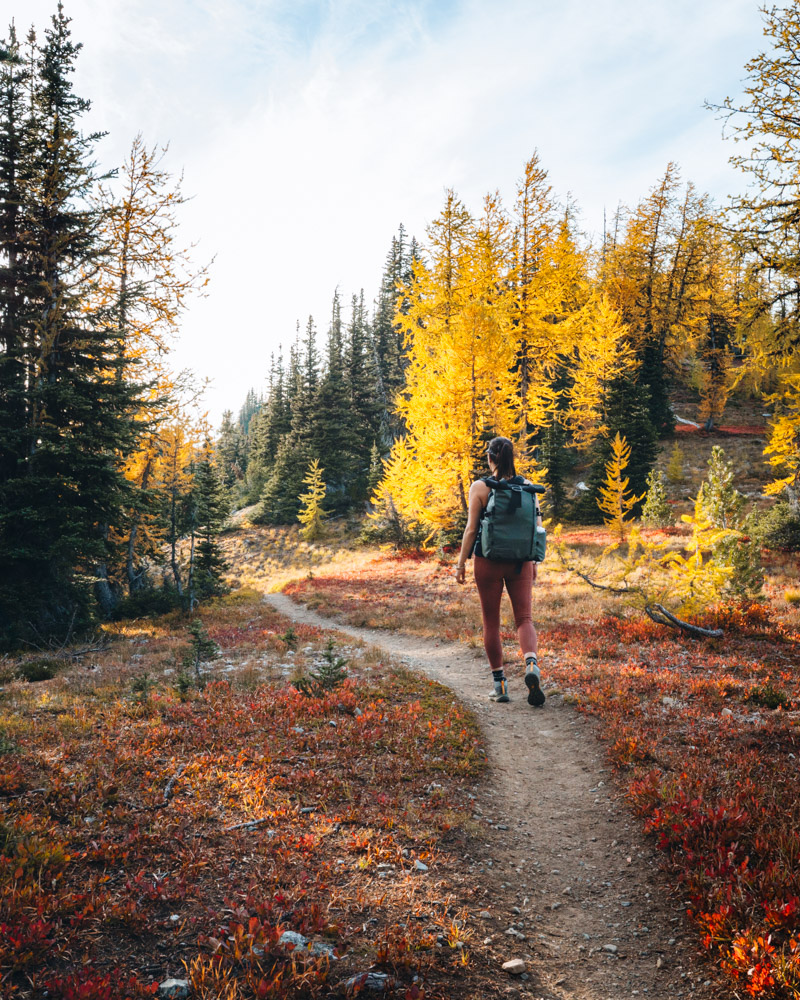
- Huge larch meadows in fall
- Ridgeline walking with massive views
- PCT access — you might see thru-hikers
Windy Pass
- 8 miles round trip
- Wildflowers in summer
- Pacific Crest Trail
Backpacking
Copper Ridge Loop
- Multi-day wilderness loop
- Classic North Cascades backcountry
- Permit required
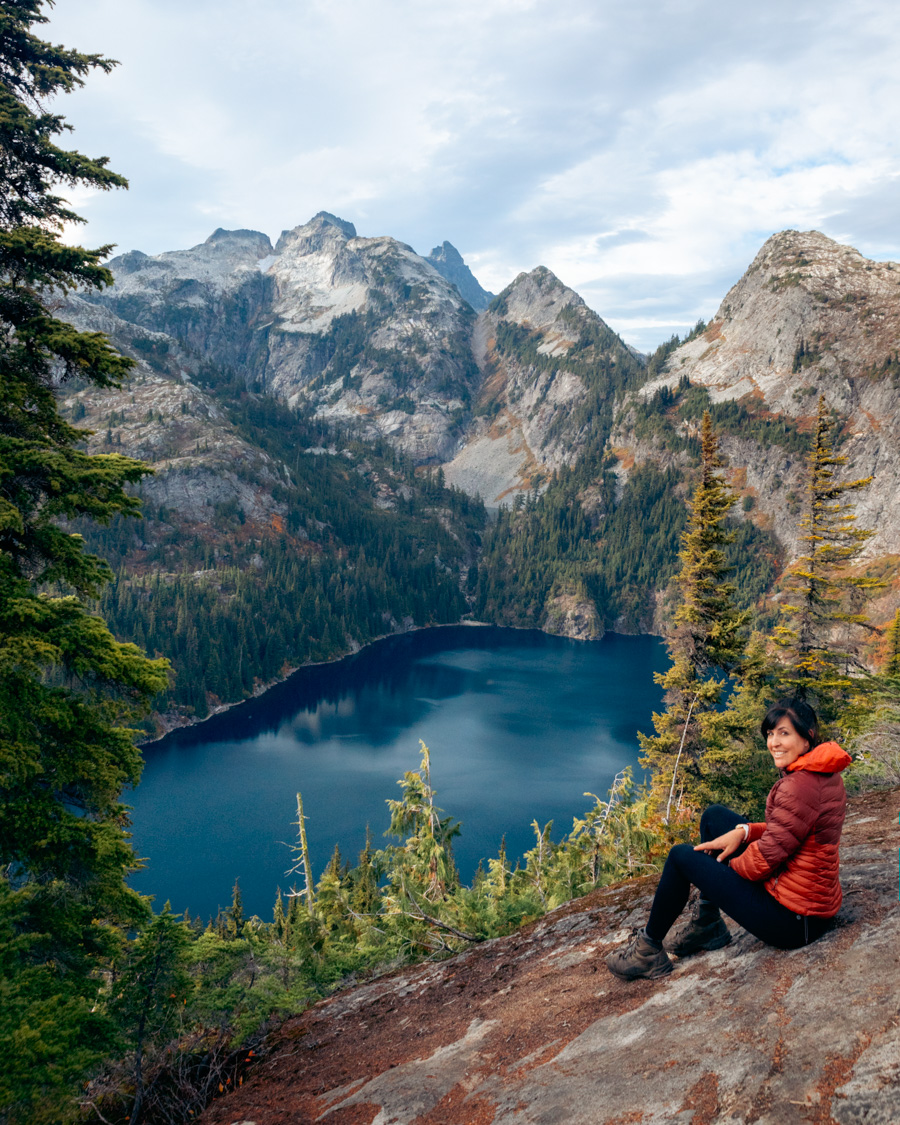
Thornton Lakes
- Alpine lakes, fewer permits needed
- Good intro to North Cascades backcountry
Cascade Pass → Stehekin
- Point-to-point bucket list trip
- Hike over the pass and descend to Stehekin
- Take the ferry back to civilization
- Requires logistics but unforgettable
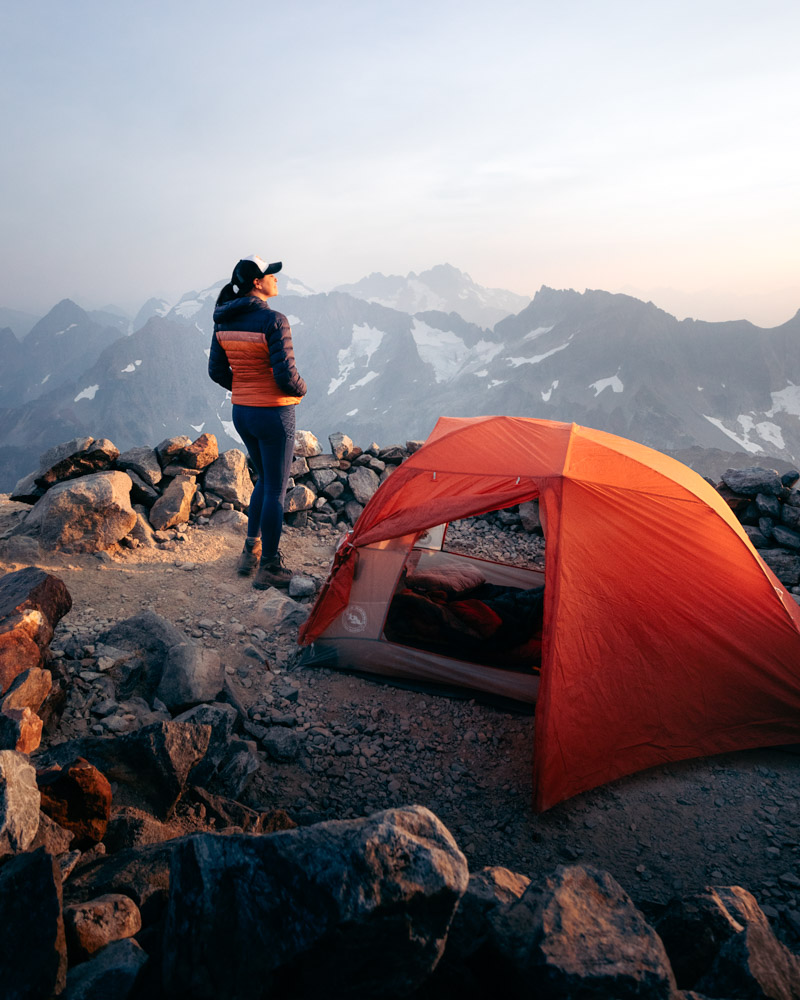
Sahale Glacier Camp
- Permit required (apply early — competitive)
- One of the most spectacular backcountry campsites in Washington
- Exposed, alpine conditions — not for beginners
- The kind of place you’ll remember forever
The Highway 20 Scenic Drive
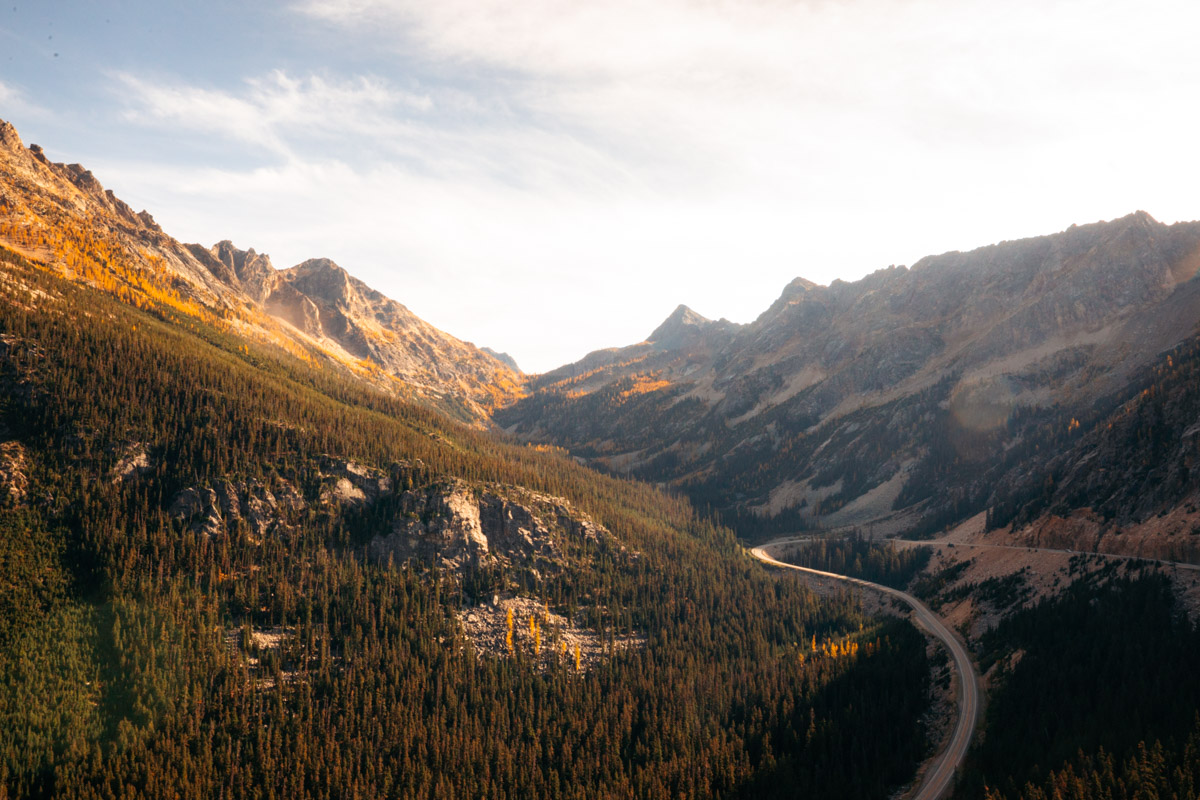
Can you drive through the North Cascades? Yes — Highway 20 (North Cascades Highway) is the only road that crosses the North Cascades, connecting the west and east sides of the range when it’s open seasonally.
Not everyone wants to hike 10 miles. The Highway 20 scenic drive lets you experience the North Cascades from your car — with short walks to viewpoints and plenty of places to stop.
Total driving time: About 2.5 hours without stops (Marblemount to Mazama). Plan 4-5 hours if you’re stopping at viewpoints and doing short walks.
West to East Stops:
1. North Cascades Visitor Center (Newhalem)
- Talk to rangers, get current conditions
- Exhibits on park ecology and history
- Restrooms, picnic area
2. Ladder Creek Falls
- Short walk from the visitor center area
- Seasonally lit at night (worth seeing if you’re camping nearby)
3. Gorge Creek Falls Viewpoint
- Roadside pullout
- Views down into the gorge
4. Diablo Lake Overlook
- THE photo stop
- That famous turquoise water
- Gets crowded midday — early morning or late afternoon is better
5. Ross Lake Overlook
- Another stunning viewpoint
- Different perspective than Diablo
- Less crowded
6. Rainy Pass
- Trailhead for Maple Pass Loop, Rainy Lake
- Vault toilets
- If you have time for one short hike, Rainy Lake (2 mi round trip, paved) is here
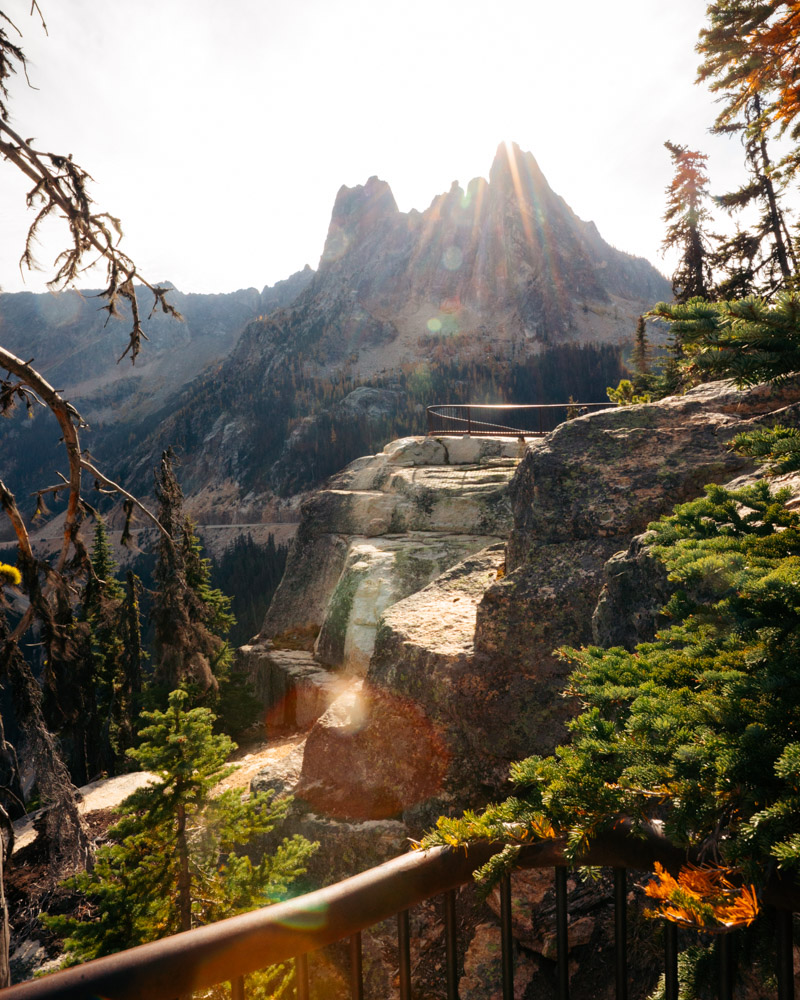
7. Washington Pass Overlook
- 2-minute walk from parking lot
- Views of Liberty Bell and Early Winters Spires
- Excellent at sunset
8. Blue Lake Trailhead
- If you have time for a longer hike
- 4.6 miles round trip to a stunning alpine lake
Which Direction?
East to west: Better afternoon light on Diablo Lake.
West to east: Better morning light at Washington Pass, and you end in Mazama/Winthrop with food and lodging options.
When to Visit
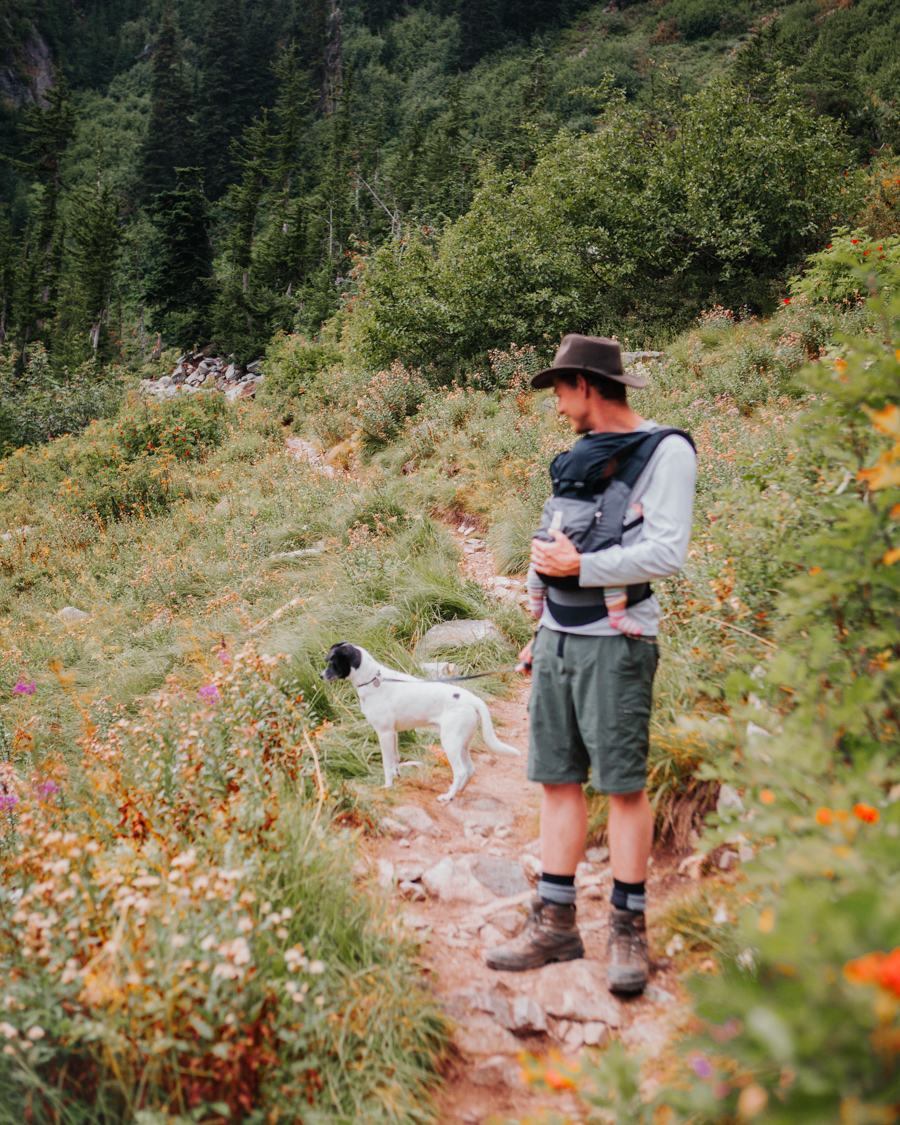
The best time to visit the North Cascades is July through September, when Highway 20 is fully open and most trails are snow-free.
Summer (July – September)
The prime season.
- Best weather, all trails accessible
- Wildflowers peak late July through early August
- Long days — sunrise around 5:30am, sunset after 9pm
- Busiest time, but still far less crowded than Rainier or the Olympics
- Highway 20 fully open
Best for: First-time visitors, families, anyone who wants reliable weather and full trail access.
Fall (September – October)
Larch season.
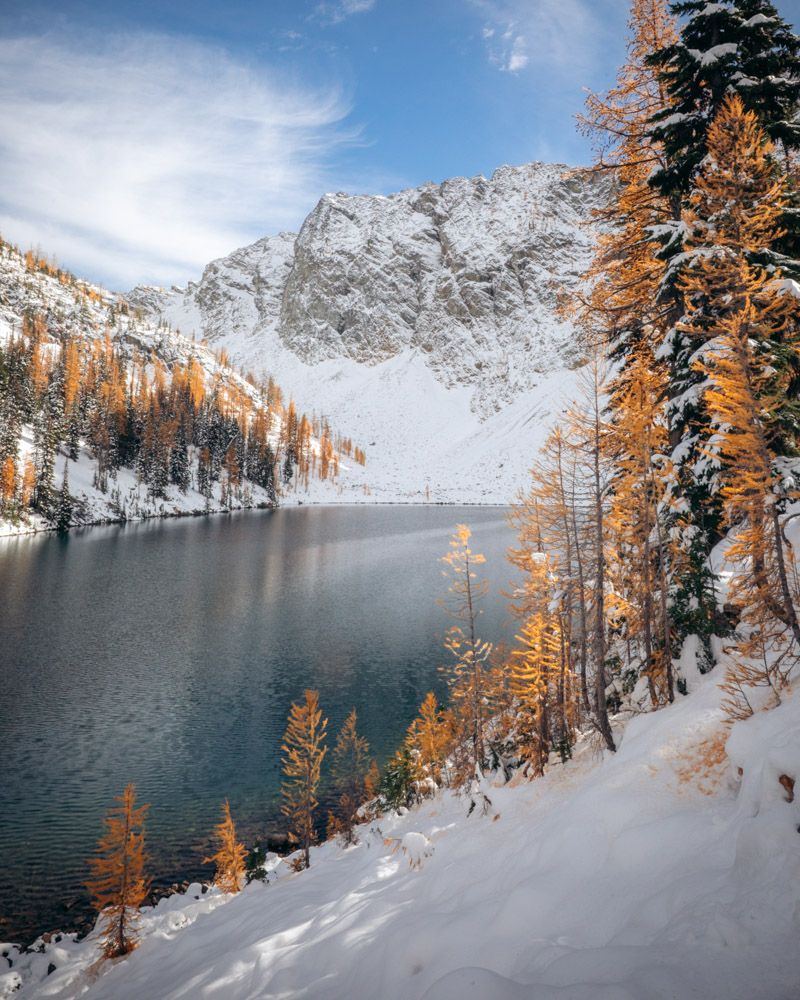
- Golden larches typically peak early-to-mid October (varies by year and elevation)
- Smaller crowds (except during peak larch weekends)
- Stunning fall color throughout the valleys
- Unpredictable weather — snow possible at the passes
- Highway 20 usually closes for winter sometime in late fall (timing varies by snowfall). Check WSDOT.
Best for: Photographers, larch chasers, anyone who doesn’t mind variable weather.
North Cascades Larch Itinerary
Spring (May – June)
Shoulder season.
- Highway 20 reopens (usually mid-to-late May — check WSDOT)
- Snow lingers at higher elevations into July
- Waterfalls at peak flow
- Wildflowers in the lower valleys
- Limited trail access until late June
Best for: Waterfall lovers, early-season explorers willing to accept limited options.
Winter (November – April)
Highway 20 is CLOSED.
The road closes somewhere between Diablo and the Ross Lake area on the west side, and near Mazama on the east side. You cannot drive through.
However:
- Stehekin is still accessible via the Lake Chelan ferry (winter schedule)
- The Methow Valley (Mazama, Winthrop) is open and offers excellent cross-country skiing
- Some lower-elevation hikes on the west side remain accessible
Best for: Cross-country skiers, Stehekin winter adventurers.
Where to Stay
East Side (Closest to Highway 20 Trailheads)
Mazama
The closest lodging to Maple Pass, Blue Lake, Cutthroat, and Washington Pass.
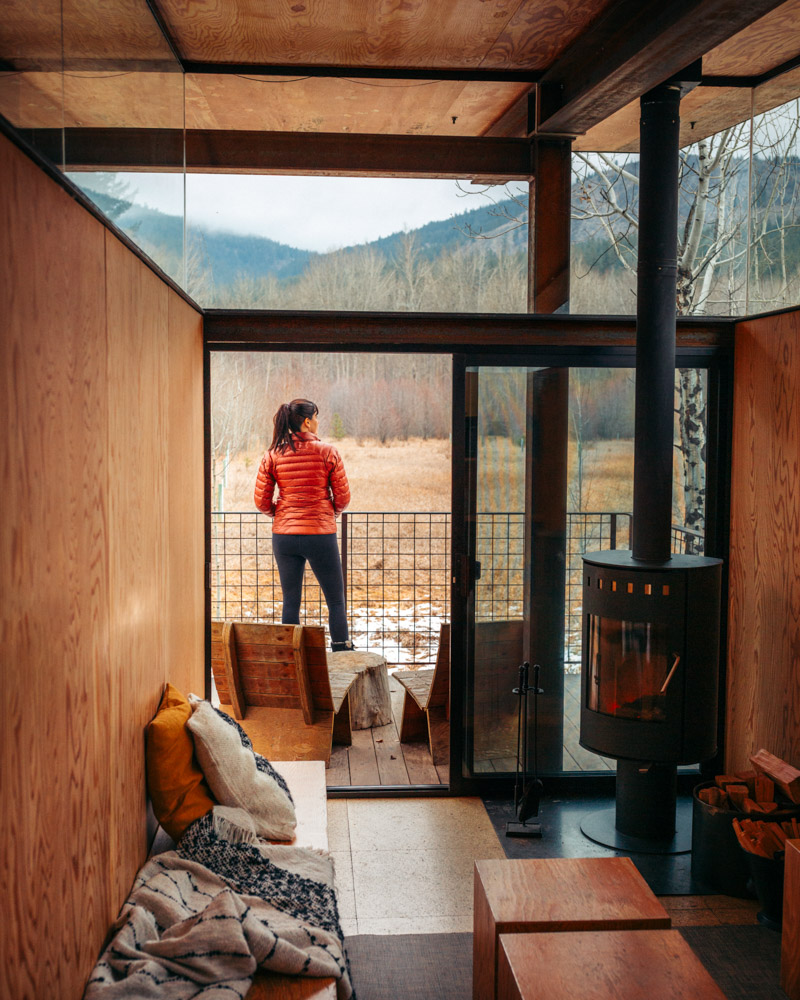
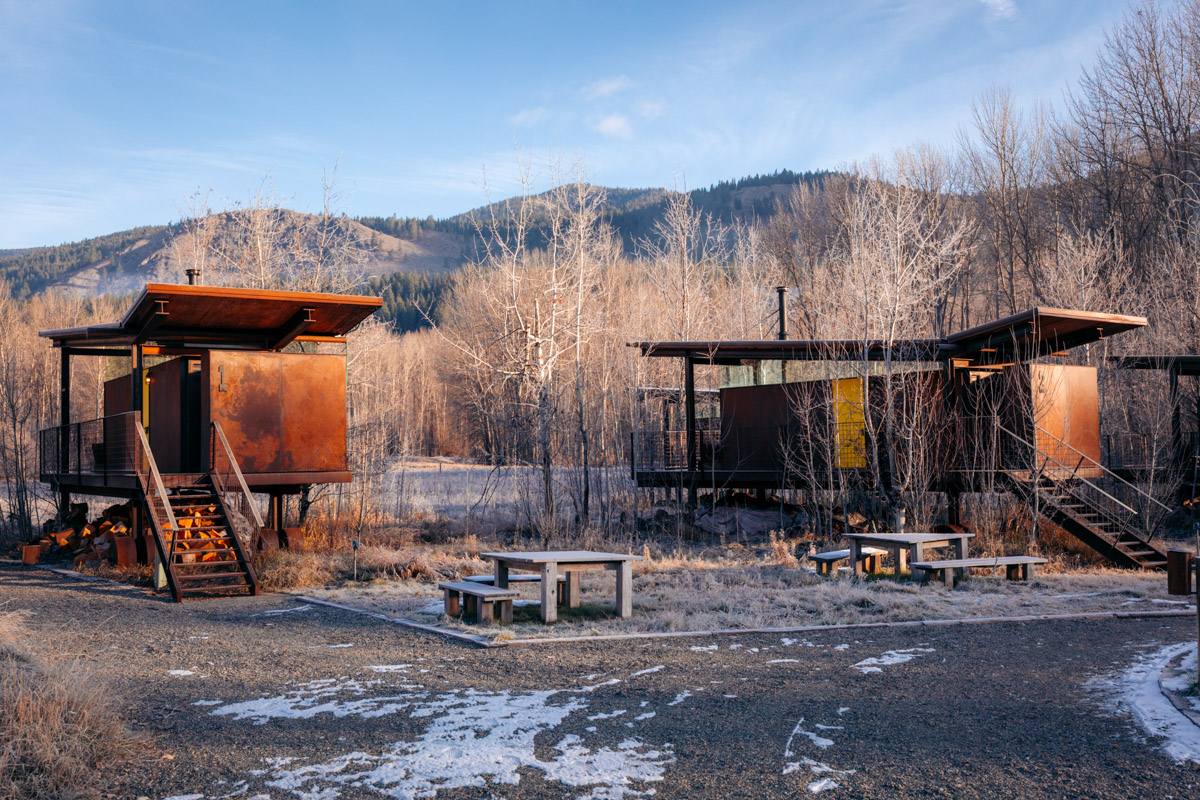
- The Rolling Huts – Modern tiny cabins near Mazama; minimalist, cozy, and perfect for hikers (books up fast in peak season).
- Lost River Resort — Charming cabins tucked into the woods near Mazama; peaceful, cozy, and full of character.
- The Inn at Mazama — Hotel-style rooms, restaurant on-site
- Vacation rentals — Several options on VRBO
Pro tip: Book 3-6 months ahead for peak larch season (early October). Mazama has limited rooms and sells out fast.
Winthrop
30 minutes from trailheads but more dining and lodging options.
- Western-themed downtown (it’s charming, not cheesy)
- Breweries, restaurants, shops
- More last-minute availability than Mazama
Lodging:
- River’s Edge Resort: Riverside cabins with private decks and hot tubs, steps from town shops and dining.
- Methow River Lodge & Cabins: Cozy, quiet cabins with full kitchens and decks over the river; valued for cleanliness, comfort, and thoughtful extras like free bikes and laundry.
- Chewuch Inn & Cabins: Charming cottage-style lodging with kitchenettes, excellent breakfast, and peaceful, deer-populated grounds.
- Sun Mountain Lodge: Sitting above the Methow Valley, Sun Mountain Lodge makes a scenic home base for exploring the dramatic peaks, alpine lakes, and scenic drives of the North Cascades. It’s the perfect balance of adventure-filled days and quiet, relaxed evenings.
Where to eat:
- East 20 Pizza — Wood-fired pizza, great pasta (our favorite)
- Old Schoolhouse Brewery — Riverside beers, pub food
- Rocking Horse Bakery — Breakfast, pastries
West Side
Newhalem / Marblemount
Closer if you’re coming from Seattle, but limited options.
- Skagit General Store (Newhalem) — Basic supplies
- North Cascades Inn (Marblemount) — One of the few lodging options
- Better for camping-focused trips
Stehekin
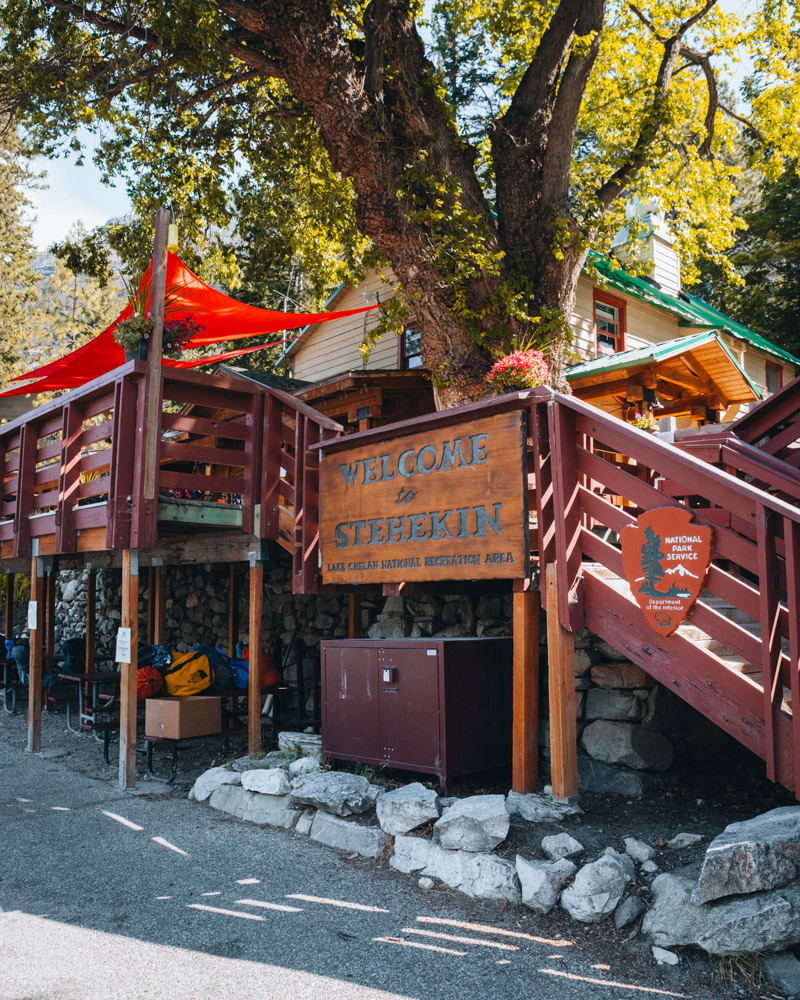
A completely different experience — remote and off-grid.
- North Cascades Lodge at Stehekin — The main lodging option
- Stehekin Valley Ranch — Cabins, more rustic
- Camping — Several campgrounds in the valley such as Purple Point, Lakeshore and Harlequin.
Accessible only by ferry, floatplane, or foot.
→ Stehekin Guide (Coming soon)
Camping Along Highway 20
Note: These campgrounds are all drive-up along Highway 20. For camping in Stehekin (ferry/floatplane access), see the Stehekin section above.
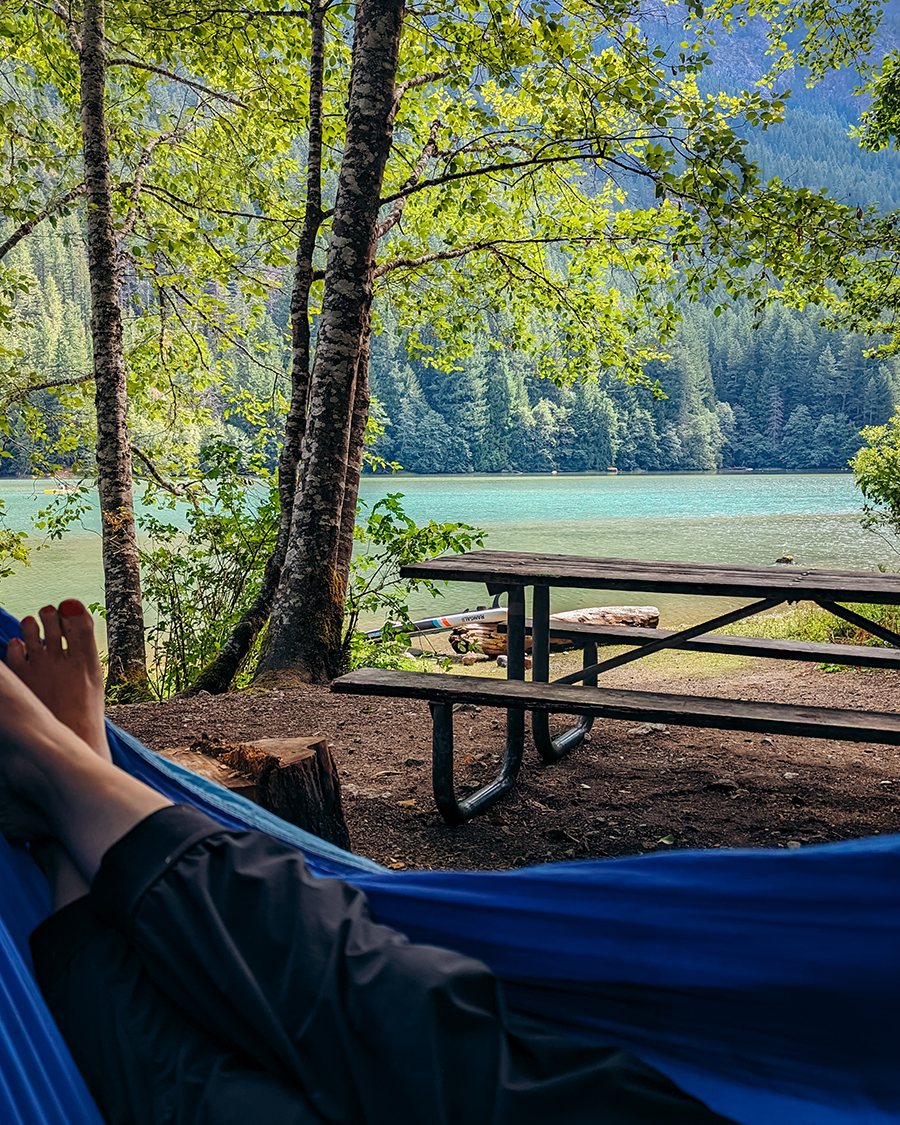
Colonial Creek Campground (Amazing sites on Diablo Lake)
- On Diablo Lake
- 130+ sites
- Flush toilets, running water
- Reserve at Recreation.gov during peak season
- Colonial Creek Campground Guide
Newhalem Creek Campground
- Near the visitor center
- 111 sites
- First-come, first-served (some reservable)
Klipchuck Campground (east side – a family favorite)
- Near Early Winters
- 46 sites
- Reservable

Goodell Creek Campground
- Smaller, more rustic
- Near Newhalem
- First-come, first-served
Lone Fir Campground (east side)
- Near Mazama
- 27 sites
- First-come, first-served
Planning Essentials
Getting There
When coming from Seattle:
- 2.5 hours to Marblemount (west entrance)
- 3.5-4 hours to Mazama (east side, via Highway 20 when open)
- If Highway 20 is closed, the east side requires going around via Stevens Pass or I-90 — add 1-2 hours
From Spokane:
- 4 hours to Mazama/Winthrop (east side)
From Portland:
- 5+ hours to either side
Highway 20 status: The road closes for winter, typically mid-November through mid-May. Check WSDOT before planning any trip outside summer months.
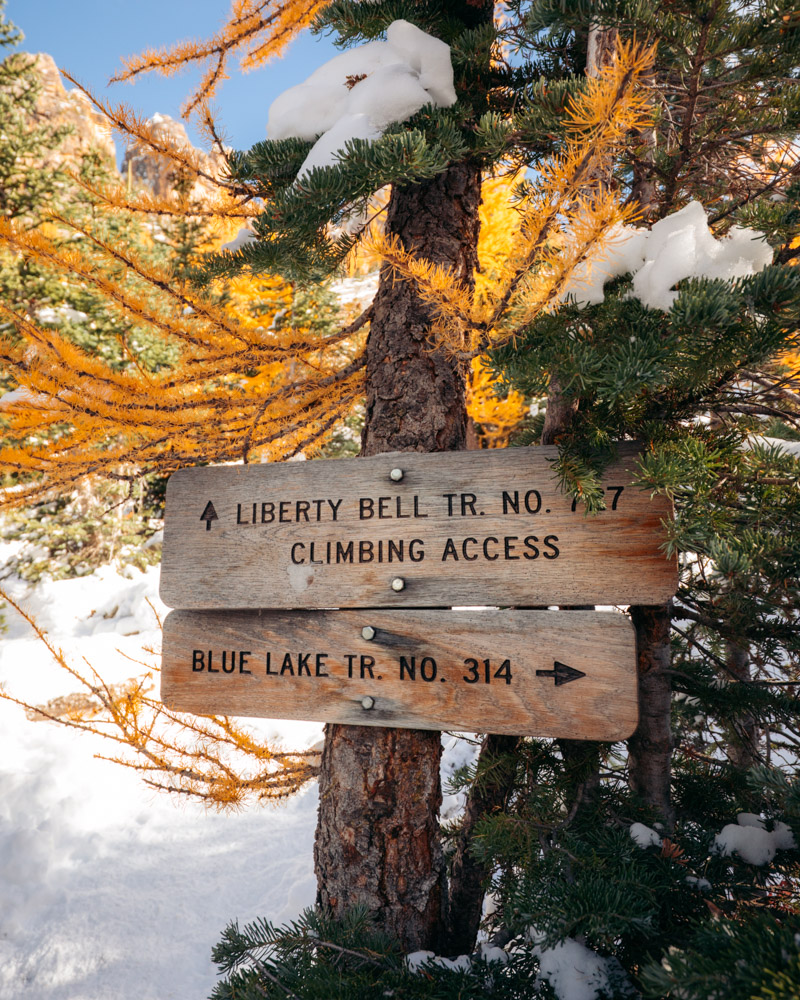
Passes & Permits
There is no entrance fee to North Cascades National Park, but most trailheads require a Northwest Forest Pass or America the Beautiful Pass.
Entrance fee: None. North Cascades is one of the few national parks with no entrance fee.
Northwest Forest Pass: Required at most trailheads ($5/day or $30/year). Buy at ranger stations, some gas stations in Winthrop/Mazama, or online at Recreation.gov.
America the Beautiful Pass: Also works at all trailheads ($80/year, covers all federal lands).
Backcountry permits: Some backcountry permits are reserved/issued in advance online; others are picked up in person. Check the park’s backcountry permit page before you go.
Cell Service
Expect none.
Between Marblemount and Winthrop, you’ll have zero cell service for most of the drive. Some carriers get spotty signal in Newhalem and at high points, but don’t count on it.
What to do:
- Download offline maps before you go (Google Maps, Gaia GPS, AllTrails)
- Tell someone your plans and expected return time
- Consider a satellite communicator for emergencies (Garmin inReach, Zoleo, etc.)
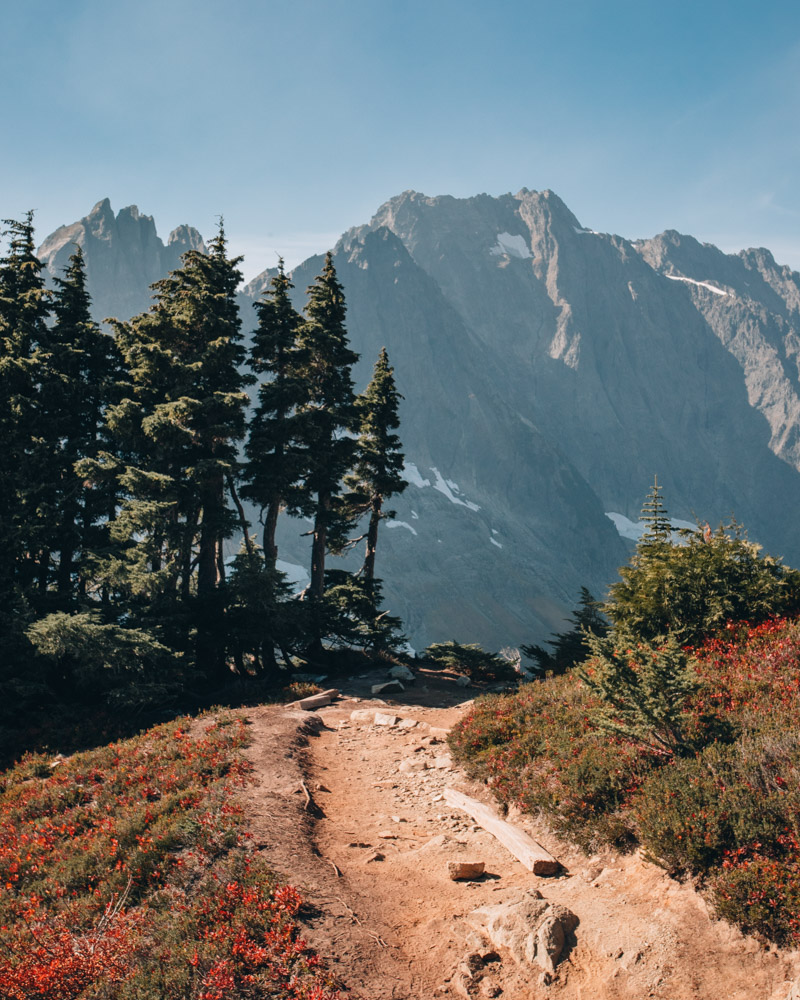
Gas & Supplies
Last gas (west side): Marblemount
Last gas (east side): Winthrop (the Mazama Store has gas but limited hours — don’t count on it for evening fill-ups)
Groceries: Very limited in the park area. Stock up in Seattle, Bellingham, or Wenatchee before you arrive. Winthrop has a small grocery store.
Pro tip: Bring more food and water than you think you need. There are no convenience stores on Highway 20.
Weather
Mountain weather changes fast. A sunny morning can turn into afternoon thunderstorms. October mornings at the pass can drop below freezing even if the valley is 50°F.
Summer:
- Valley highs: 70-85°F (21-29°C)
- Pass temperatures: 50-65°F (10-18°C)
- Afternoon thunderstorms possible
Fall:
- Expect 30-40°F (17-22°C) swings in a single day
- Frost and snow possible at higher elevations by late September
- Dress in layers, always bring rain gear
Always bring:
- Rain jacket (even on sunny days)
- Warm layers (it’s colder at the passes than the trailhead)
- Sun protection (exposed alpine terrain)
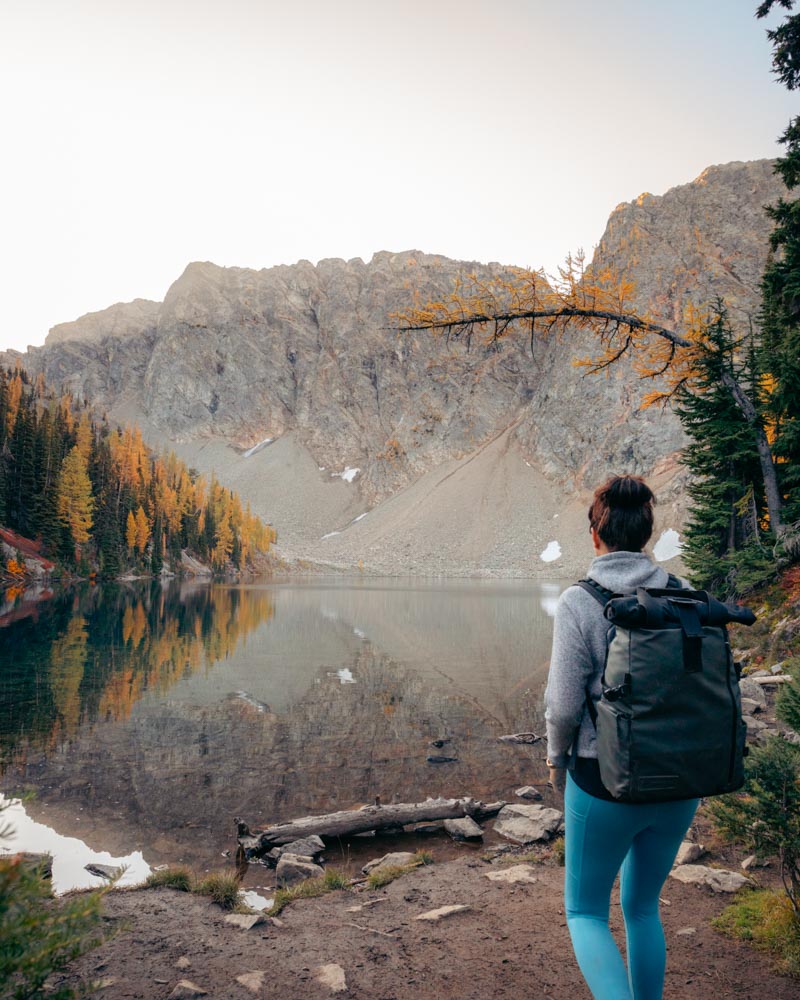
What to Pack
Day Hiking Essentials
- Sturdy hiking boots — trails can be rocky and uneven La Sportiva Nucleo High II GTX
- Rain jacket — weather changes fast XeroCloud 3L Rain Jacket
- Layers — temperatures vary wildly by elevation REI Magma Down Hoodie (packable warmth)
- Trekking poles — helpful on steep descents Black Diamond Trail Ergo Cork
- Daypack — 20-30 liters for day hikes Osprey Tempest 20
- Water — 2-3 liters minimum (don’t count on water sources; many are seasonal)
- Headlamp — always, even for day hikes Black Diamond Spot 400
- Sun protection — hat, sunglasses, sunscreen (exposed alpine terrain)
- First aid kit — basic supplies
- Snacks — more than you think you need
Fall / Shoulder Season Additions
- Microspikes — essential after early October Kahtoola MICROspikes
- Warm hat and gloves — mornings are cold
- Extra insulation layer — conditions can change quickly
Winter / Snow Conditions
- Snowshoes — if venturing onto snow MSR EVO snowshoes
- Gaiters — keeps snow out of boots Outdoor Research Crocodile
Sample Itineraries
3 Days in Summer
The classic North Cascades experience — hikes, scenic drives, and time to soak it in.
→ 3 Days in North Cascades: The Ultimate Itinerary for Hikers
3 Days for Larch Season
Maximize your golden larch experience with strategic timing and the best trails.
North Cascades Fall Larch Itinerary: 3 Days Among Golden Needles
Weekend Camping Trip
Base yourself at Colonial Creek Campground and explore from there.
A Weekend at Colonial Creek Campground in the North Cascades
Stehekin Adventure
Something completely different — remote valley, ferry access, off-grid magic.
→ Stehekin Guide (coming soon)
Final Thoughts
If you’re planning your first trip, start with Highway 20. Do Maple Pass or Blue Lake. Stop at the overlooks. Get a feel for the place.
But don’t stop there.
There is more to the North Cascades that is waiting beyond the scenic pullouts — in the fire lookouts, the remote valleys, the sunrise ridgelines, the nights spent sharing a backcountry shelter with strangers who become friends.
It’s out there. Go find it.
More North Cascades Adventures
- 3 Days in North Cascades: The Ultimate Itinerary
- North Cascades Fall Larch Itinerary
- Blue Lake Trail Guide
- Colonial Creek Campground Guide
- Best Golden Larch Hikes in Washington
Have questions about planning your North Cascades trip? Drop a comment below or reach out on Instagram @the.trekking.mama — I’m always happy to help!