Best Waterfall Hikes in the Columbia River Gorge (Oregon + Washington)
The Columbia River Gorge is one of the most waterfall-dense regions in the Pacific Northwest, with dozens of named waterfalls spilling over basalt cliffs on both the Oregon and Washington sides of the river. Fed by snowmelt, spring rain, and steep Cascade terrain, these Columbia River Gorge waterfalls range from iconic roadside stops to immersive backcountry hikes.
I’ve been hiking Gorge waterfalls for years — on family trips, solo dawn hikes squeezed between hotel checkouts, and rainy spring afternoons when the trails are quiet and the waterfalls are roaring. This guide covers the best waterfall hikes in the Columbia River Gorge, including easy roadside waterfalls, family-friendly trails, and longer adventures on both sides of the river.
Disclosure: This post may contain affiliate links. If you purchase through these links, I may earn a small commission at no extra cost to you. Thanks for supporting The Trekking Mama.
Quick Guide: Columbia River Gorge Waterfalls
Easy roadside stops (minimal walking):
Horsetail Falls, Bridal Veil Falls, Starvation Creek Falls
Short hikes with a big payoff:
Latourell Falls, Wahclella Falls, Panther Creek Falls
Great picks for families:
Latourell Falls, Horsetail + Ponytail Falls, Wahkeena Falls
Photographer favorites:
Latourell Falls, Elowah Falls, Panther Creek Falls
All-day adventure:
Tunnel Falls (Eagle Creek)
Quieter gems (worth the detour):
Panther Creek Falls (WA), Elowah Falls (OR), Falls Creek Falls (WA)
The classic must-see:
Multnomah Falls
Peak flow: March–April
Parking & passes: Some Oregon trailheads use timed entry/permits in peak season (details below), while Washington State Parks often require a Discover Pass for parking.
How to Avoid Crowds in the Gorge
Crowds are part of the Columbia River Gorge — but they’re manageable with a little strategy.
- Start early (before 9am on weekends)
- Choose rainy weekdays for dramatic flow and fewer people
- Pair one iconic stop with quieter nearby hikes
- Consider Washington-side waterfalls for a less crowded experience
If you’re planning a multi-day visit, I break down timing, lodging, and crowd patterns in my full guide to spring in the Columbia River Gorge.
Oregon Side Waterfalls (West to East)
The Oregon side of the Gorge is where most of the iconic waterfalls are concentrated. Many are clustered along the Historic Columbia River Highway between Troutdale and Cascade Locks, making it possible to see several in a single day — if you plan around timing and crowds.
Permits note: In peak season, timed use permits can apply around Multnomah Falls and the Waterfall Corridor (I-84/Historic Highway area). Always verify current rules before you go: ODOT Waterfall Corridor permits and Multnomah Falls Timed Use Permit (Recreation.gov).
Latourell Falls
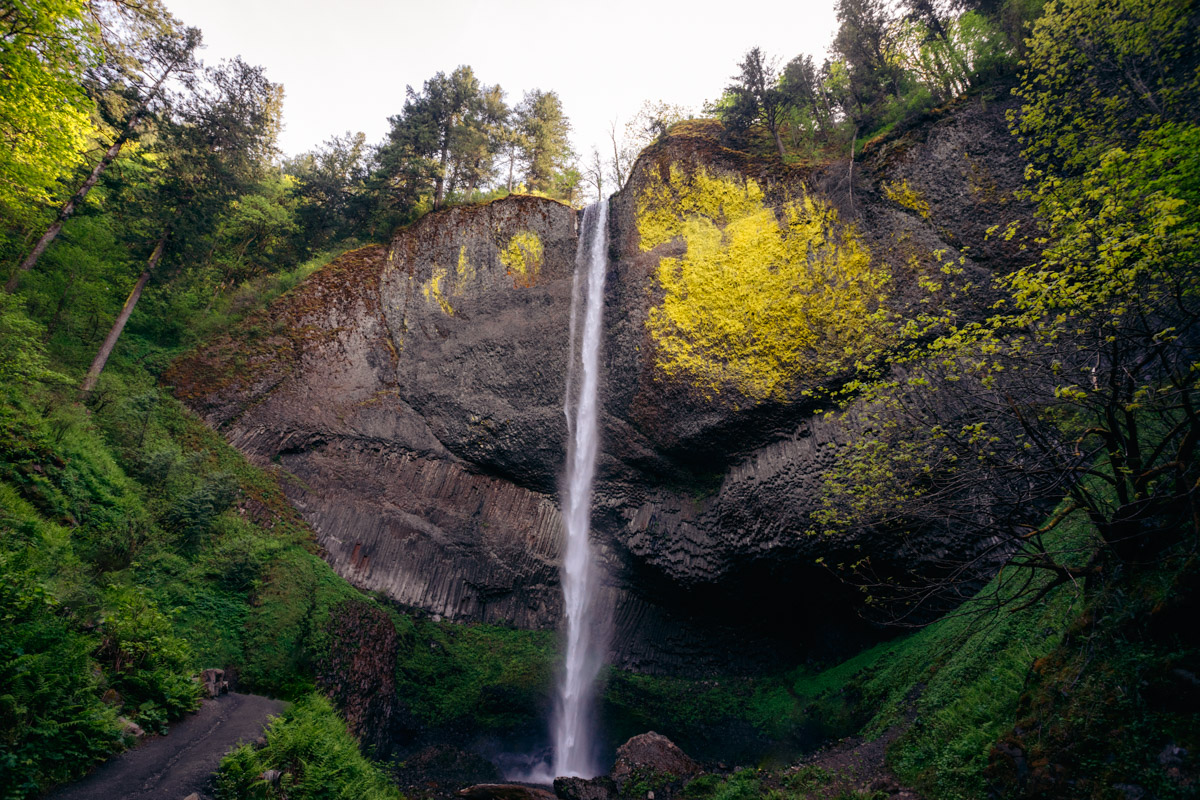
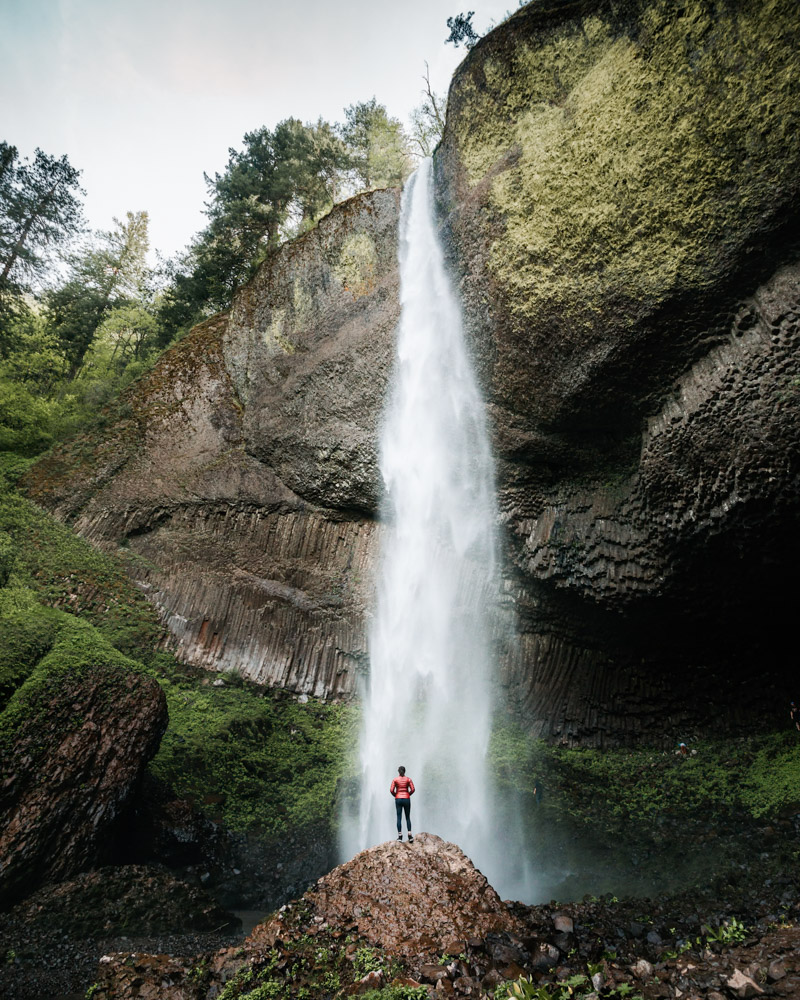
Hands down, Latourell Falls is one of my absolute favorites in the Gorge — and one of the most underrated. The lower falls plunge 224 feet over columnar basalt, and you can walk right up to the misty base in under five minutes from the parking lot.
I hiked Latourell on a solo trip and had the lower viewpoint nearly to myself at golden hour. The basalt columns glow in the right light, and the whole scene feels more dramatic than Multnomah without the crowds.
If you have time, the 2.4-mile loop climbs up and behind the falls to Upper Latourell Falls — a wider, more delicate cascade worth the effort.
Stats
- Distance: 2.4 miles (loop) or 0.4 miles to lower viewpoint
- Elevation gain: ~500 feet (loop)
- Difficulty: Easy to Moderate
- Time: 15 minutes–1.5 hours
Best for: photographers, quick stops
Pro tip: arrive early or late for the best light
Bridal Veil Falls
One of the easiest waterfall stops, Bridal Veil Falls is beautiful. A short, paved path leads to a two-tiered waterfall tucked into a fern-filled canyon just off the highway.
It’s ideal if you’re short on time or hiking with kids who need a quick win.
Stats
- Distance: 0.5 miles round trip
- Elevation gain: ~100 feet
- Difficulty: Easy
- Time: 20–30 minutes
Best for: families, quick stops
Pro tip: there’s a nearby viewpoint trail with Gorge views — worth the extra few minutes
Wahkeena Falls + Fairy Falls
Wahkeena Falls is impressive on its own, but the real magic is continuing up the trail to Fairy Falls — a mossy, tucked-away cascade that feels straight out of a storybook.
You can hike out-and-back to Fairy Falls or connect to Multnomah Falls for a longer loop.
Stats
- Distance: 2.4 miles to Fairy Falls (RT) or 4.7-mile loop
- Elevation gain: 700–1,600 feet
- Difficulty: Moderate
- Time: 1.5–3 hours
Best for: hikers wanting more than a viewpoint
Pro tip: the bridge at Wahkeena Falls is a great photo spot
Multnomah Falls
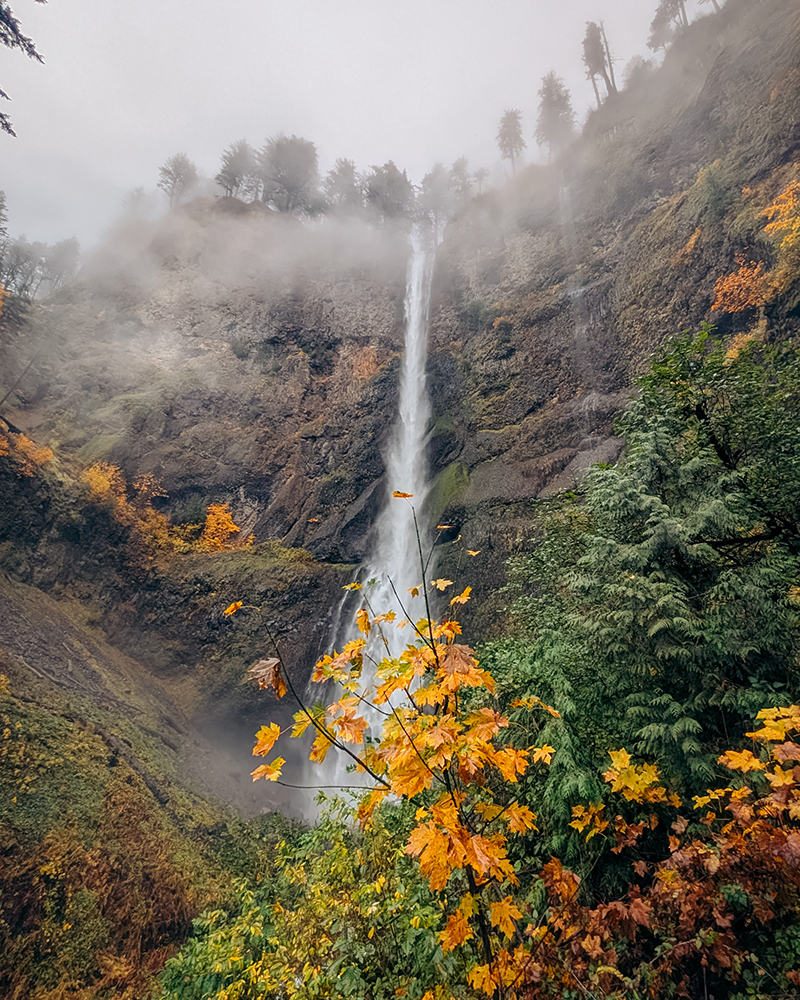
At 620 feet, Multnomah Falls is the tallest waterfall in Oregon and the most visited natural site in the Pacific Northwest.
Here’s the honest take: it’s worth seeing once — but it’s not my favorite. The lower viewpoint is crowded, and the hike to the top is more workout than wilderness. Still, if it’s your first Gorge visit, go. Just manage expectations and timing.
Stats
- Distance: 2.6 miles round trip (to the top)
- Elevation gain: ~700 feet
- Difficulty: Moderate
- Time: 1.5–2 hours
Good to know: timed use permits can be required in peak season. Check the official info here: ODOT permit details and Recreation.gov timed permits.
Pro tip: go early on a weekday or prioritize Latourell instead
Horsetail Falls + Ponytail Falls
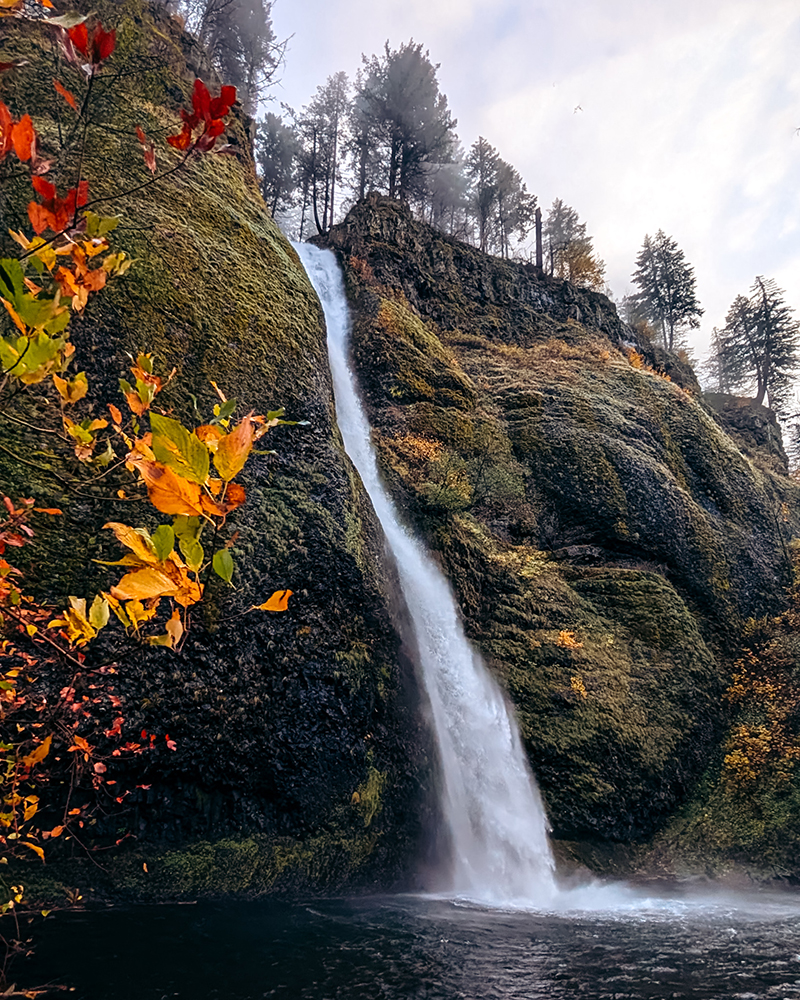
The stunning Horsetail Falls is visible right from the road, but the short hike to Ponytail Falls is the real highlight — you can walk behind the waterfall through a rocky overhang.
Kids love this one.
Stats
- Distance: 1.4 miles round trip
- Elevation gain: ~300 feet
- Difficulty: Easy
- Time: 45–60 minutes
Best for: families, easy adventure
Pro tip: rocks behind Ponytail Falls can be slippery
Oneonta Falls
Oneonta Falls sits at the end of a narrow slot canyon. Reaching it historically involved wading through Oneonta Creek, making this more of an adventure than a traditional hike.
Important: Access and safety can change due to closures and conditions. The Forest Service notes that the Oneonta Trail may be open while the Oneonta Gorge remains closed. Check the current status before you try to reach the falls: West Oneonta Trailhead conditions and Oneonta Trail (#424) conditions.
Stats
- Distance: ~1 mile round trip
- Difficulty: Moderate (creek crossing / conditions-dependent)
Elowah Falls
Elowah Falls is a 213-foot plunge into a mossy amphitheater and a favorite among photographers. It’s quieter than Historic Highway falls and well worth the detour.
This hike is still on my short list, but early morning light here is known to be beautiful.
Stats
- Distance: 1.6 miles round trip
- Elevation gain: ~200 feet
- Difficulty: Easy
Wahclella Falls
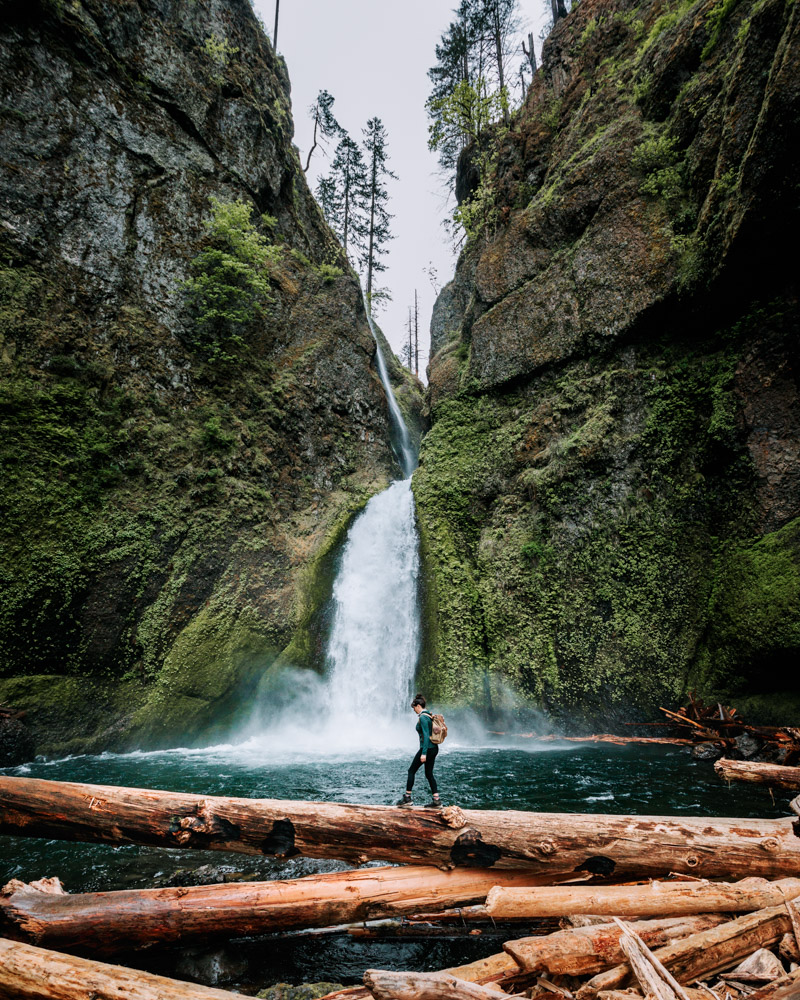
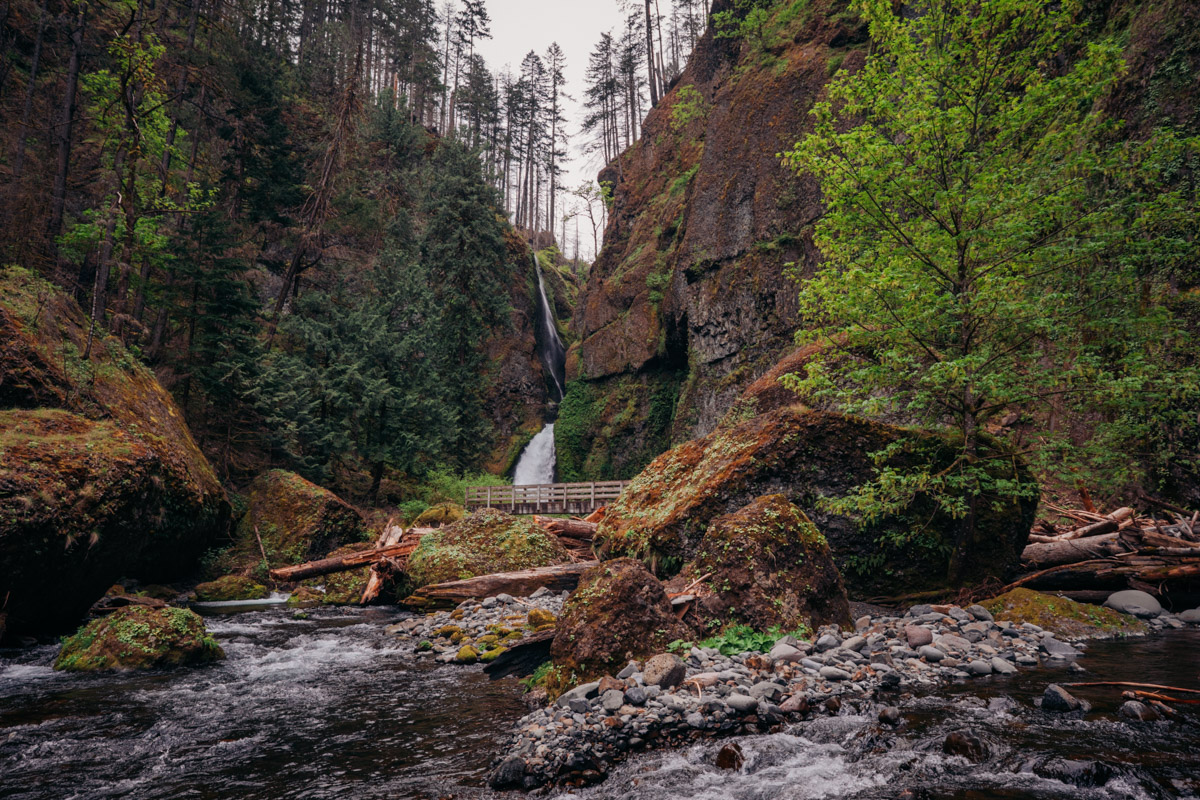
The hike to Wahclella Falls might be my favorite short waterfall hike in the entire Gorge. The trail follows Tanner Creek through a narrow canyon, past mossy boulders and fern-covered walls, before opening up to a dramatic two-tiered waterfall surrounded by steep cliffs.
I did this one on the same solo trip as Latourell, and the two together made for a perfect Gorge day. Wahclella has the feel of a longer backcountry hike packed into two miles — immersive, dramatic, and surprisingly uncrowded for how accessible it is.
Stats
- Distance: 2 miles round trip
- Elevation gain: ~350 feet
- Difficulty: Moderate
Pro tip: the trail can be slippery when wet — good footwear matters
Tunnel Falls (Eagle Creek)
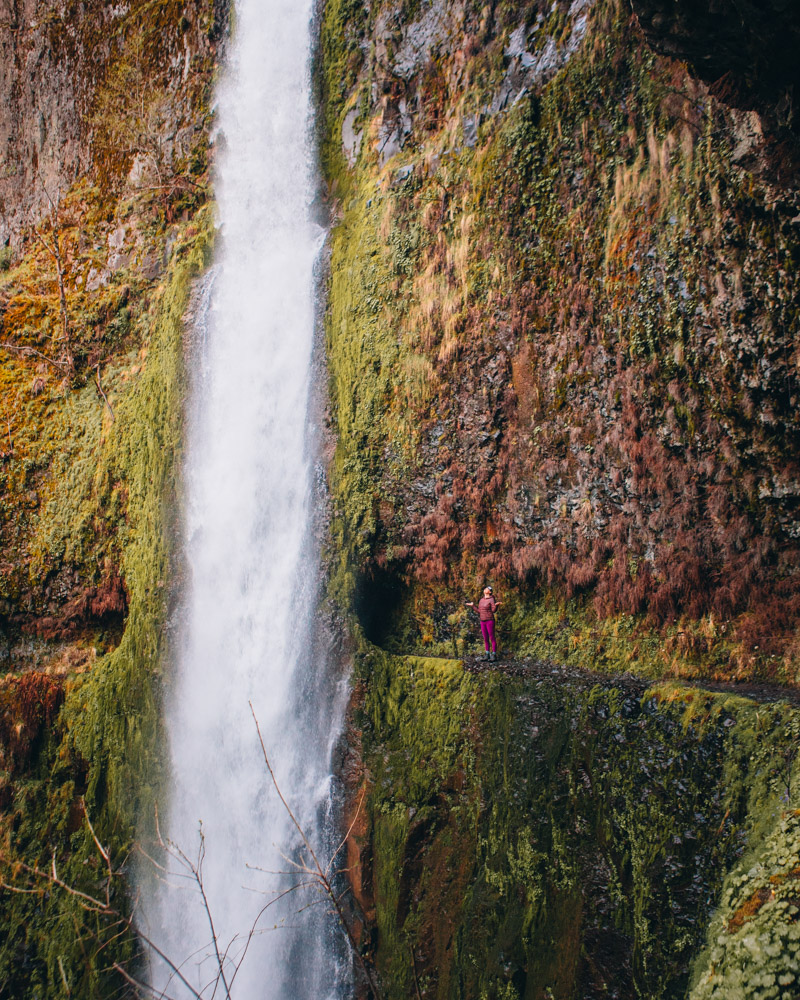
This hike had been on my list forever. On our way back from Bend, we stayed at Skamania Lodge and I left at 5am to hike in the dark — racing to make it back by checkout. It was worth every dark mile. The trail has exposure in places, and it’s long, but there’s nothing else quite like walking behind Tunnel Falls.
Stats
- Distance: 12 miles round trip
- Elevation gain: ~1,200 feet
- Difficulty: Moderate to strenuous (exposure)
- Time: 5–7 hours
Important: Trail conditions vary year to year. Before you go, check the official Columbia River Gorge alerts and the Forest Service page for Eagle Creek Trail #440.
Dry Creek Falls
A quieter option accessed from the Pacific Crest Trail, Dry Creek Falls is ideal if you want to avoid the Historic Highway corridor.
Stats
- Distance: 4.4 miles round trip
- Elevation gain: ~700 feet
- Difficulty: Easy to Moderate
Starvation Creek Falls
One of the easiest waterfall stops in the Gorge, visible right from the parking area.
Stats
- Distance: 0.2 miles to viewpoint
- Difficulty: Easy
Pro tip: bathrooms available here — useful on a waterfall road trip
Washington Side Waterfalls
The Washington side of the Gorge has fewer roadside waterfalls, but the hikes here feel quieter and more remote. Many trailheads require a Discover Pass for parking.
Panther Creek Falls
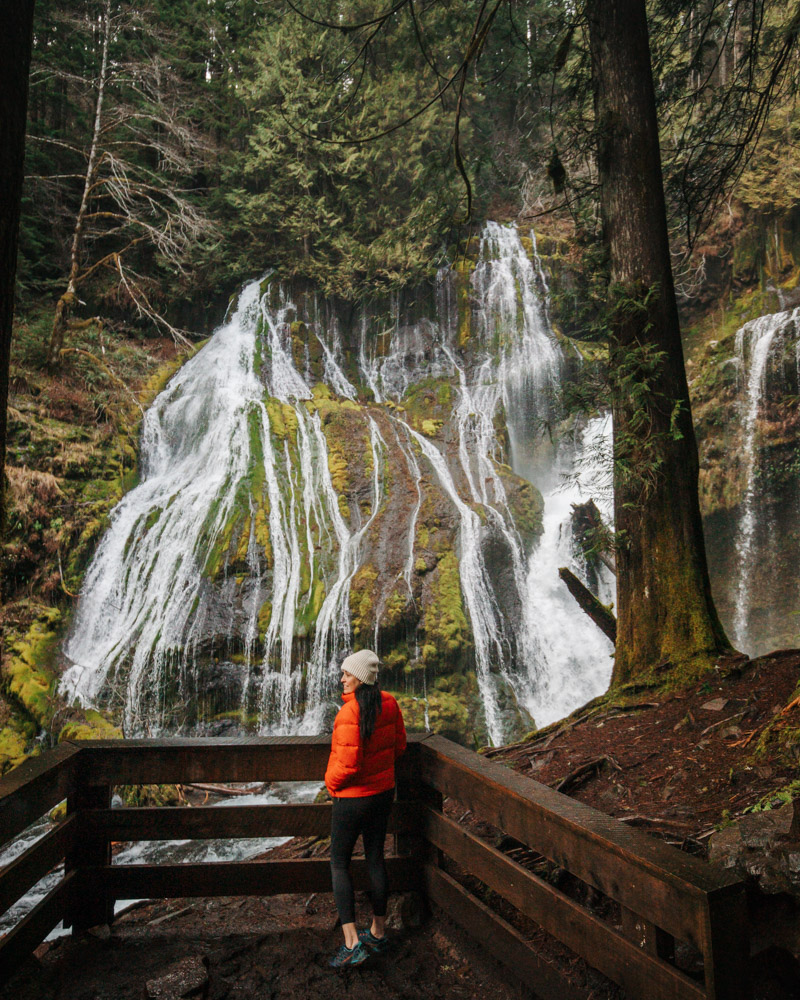
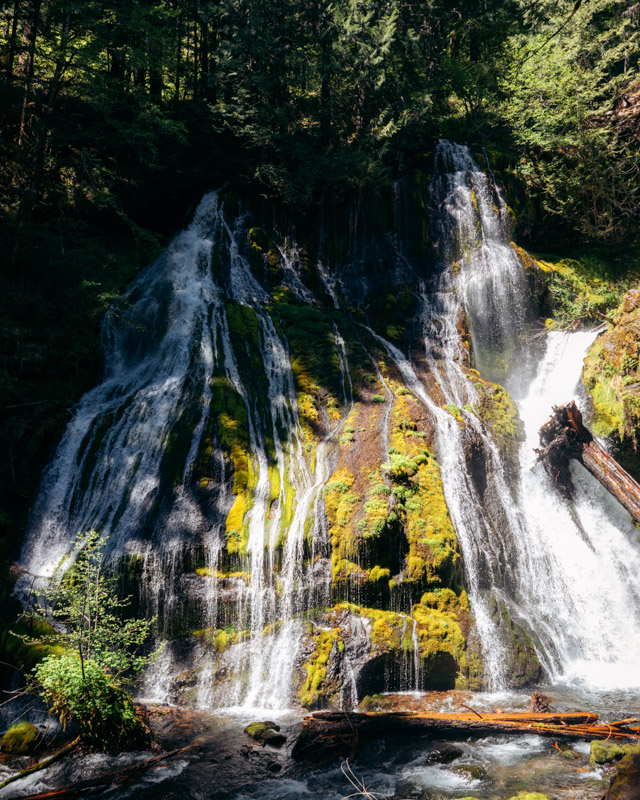
Panther Creek Falls is one of the most underrated waterfalls in the entire Gorge region — and honestly, one of the dreamiest. A multi-tiered cascade fans out over a moss-covered cliff, with water trickling and plunging from multiple angles into a single pool. It feels like something out of a fairy tale.
The hike is short but steep — more of a quick descent to a viewpoint than a true trail. But the payoff is huge.
Stats
- Distance: 0.4 miles round trip
- Elevation gain: ~200 feet
- Difficulty: Easy (but steep)
Falls Creek Falls
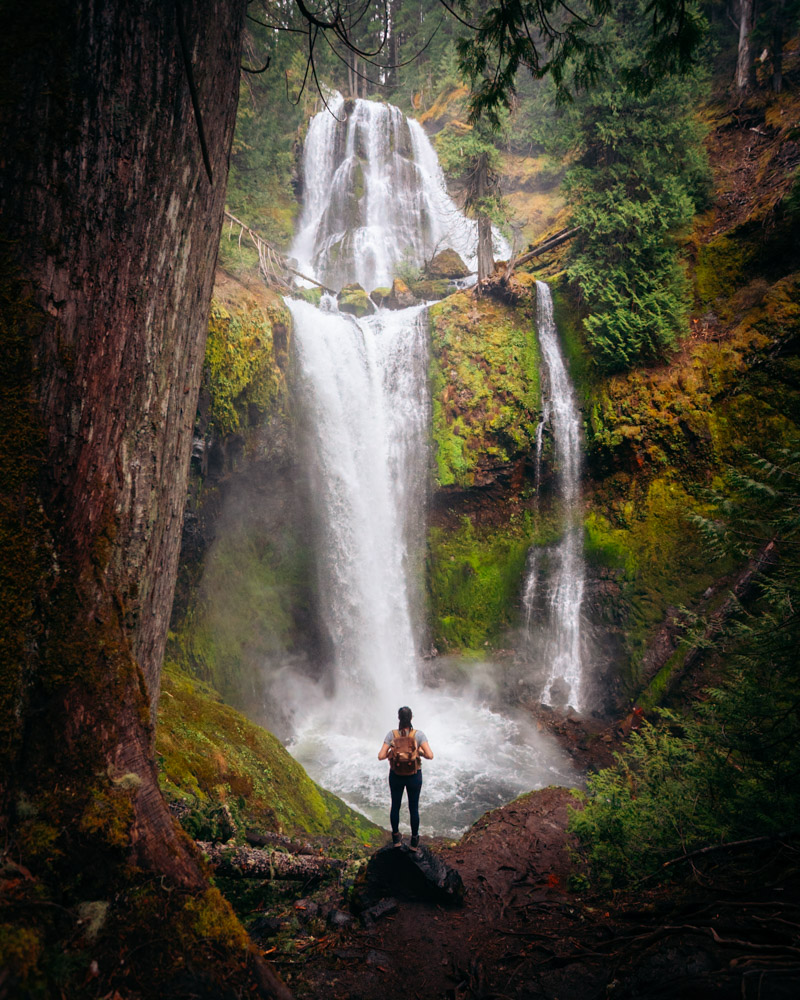
Falls Creek Falls is one of my favorite waterfalls in Washington — and the first time I saw it, I couldn’t believe my eyes. A powerful three-tiered cascade pours into a mossy amphitheater, and the scale of it catches you off guard after the quiet forest approach.
I’ve been back several times now, and it never disappoints. The trail winds through old-growth forest, crosses a fun suspension bridge, and follows the creek before revealing the falls. It’s a Washington favorite for a serious reason.
Stats
- Distance: 3.4 miles (RT) or 6.2-mile loop
- Difficulty: Moderate
Good to know: Road is gated Dec 1–Mar 31, adding 4 miles round trip if hiking in winter.
Pro tip: pair with Panther Creek Falls for a full WA waterfall day.
Spirit Falls
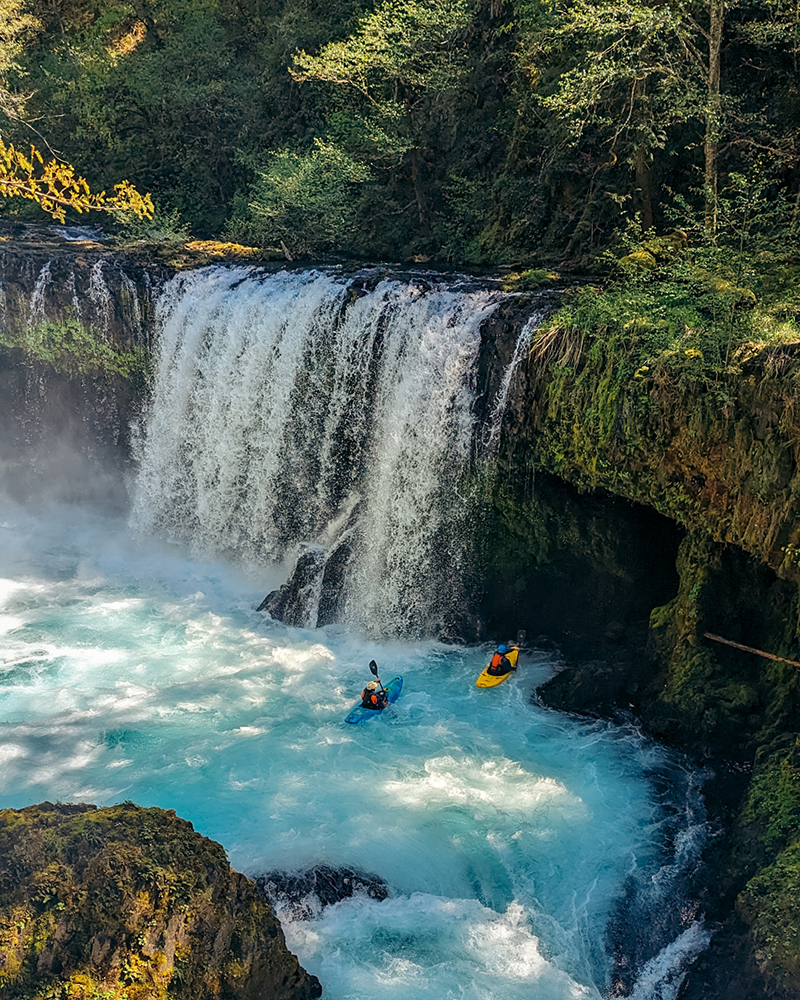
Spirit Falls is a 33-foot waterfall on the Little White Salmon River, known as much for the kayakers who drop over its edge as for the falls themselves. The hike down is short but steep and rugged — this isn’t a developed trail, and the final descent is a bit steep.
I watched kayakers launch off the edge here, and it was incredible — one of those moments where you can’t believe what you’re seeing is real. The falls are powerful, the setting is wild, and if you time it right, you’ll catch paddlers running one of the most famous drops in the Pacific Northwest.
Stats
- Distance: 0.6 miles round trip
- Difficulty: Strenuous
Hardy Falls, Rodney Falls & Pool of the Winds (Beacon Rock)
Beacon Rock State Park has a waterfall trail that passes three distinct falls: Hardy Falls, Rodney Falls, and the dramatic Pool of the Winds — a hollow rocky cylinder where water pours straight down into a churning pool.
Full disclosure: I tried to find Rodney Falls once and couldn’t locate the trail junction. It’s on my list to go back and do properly. The falls are there — I just had one of those days where nothing lined up. If you go, pay attention to the signage at the Hamilton Mountain trailhead.
Stats
- Distance: 2–4 miles
- Difficulty: Moderate
What to Pack for Columbia River Gorge Waterfall Hikes
Waterfall trails in the Columbia River Gorge stay wet and muddy for much of the year, especially in spring. Here’s the quick packing list I recommend for most Gorge waterfall hikes:
- Waterproof hiking shoes or boots — I’ve owned more pairs of La Sportiva Nucleo High II GTX Hiking Boots than I can count. They handle wet trails without feeling heavy.
- Lightweight rain shell — For mist, spray, and sudden Gorge showers. I use the Black Diamond Fineline Stretch Shell — breathable enough to hike in, waterproof enough to stand near the falls.
- Warm midlayer — A fleece or light puffy for canyon temps that shift quickly.
- Trekking poles — On slick, muddy trails like Wahclella or the descent to Spirit Falls, poles make a real difference. I use Black Diamond Alpine Carbon Cork Trekking Poles.
- Small daypack — My Osprey Tempest 20 carries layers, water, and snacks without feeling bulky.
- Lens cloth if you’re photographing waterfalls — mist builds up fast.
- 10 essentials, especially if you’re starting early or hiking longer trails like Tunnel Falls.
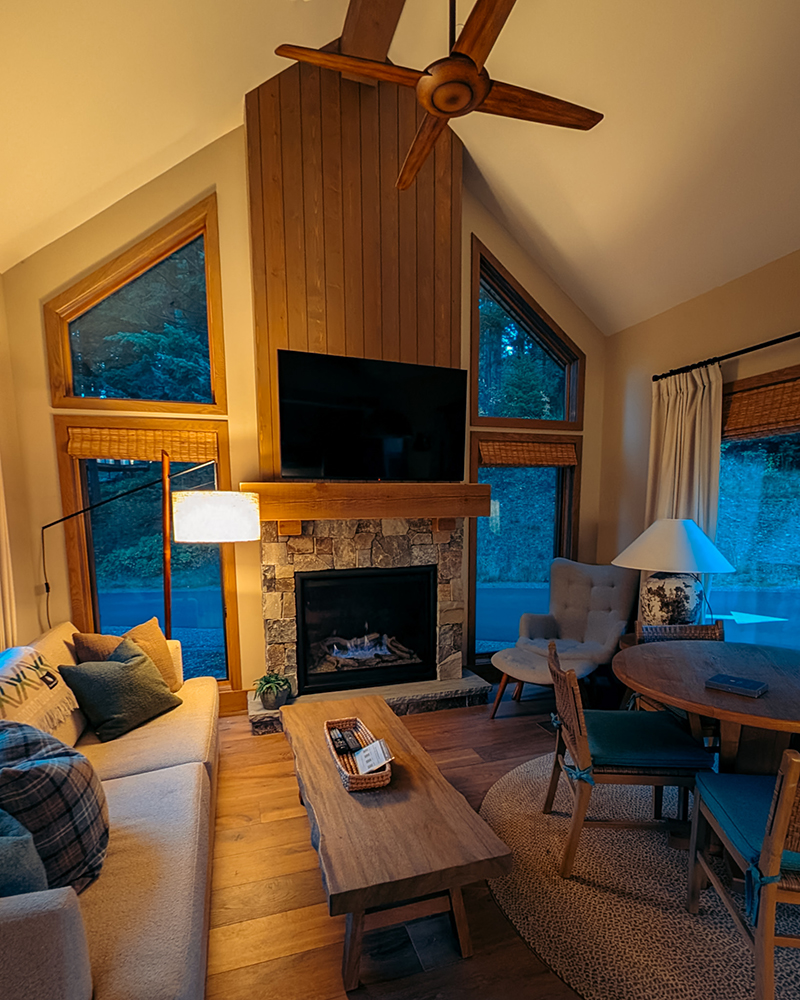

Where to Stay
Where you stay in the Gorge shapes how much you can see in a day — especially in spring when conditions change fast. For a complete lodging and basecamp guide, see:
Spring in the Columbia River Gorge: Waterfalls, Wildflowers + Where to Stay
Quick picks
- Columbia Gorge Getaways (Carson, WA)
- Skamania Lodge (Stevenson, WA)
- Beacon Rock State Park
FAQ: Columbia River Gorge Waterfalls
Do you need a permit for Columbia River Gorge waterfalls?
Sometimes. In peak season, timed use permits may apply to Multnomah Falls (I-84 lot) and/or parts of the Waterfall Corridor. Confirm current rules here: ODOT permit info and Recreation.gov permits. Washington State Parks often require a Discover Pass for parking.
What’s the best time of year for waterfalls in the Gorge?
March and April usually have the strongest flow thanks to rain and snowmelt. May can still be great, especially after wet weeks.
What are the best easy waterfalls in the Columbia River Gorge?
Horsetail Falls, Bridal Veil Falls, and Starvation Creek Falls are excellent minimal-walking options. Latourell Falls is also very easy with a huge payoff.
What’s the best family waterfall hike in the Gorge?
Horsetail + Ponytail Falls is a favorite for kids because you can walk behind Ponytail Falls. Wahkeena Falls (and the trail toward Fairy Falls) is another great option for older kids.
What’s the best “big adventure” waterfall hike in the Gorge?
Tunnel Falls via the Eagle Creek Trail is the classic all-day adventure. Expect mileage, narrow sections, and conditions that can vary year to year. Check official USFS alerts before you go.
Which side is less crowded—Oregon or Washington?
Oregon has the highest concentration of famous stops and tends to be busier. Washington-side waterfalls often feel quieter and more remote, especially outside weekends.
How do you avoid crowds at Gorge waterfalls?
Go early (before 9am on weekends), choose rainy weekdays, and pair one iconic stop with a quieter nearby hike. Consider Washington-side trails for a calmer experience.
Is Oneonta Falls open, and is it safe?
Access and safety can change by season, water level, and closures. The Forest Service notes the Oneonta Trail can be open while the Oneonta Gorge remains closed — check official conditions before attempting: West Oneonta Trailhead.
More Waterfall Guides
If waterfalls are your thing, I also cover Oregon and Washington waterfall hikes beyond the Gorge.
Have a favorite Gorge waterfall I missed? Tag me @the.trekking.mama — I’m always updating this list.